



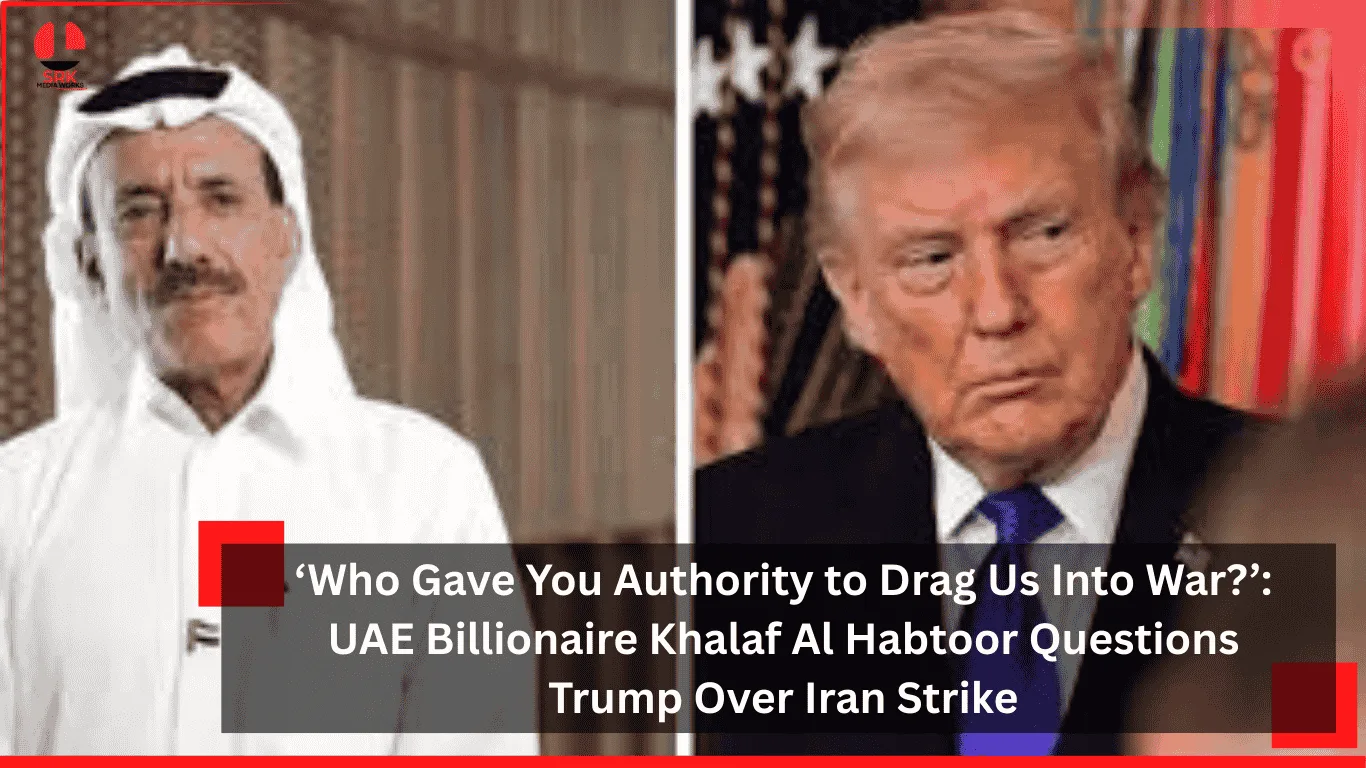
The geopolitical landscape in the Middle East has once again been shaken after UAE billionaire Khalaf Al Habtoor publicly criticized U.S. President Donald Trump over his decision to launch a strike against Iran. Al Habtoor, a prominent businessman and influential voice in the Gulf, questioned Trump’s authority to involve regional nations in escalating tensions, asking bluntly: “Who gave you authority to drag us into war?”
🌍 Background of the Iran Strike
The U.S. strike against Iran has reignited fears of a wider conflict in the Middle East. While Washington framed the action as a defensive measure, regional leaders and business figures expressed concern about the potential fallout. Al Habtoor’s remarks reflect growing unease among Gulf nations, who fear that instability could undermine economic growth and regional security.
🏛️ Al Habtoor’s Criticism
Al Habtoor’s statement was direct and uncompromising:
- He accused Trump of acting unilaterally without considering the impact on Gulf nations.
- He warned that dragging the region into war would have devastating consequences for both economies and civilian populations.
- He emphasized that the UAE and other Gulf states should not be forced into conflicts that threaten their stability.
📊 Comparative Analysis of Regional Reactions
| Country | Reaction to U.S. Strike | Concerns Raised | Public Sentiment |
|---|---|---|---|
| UAE | Criticism from Al Habtoor | Economic fallout, regional instability | Strong caution |
| Saudi Arabia | Official support but cautious | Oil market volatility | Mixed |
| Qatar | Neutral stance | Diplomatic balance | Moderate |
| Iran | Condemnation | Sovereignty violation | Strong opposition |
📈 Pivot Analysis: Economic Stability vs Military Escalation
| Factor | Economic Stability | Military Escalation |
|---|---|---|
| Oil Prices | Sensitive to conflict | Likely to spike |
| Regional Trade | Dependent on peace | Disrupted by war |
| Public Confidence | High in stability | Low in conflict |
| Global Perception | Reliable partner | Risk zone |
This analysis shows that Gulf nations prioritize economic stability, making military escalation a direct threat to their long-term interests.
🔎 Broader Implications
- Regional Security: The strike risks inflaming tensions across the Gulf, potentially drawing in multiple nations.
- Economic Fallout: Oil markets and trade routes could face severe disruption if conflict escalates.
- Diplomatic Strain: Gulf leaders may seek to distance themselves from U.S. actions to preserve neutrality.
🗣️ Expert Opinions
- Political Analysts: Stress that unilateral U.S. actions undermine trust among allies.
- Economic Observers: Warn that war could destabilize oil markets, impacting global economies.
- Regional Voices: Al Habtoor’s criticism reflects a broader sentiment among Gulf elites wary of being dragged into conflict.
🌐 Impact on U.S.-Gulf Relations
Al Habtoor’s remarks highlight a growing tension between Washington and Gulf nations. While the U.S. remains a key security partner, Gulf leaders are increasingly vocal about the risks of being entangled in conflicts that do not serve their national interests.
📝 Conclusion
Khalaf Al Habtoor’s sharp criticism of Donald Trump’s Iran strike underscores the delicate balance between military action and regional stability. His question—“Who gave you authority to drag us into war?”—captures the frustration of Gulf leaders and business figures who fear that escalating tensions could jeopardize decades of economic progress.
The incident serves as a reminder that unilateral actions in geopolitics often carry consequences far beyond immediate military objectives, reshaping alliances, economies, and public sentiment across the Middle East.
Disclaimer
This article is based on public commentary and geopolitical analysis. It does not represent endorsement of any political figure or government. The content is intended for informational and educational purposes only, highlighting the complexities of Middle Eastern politics and U.S. foreign policy. Readers are encouraged to consult multiple perspectives for a comprehensive understanding.