




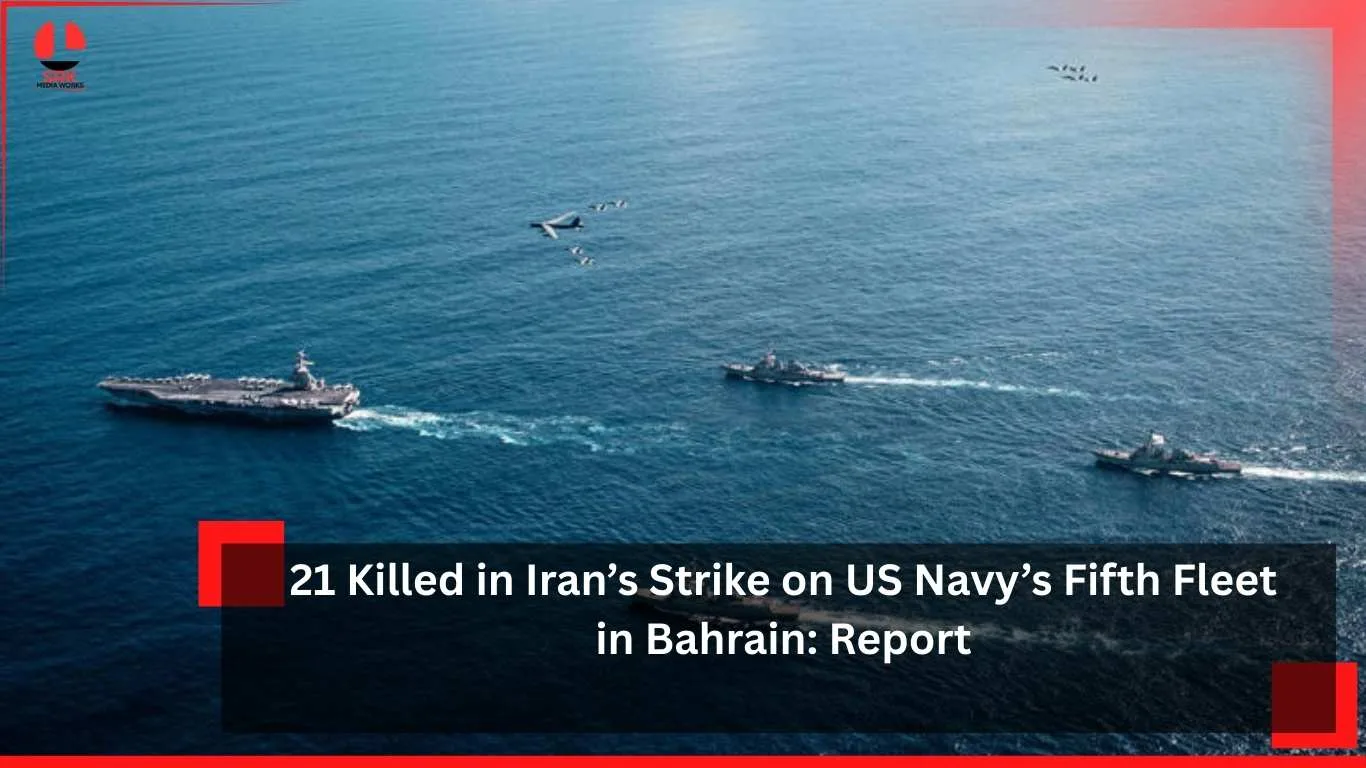
A shocking escalation in Middle East tensions has been reported, with Iran allegedly launching a strike on the US Navy’s Fifth Fleet stationed in Bahrain. According to initial reports, the attack resulted in the deaths of 21 personnel, marking one of the most serious confrontations between Iran and the United States in recent years. The incident has sent ripples across global markets, diplomatic circles, and defense establishments, raising fears of a wider conflict in the region.
The Incident
The US Navy’s Fifth Fleet, headquartered in Bahrain, plays a crucial role in safeguarding maritime security in the Persian Gulf, Red Sea, Arabian Sea, and parts of the Indian Ocean. Reports suggest that Iranian forces targeted the fleet in a coordinated strike, leading to significant casualties and damage.
While official confirmations are awaited, the scale of the attack has already triggered emergency meetings in Washington and allied capitals. Bahrain, a key US ally in the Gulf, has also heightened security measures across its territory.
Immediate Reactions
- United States: Senior defense officials condemned the strike, calling it an “unprovoked act of aggression.” Emergency consultations are underway to determine the next course of action.
- Iran: Iranian sources claim the strike was a retaliatory measure against US military presence in the region.
- Global Allies: NATO members and regional allies expressed concern, urging restraint while preparing contingency plans.
- Markets: Oil prices surged past $110 per barrel, while global equities dipped amid fears of prolonged instability.
Historical Context
The US-Iran relationship has been fraught with hostility for decades, with flashpoints including:
- The 1979 Iranian Revolution and subsequent hostage crisis.
- Naval clashes in the Persian Gulf during the 1980s.
- Tensions over Iran’s nuclear program.
- Recent confrontations involving drone strikes and maritime incidents.
This latest strike represents a dangerous escalation, potentially drawing the region into a broader conflict.
Comparative Analysis of Major US-Iran Confrontations
| Year | Event | Casualties | Global Impact |
|---|---|---|---|
| 1988 | Operation Praying Mantis | Dozens | Heightened Gulf tensions |
| 2019 | Downing of US drone | None | Oil price surge |
| 2020 | Killing of Qasem Soleimani | High-profile | Regional instability |
| 2026 | Strike on Fifth Fleet | 21 reported | Potential global crisis |
Pivot Analysis of Current Situation
| Dimension | US Response | Iran’s Position | Global Impact |
|---|---|---|---|
| Military Strategy | Retaliation under consideration | Retaliatory justification | Risk of escalation |
| Diplomatic Channels | Emergency consultations | Defiance | Strained negotiations |
| Economic Fallout | Oil surge, market dip | Limited domestic impact | Global inflationary pressure |
| Security Outlook | Heightened alert | Regional mobilization | Maritime instability |
Strategic Implications
- For the US: The strike challenges its military dominance in the Gulf and raises questions about troop safety.
- For Iran: It signals Tehran’s willingness to confront Washington directly, despite risks of retaliation.
- For the Region: Gulf states face heightened security threats, with potential spillover into neighboring territories.
- For Global Markets: Energy supply chains are vulnerable, with oil and gas prices likely to remain volatile.
Broader Concerns
The incident raises pressing questions:
- Will the US retaliate militarily, risking a full-scale conflict?
- Can diplomatic channels prevent escalation?
- How will global markets absorb the shock of prolonged instability?
- What role will regional players like Saudi Arabia, Israel, and the UAE play in shaping the response?
Conclusion
The reported strike by Iran on the US Navy’s Fifth Fleet in Bahrain, resulting in 21 deaths, marks a dangerous turning point in Middle East geopolitics. With tensions already high, this incident could reshape global security dynamics, energy markets, and diplomatic relations.
Whether the crisis escalates into a broader conflict or is contained through diplomacy will depend on the immediate responses of Washington, Tehran, and their allies. For now, the world watches anxiously as two adversaries stand on the brink of confrontation.
Disclaimer
This article is a journalistic analysis based on publicly available reports and expert commentary. It does not represent endorsement of any government, military action, or political stance. Readers are encouraged to verify facts independently and interpret the content as part of ongoing global developments.