









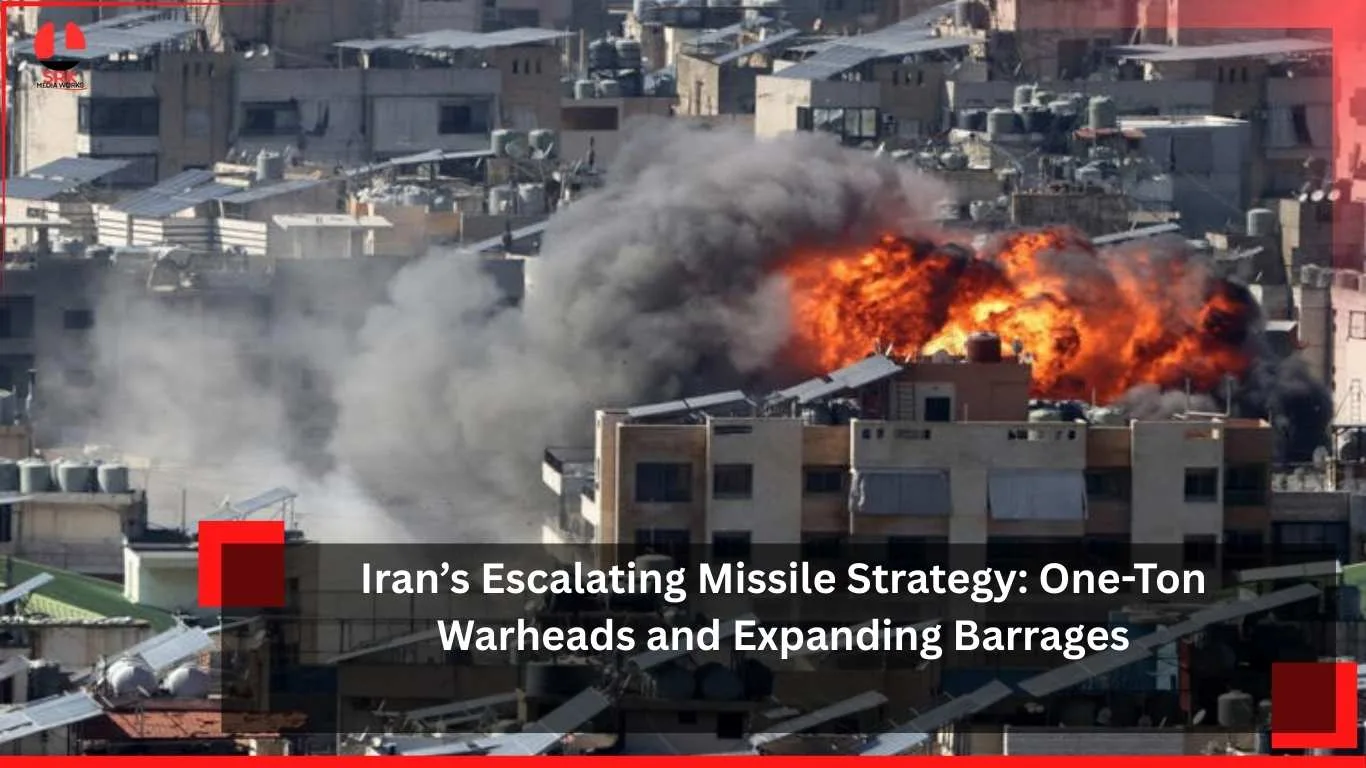
Iran has unveiled a new phase in its missile development program, signaling a dangerous shift in regional military dynamics. The announcement of one-ton warheads and larger, more coordinated barrages has raised alarm among global security analysts, who warn that Tehran’s evolving missile doctrine could destabilize the Middle East and complicate international defense strategies.
Iran’s Missile Evolution
Iran’s missile program has historically been a cornerstone of its defense and deterrence strategy. With limited access to advanced air power, Tehran has invested heavily in ballistic and cruise missile technology. Over the past decade, Iran has demonstrated increasing sophistication in missile design, range, and payload capacity.
The latest revelation of one-ton warheads represents a significant leap in destructive potential. Such warheads can devastate hardened military installations, critical infrastructure, and urban centers. Combined with mass-launch tactics, Iran’s missiles could overwhelm even advanced defense systems like Israel’s Iron Dome or U.S. Patriot batteries.
Strategic Implications
The introduction of heavier warheads and larger barrages signals a deliberate strategy to enhance deterrence and offensive capability. Iran’s leadership views missile power as both a defensive shield and a political tool to project strength.
Key Implications:
- Regional Balance of Power: Iran’s missile advancements could shift military calculations in the Middle East, particularly for Israel, Saudi Arabia, and Gulf states.
- Deterrence Against U.S. Presence: American bases in the region may face heightened vulnerability.
- Proxy Warfare: Iran could supply advanced missile technology to allied groups such as Hezbollah and the Houthis, amplifying regional instability.
- Global Security Concerns: The potential for missile proliferation raises fears of wider conflict escalation.
Comparative Analysis of Missile Capabilities
| Country | Notable Missile Systems | Payload Capacity | Strategic Focus |
|---|---|---|---|
| Iran | Shahab, Fateh, Khorramshahr | Up to 1 ton | Regional deterrence, proxy support |
| Israel | Jericho series | 750 kg – 1 ton | Strategic deterrence, defense |
| Saudi Arabia | DF-3, DF-21 (Chinese origin) | 2 tons | Strategic deterrence |
| United States | Minuteman III, Trident II | Multiple warheads | Global deterrence |
This comparison highlights Iran’s growing parity with regional rivals in terms of payload capacity, though the U.S. remains unmatched in global reach.
Tactical Shift: Bigger Barrages
Iran’s emphasis on larger barrages reflects a tactical evolution. Instead of relying on single, high-value strikes, Tehran is preparing to launch waves of missiles designed to saturate defenses.
Barrage Strategy Benefits:
- Overwhelming Defenses: Multiple launches can bypass interception systems.
- Psychological Impact: Mass barrages create fear and uncertainty.
- Operational Flexibility: Enables simultaneous targeting of military and civilian infrastructure.
Pivot Analysis: Regional Reactions
| Actor | Likely Response | Strategic Adjustment |
|---|---|---|
| Israel | Strengthen Iron Dome and Arrow systems | Increase preemptive strike capability |
| Saudi Arabia | Expand missile defense cooperation with U.S. | Invest in indigenous missile programs |
| United States | Reinforce regional bases | Enhance naval missile defense presence |
| European Union | Diplomatic pressure on Iran | Push for renewed arms control talks |
Historical Context
Iran’s missile program dates back to the Iran-Iraq War in the 1980s, when Tehran first sought ballistic capabilities to counter Saddam Hussein’s forces. Over time, sanctions and isolation pushed Iran to develop indigenous technology. Today, Iran boasts one of the largest missile arsenals in the Middle East, with ranges extending up to 2,000 kilometers.
Global Security Concerns
The unveiling of one-ton warheads raises fears of escalation beyond the Middle East. Analysts warn that Iran’s advancements could trigger:
- Arms Race: Regional rivals may accelerate missile development.
- Nuclear Linkage: Heavier warheads could eventually be adapted for nuclear delivery.
- Proliferation Risks: Iran’s allies may gain access to advanced missile systems.
Diplomatic Dimensions
Iran’s missile strategy complicates ongoing diplomatic efforts. Western powers have long sought to limit Tehran’s missile program through sanctions and negotiations. However, Iran insists its missiles are non-negotiable, framing them as essential for national defense.
Renewed talks may focus on missile limitations, but Tehran’s latest advancements suggest a hardened stance.
Conclusion
Iran’s unveiling of one-ton warheads and larger barrages marks a dangerous escalation in its missile strategy. This development threatens to destabilize the Middle East, challenge U.S. and allied defenses, and complicate global security efforts. As regional actors respond with military and diplomatic adjustments, the risk of miscalculation and conflict grows.
Disclaimer
This article is based on publicly available information and expert analysis. It is intended for informational purposes only and does not represent official intelligence or government policy. Readers should note that military developments are subject to change, and interpretations may vary across sources.