

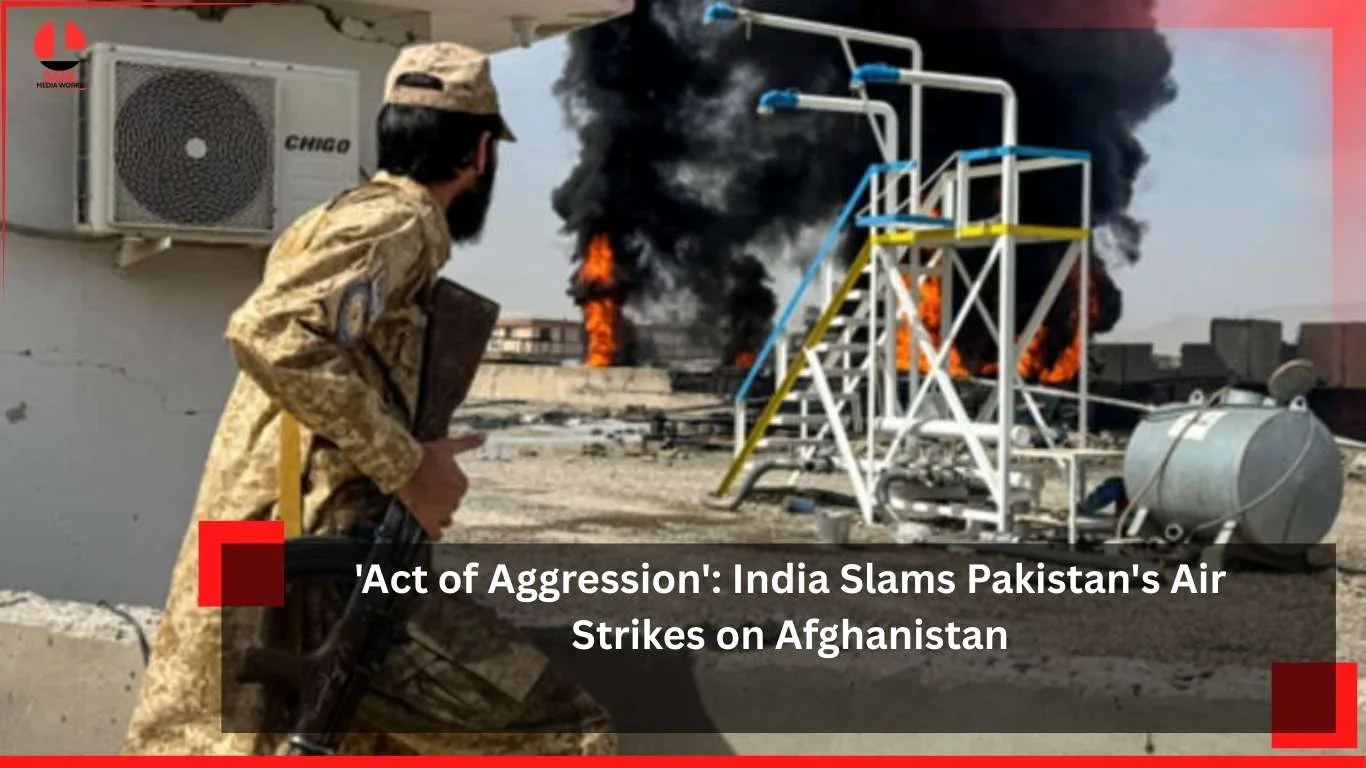
India has strongly condemned Pakistan’s recent air strikes on Afghan territory, labeling them an “act of aggression” that destabilizes regional peace and security. The strikes, which Pakistan claims were aimed at militant hideouts, have drawn sharp criticism from New Delhi and sparked fresh debate about the fragile balance of power in South Asia.
Background of the Strikes
Pakistan announced that its forces carried out air strikes targeting alleged militant camps inside Afghanistan. Officials in Islamabad argued that the operation was necessary to protect national security.
- Target: Claimed militant hideouts near the border.
- Pakistan’s Justification: Defensive action against cross-border terrorism.
- Afghanistan’s Response: Condemned the violation of sovereignty.
- India’s Position: Called the strikes an “act of aggression” and a threat to regional stability.
India’s Reaction
India’s Ministry of External Affairs issued a strong statement criticizing Pakistan’s actions.
- Violation of Sovereignty: India emphasized that Afghanistan’s territorial integrity must be respected.
- Regional Stability: Warned that such strikes could escalate tensions across South Asia.
- Diplomatic Pressure: Urged the international community to hold Pakistan accountable.
Comparative Analysis of Stakeholder Positions
| Stakeholder | Position on Strikes | Key Concerns |
|---|---|---|
| India | Act of aggression | Regional peace, sovereignty |
| Pakistan | Defensive operation | National security, counter-terrorism |
| Afghanistan | Violation of sovereignty | Civilian safety, territorial integrity |
| International Community | Calls for restraint | Prevent escalation, maintain stability |
Historical Context
Cross-border tensions between Pakistan and Afghanistan are not new.
- Durand Line Disputes: Long-standing disagreements over border demarcation.
- Militant Activity: Both countries accuse each other of harboring militants.
- India’s Role: India has historically supported Afghanistan’s sovereignty and development.
Pivot Analysis of Strategic Approaches
| Strategy Focus | Pakistan’s Approach | India’s Approach |
|---|---|---|
| Security | Air strikes to neutralize threats | Condemn strikes, call for diplomacy |
| Diplomacy | Justify actions internationally | Pressure global community against aggression |
| Regional Stability | Risk escalation | Advocate for peace and dialogue |
| Sovereignty | Downplay violation | Highlight breach of international norms |
Regional Security Implications
The strikes have heightened concerns about broader instability in South Asia.
- Afghanistan: Faces renewed challenges to sovereignty.
- India-Pakistan Relations: Already tense, now further strained.
- China and Russia: Watching closely, given their regional interests.
- US and Western Allies: Concerned about escalation affecting counter-terrorism efforts.
Economic and Social Dimensions
Military actions in the region often ripple into economic and social spheres.
- Trade Disruption: Cross-border tensions affect regional trade routes.
- Civilian Impact: Fear and displacement in border areas.
- Global Markets: Oil and commodity prices react to instability in South Asia.
Public and Media Reaction
The strikes have sparked intense debate across the region.
- Indian Media: Strongly critical of Pakistan’s actions.
- Pakistani Media: Defends the strikes as necessary for security.
- Afghan Citizens: Express anger and fear over violation of sovereignty.
- Global Media: Highlights risks of escalation and calls for restraint.
Conclusion
India’s condemnation of Pakistan’s air strikes on Afghanistan as an “act of aggression” underscores the fragile state of regional security. While Pakistan insists the strikes were defensive, Afghanistan and India view them as violations of sovereignty that could destabilize South Asia.
The incident highlights the urgent need for dialogue and diplomatic engagement to prevent further escalation. The international community faces the challenge of balancing counter-terrorism efforts with respect for sovereignty and regional peace.
Disclaimer
This article is based on publicly available information and statements from political stakeholders. It does not confirm the accuracy of military claims or endorse any position. Readers are encouraged to follow official updates and independent reporting for verified details.