

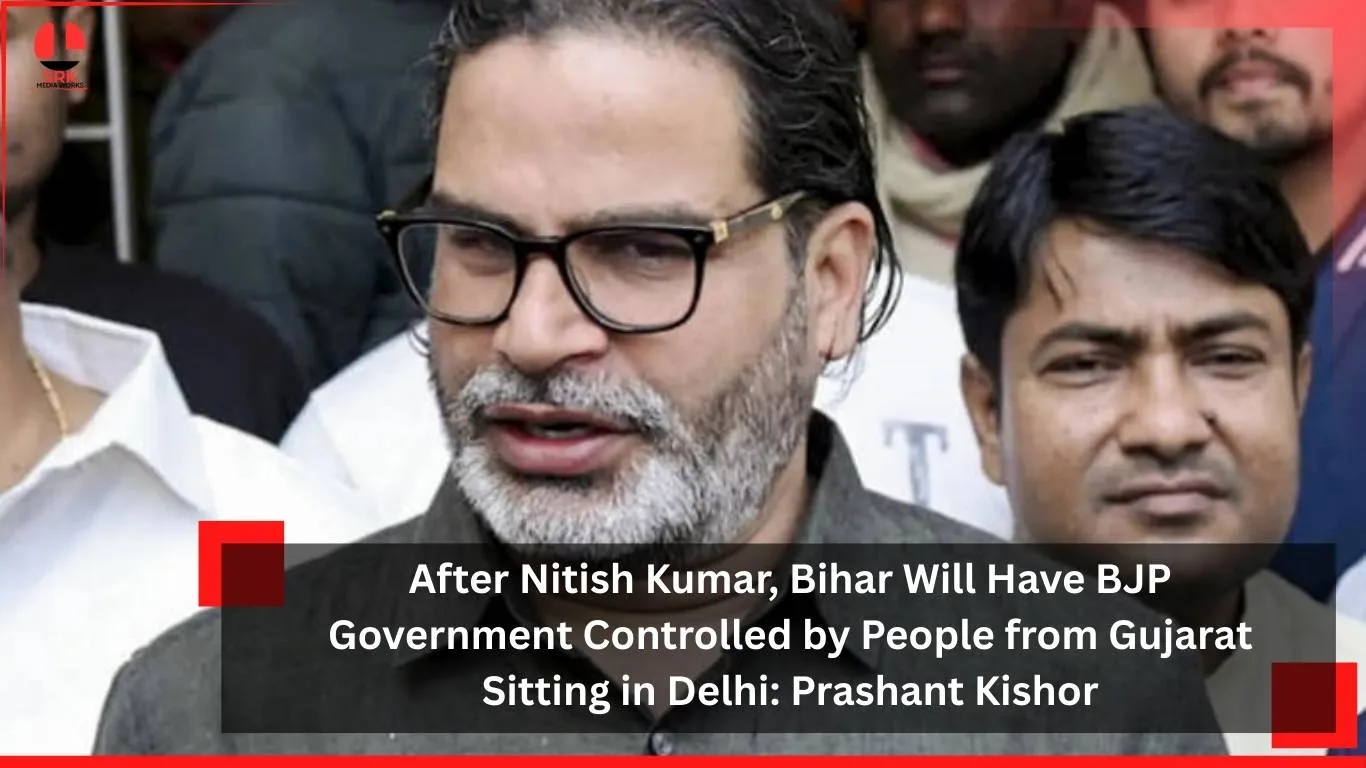
Political strategist-turned-activist Prashant Kishor has stirred debate in Bihar’s political circles with his sharp remarks about the state’s future governance. He claimed that after Chief Minister Nitish Kumar, Bihar will eventually be governed by the Bharatiya Janata Party (BJP), but the real control will lie with leaders from Gujarat sitting in Delhi. His statement has sparked discussions about regional autonomy, centralization of power, and the role of national leadership in state politics.
Kishor’s Statement
Prashant Kishor, known for his outspoken views and political foresight, made the following points:
- End of Nitish Era: He suggested that Nitish Kumar’s political chapter in Bihar is nearing its conclusion.
- BJP’s Rise: Predicted that BJP will dominate Bihar’s political landscape after Kumar.
- Central Control: Asserted that the state government will be controlled by leaders from Gujarat, symbolizing Delhi’s influence over Bihar.
- Regional Autonomy Concerns: Warned that Bihar’s governance may lose its local identity under centralized control.
Political Context
Bihar has long been a battleground of coalition politics, with Nitish Kumar playing a pivotal role in shaping alliances.
- Nitish Kumar’s Legacy: Known for his governance reforms and shifting alliances between BJP and opposition parties.
- BJP’s Expansion: The party has steadily increased its influence in Bihar, especially among urban and youth voters.
- Centralization Trend: Kishor’s remarks highlight concerns about states losing autonomy to national leadership.
Comparative Analysis of Stakeholder Positions
| Stakeholder | Position on Kishor’s Claim | Key Concerns |
|---|---|---|
| Prashant Kishor | Warns of central control | Regional autonomy, Bihar’s identity |
| BJP Leaders | Emphasize national unity | Strong governance, integration |
| Nitish Kumar’s Supporters | Defend his legacy | Fear of losing local leadership |
| Citizens of Bihar | Divided opinions | Development vs. autonomy |
| Political Analysts | See Kishor’s remarks as strategic | Debate on federalism and centralization |
Historical Context of Bihar Politics
Bihar’s political journey has been marked by strong regional leaders and shifting alliances.
- Post-Independence: Dominated by Congress for decades.
- 1990s: Rise of regional parties like RJD and JD(U).
- 2005 Onwards: Nitish Kumar’s governance reforms reshaped Bihar’s image.
- Recent Years: BJP’s growing influence has altered the balance of power.
Pivot Analysis of Governance Models
| Strategy Focus | Bihar Under Nitish Kumar | Bihar Under BJP (Projected) |
|---|---|---|
| Leadership | Regional autonomy, local identity | Centralized control, national alignment |
| Development | Focus on infrastructure, education | National schemes, integration with central policies |
| Political Alliances | Coalition-driven | Single-party dominance |
| Public Perception | Strong local leader | National party influence |
Public Reaction
Kishor’s remarks have triggered mixed reactions among citizens and political observers.
- Supporters of Kishor: Agree that Bihar risks losing its local identity.
- BJP Supporters: Welcome the idea of stronger national integration.
- Neutral Voices: Stress the importance of balancing local governance with national policies.
Media Coverage
National and regional media have widely reported Kishor’s statement.
- Regional Outlets: Focus on the implications for Bihar’s autonomy.
- National Media: Highlight BJP’s growing dominance and centralization.
- Social Media: Citizens debate whether Bihar needs stronger local leadership or national alignment.
Economic and Social Implications
The debate is not just political—it has economic and social dimensions.
- Development Programs: Centralized governance could bring more national schemes to Bihar.
- Local Identity: Risk of diminishing regional culture and autonomy.
- Youth Aspirations: Many young voters favor integration with national policies for better opportunities.
Conclusion
Prashant Kishor’s bold statement that Bihar will eventually have a BJP government controlled by leaders from Gujarat sitting in Delhi has reignited debates about federalism, regional autonomy, and the future of state politics. While BJP’s rise in Bihar seems inevitable to many analysts, the question remains whether governance will retain its local identity or be overshadowed by central control.
The outcome will depend on how citizens perceive the balance between development and autonomy, and whether Bihar’s political leadership can adapt to the changing dynamics of Indian federalism.
Disclaimer
This article is based on publicly available information and statements from political stakeholders. It does not endorse any political party or confirm the accuracy of claims. Readers are encouraged to follow official updates and independent reporting for verified details.