


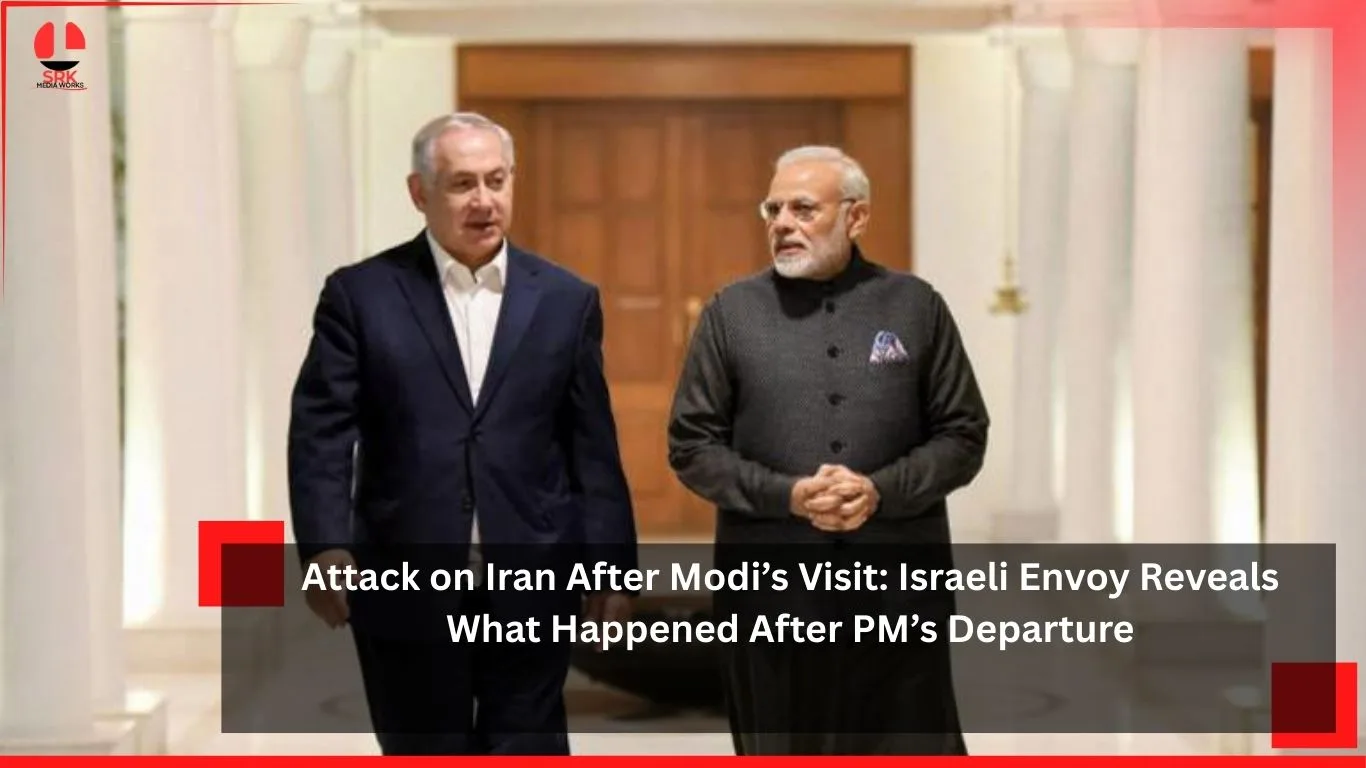
In a dramatic revelation, the Israeli envoy has disclosed details of an attack on Iran that reportedly took place shortly after Indian Prime Minister Narendra Modi concluded his official visit. The envoy’s statement has added a new dimension to the already tense geopolitical situation in the Middle East, raising questions about timing, coordination, and the broader implications for India’s diplomatic outreach in the region.
Background of Modi’s Visit
Prime Minister Modi’s visit to the Middle East was aimed at strengthening India’s strategic partnerships, enhancing energy cooperation, and promoting peace through dialogue. His meetings with regional leaders focused on trade, security, and counterterrorism. The visit was seen as a balancing act, with India maintaining ties with both Israel and Iran despite their adversarial relationship.
However, the Israeli envoy’s revelation that an attack on Iran occurred immediately after Modi’s departure has fueled speculation about whether the timing was coincidental or strategically planned.
Details of the Attack
According to the envoy:
- Targeted Sites: Iranian military installations and suspected weapons facilities were struck.
- Method: Precision airstrikes reportedly carried out by Israeli forces.
- Timing: The attack occurred hours after Modi left the region, ensuring India was not directly implicated.
- Objective: To weaken Iran’s military infrastructure and send a message of deterrence.
India’s Position
India has not commented directly on the attack but continues to emphasize its policy of neutrality and strategic autonomy. Key points include:
- Diplomatic Balance: India maintains strong ties with both Israel and Iran.
- Energy Security: Iran remains a crucial supplier of oil, while Israel is a partner in technology and defense.
- Peace Advocacy: India consistently calls for dialogue and de-escalation in the Middle East.
Comparative Analysis of Stakeholder Positions
| Stakeholder | Position | Implication |
|---|---|---|
| Israel | Justifies attack as self-defense | Escalates tensions with Iran |
| Iran | Condemns strikes as aggression | May retaliate, increasing instability |
| India | Maintains neutrality | Protects diplomatic balance |
| Global Powers | Call for restraint | Fear of wider conflict |
Pivot Analysis of Global Impact
| Factor | Positive for Israel | Negative for Iran | Neutral/Global Impact |
|---|---|---|---|
| Security | Weakens Iranian military assets | Civilian risk and retaliation | Regional instability |
| Diplomacy | Reinforces Israel’s deterrence | Strains Iran’s global ties | India caught in balancing act |
| Energy | Secures Israeli interests | Threatens oil supply routes | Global oil prices volatile |
| Public Opinion | Domestic support in Israel | Anger in Iran | International concern |
Historical Context
Israel and Iran have been adversaries for decades, with tensions escalating over Iran’s nuclear program and support for proxy groups. India, meanwhile, has pursued a careful balancing act, engaging with both nations for strategic and economic reasons. Modi’s visit was part of this broader effort to maintain equilibrium, but the timing of the attack has complicated perceptions of India’s role.
Possible Scenarios
- Escalation: Iran may retaliate, leading to further conflict in the region.
- Diplomatic Fallout: India may face pressure to clarify its position.
- Energy Crisis: Disruptions in oil supply could impact global markets.
- Mediation Role: India could leverage its ties to promote dialogue between Israel and Iran.
Public and Political Reactions
- Israel: Celebrated the strikes as a necessary measure for national security.
- Iran: Condemned the attack, vowing to respond.
- India: Maintained silence, focusing on its diplomatic agenda.
- Global Community: Expressed concern about escalating tensions and urged restraint.
Conclusion
The Israeli envoy’s revelation about an attack on Iran following Prime Minister Modi’s visit has added a new layer of complexity to Middle Eastern geopolitics. While India remains committed to neutrality, the timing of the strikes raises questions about coordination and strategic messaging. As tensions rise, India’s role as a potential mediator may become increasingly important in preventing further escalation.
Disclaimer
This article is based on political statements and speculative analysis regarding the Israeli envoy’s revelation of an attack on Iran after Prime Minister Modi’s visit. The details of the incident remain unverified, and interpretations are subject to change as new information emerges. The content is intended for informational and analytical purposes only.