



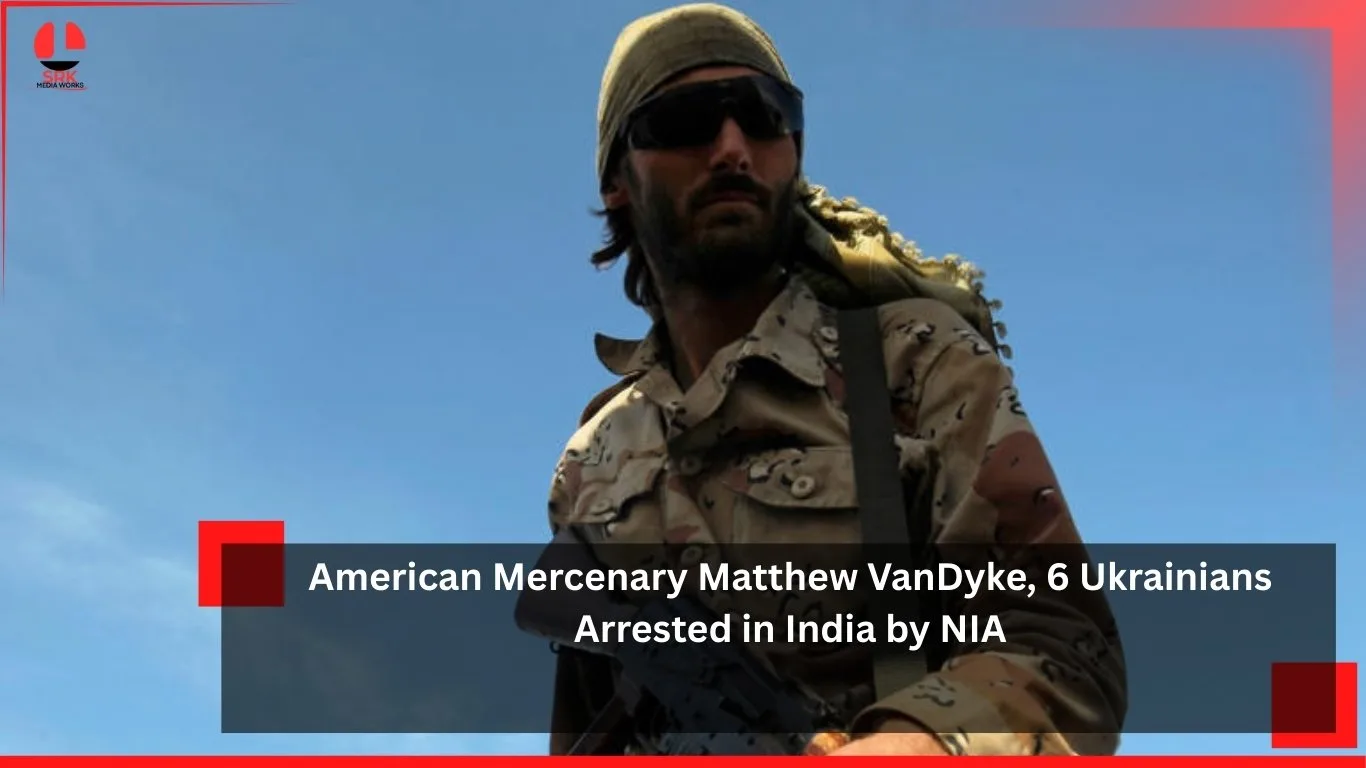
A major security development has unfolded in India as the National Investigation Agency (NIA) confirmed the arrest of American national Matthew VanDyke along with six Ukrainian citizens. The arrests have sparked widespread attention due to the alleged involvement of foreign nationals in activities linked to conflict zones and the implications for India’s national security.
Background of the Arrests
Matthew VanDyke, known internationally for his past involvement in foreign conflicts, was detained alongside six Ukrainians during a coordinated operation by the NIA. Authorities suspect that the group may have been engaged in activities that violated Indian law, with possible connections to mercenary operations or recruitment networks.
The arrests highlight India’s growing vigilance against foreign interference and underline the seriousness with which the government is treating potential threats to national security.
Why This Matters
The detention of foreign nationals in India is not just a legal matter—it carries diplomatic, security, and geopolitical implications.
- National Security: India is determined to prevent its territory from being used for activities linked to international conflicts.
- Diplomatic Relations: The arrests may affect India’s ties with the United States and Ukraine, requiring careful handling.
- Global Context: The incident reflects the increasing globalization of conflict, where mercenaries and foreign fighters cross borders.
Key Highlights
| Aspect | Details |
|---|---|
| Arrested Individuals | Matthew VanDyke (American), 6 Ukrainians |
| Agency Involved | National Investigation Agency (NIA) |
| Location | India |
| Allegations | Possible mercenary activity, recruitment networks |
| Impact | National security, diplomatic relations |
Comparative Analysis of Similar Cases
| Year | Country | Individuals Arrested | Allegations | Outcome |
|---|---|---|---|---|
| 2019 | India | Foreign nationals | Terror links | Deportation |
| 2021 | UAE | Mercenaries | Recruitment for conflicts | Legal prosecution |
| 2023 | Turkey | Foreign fighters | Cross-border operations | Trials conducted |
| 2026 | India | American + Ukrainians | Mercenary activity | NIA investigation ongoing |
This comparison shows how nations worldwide are increasingly cracking down on foreign fighters and mercenary networks.
Public Reactions
- Supporters of Strong Security: Applauded the NIA for acting decisively to protect India’s sovereignty.
- Critics: Raised concerns about diplomatic fallout and the need for transparent investigations.
- Neutral Analysts: Emphasized the importance of balancing national security with international cooperation.
Analytical Breakdown of Stakeholders
| Stakeholder | Position | Impact |
|---|---|---|
| NIA | Conducted arrests | Reinforces India’s security framework |
| Matthew VanDyke | Detained | Faces legal scrutiny |
| Ukrainian Nationals | Detained | Diplomatic implications |
| Indian Government | Oversees investigation | Balances security with diplomacy |
| International Community | Observes closely | Potential diplomatic consequences |
Broader Impact
The arrests underscore India’s growing role in global security enforcement. By detaining foreign nationals suspected of mercenary activity, India sends a strong message about its zero-tolerance policy toward unlawful operations on its soil.
This incident may also influence global discussions on mercenary networks, recruitment practices, and the need for international cooperation to prevent cross-border threats.
Conclusion
The arrest of Matthew VanDyke and six Ukrainians by the NIA marks a significant moment in India’s security landscape. It highlights the country’s determination to safeguard its sovereignty, prevent foreign interference, and uphold the rule of law.
As investigations continue, the case will remain a focal point of public and diplomatic interest, reflecting both the challenges of globalized conflict and the importance of strong national security measures.
Disclaimer
This article is intended for informational purposes only and does not constitute legal or diplomatic advice. The content is based on publicly available information and analysis at the time of writing. Readers are encouraged to consider multiple perspectives before forming conclusions on sensitive security matters.