



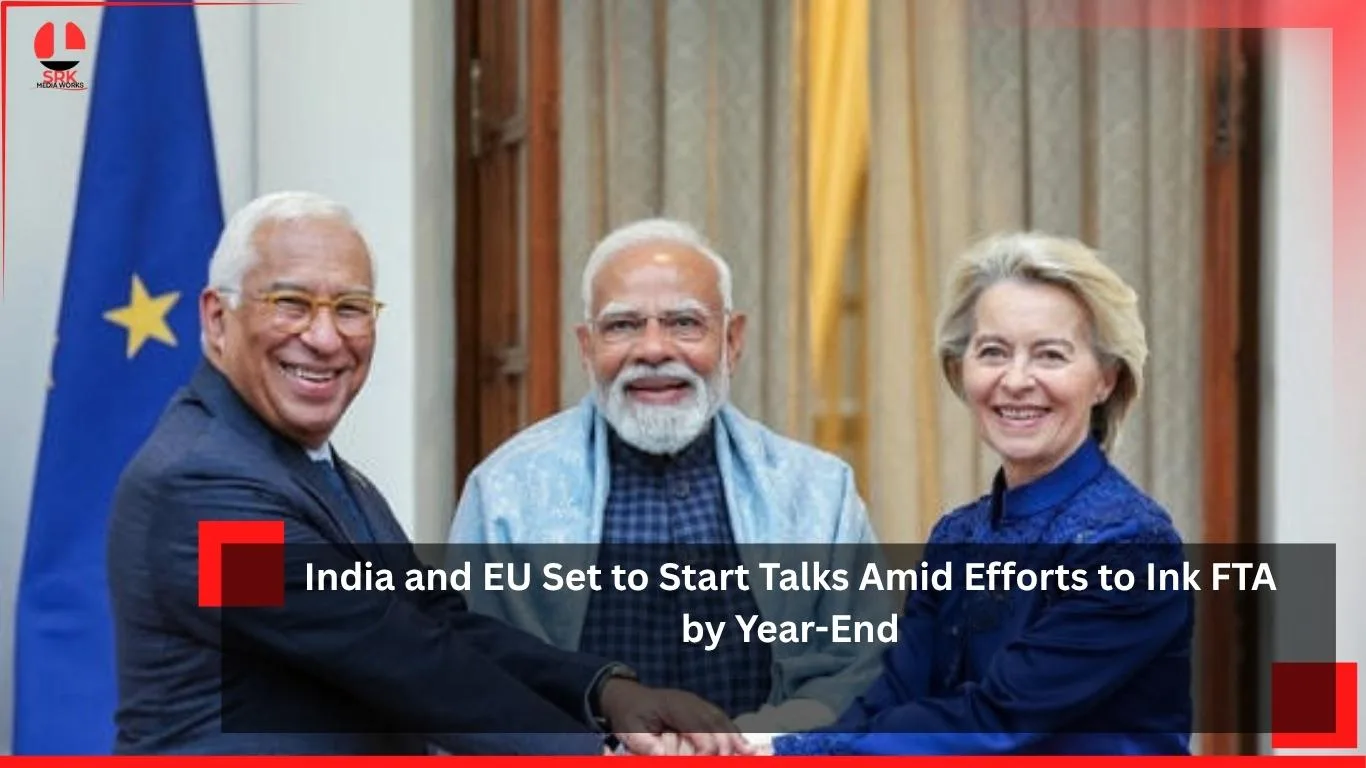
India and the European Union (EU) are preparing for a series of high-level negotiations aimed at finalizing a Free Trade Agreement (FTA) by the end of 2026. The talks will cover trade, technology, security, and Indo-Pacific cooperation, with both sides eager to strengthen economic ties and reduce barriers to commerce.
Background of the India–EU FTA
- Timeline: India hopes to conclude the FTA with the EU by November 2026.
- Scope: The agreement will address tariffs, market access, investment rules, and digital trade.
- Strategic Importance: The EU is India’s third-largest trading partner, while India is among the EU’s fastest-growing markets.
- Recent Engagements: The January 2026 India–EU Summit laid the groundwork for accelerated negotiations.
Key Areas of Negotiation
- Trade and Tariffs
- Reduction of duties on goods such as textiles, automobiles, and agricultural products.
- Greater access for Indian IT services in the EU market.
- Technology Cooperation
- Expansion of the India–EU Trade and Technology Council.
- Collaboration on AI, cybersecurity, and green technologies.
- Security and Indo-Pacific Strategy
- Joint efforts to ensure maritime security in the Indo-Pacific.
- Enhanced intelligence sharing and defense cooperation.
- Sustainability and Climate
- Commitments to green energy and carbon reduction.
- Cooperation on renewable energy projects.
Comparative Analysis of India–EU Trade
| Aspect | India’s Position | EU’s Position | Expected Outcome |
|---|---|---|---|
| Tariffs on Goods | Wants lower tariffs on textiles, pharma | Seeks reduced duties on automobiles, wines | Mutual tariff reduction |
| Services Market Access | Push for IT and digital services | Seeks investment protections | Balanced concessions |
| Technology Cooperation | Focus on AI, cybersecurity | Focus on green tech, data rules | Joint innovation projects |
| Climate Commitments | Renewable energy expansion | Carbon neutrality goals | Shared sustainability roadmap |
Public and Analyst Perspectives
- Economic Analysts: See the FTA as a game-changer for India’s exports and EU’s access to a large consumer base.
- Political Analysts: Stress the importance of balancing trade with geopolitical cooperation in the Indo-Pacific.
- Public Sentiment: Indian businesses are optimistic about expanded EU market access, while European firms anticipate growth in India’s consumer sector.
Sentiment Breakdown
| Sentiment | Percentage |
|---|---|
| Optimism about FTA benefits | 60% |
| Concern about negotiation delays | 25% |
| Neutral/Wait-and-see | 15% |
Broader Implications
- For India: Strengthened global trade position, diversification beyond US and China.
- For EU: Access to India’s fast-growing market and strategic Indo-Pacific partnership.
- For Global Trade: Signals a shift toward multipolar trade alliances amid geopolitical tensions.
Long-Term Outlook
If concluded by year-end, the India–EU FTA could:
- Boost bilateral trade by over $100 billion annually.
- Create new opportunities in technology, renewable energy, and defense.
- Strengthen India’s role as a global economic hub while reinforcing EU’s Indo-Pacific strategy.
Conclusion
India and the EU’s push to finalize an FTA by November 2026 reflects a shared ambition to deepen economic and strategic ties. With negotiations spanning trade, technology, security, and sustainability, the agreement could reshape global commerce and geopolitics. Success will depend on balancing concessions and ensuring timely progress in talks.
Disclaimer
This article is based on publicly available information and analytical perspectives. It does not claim to provide verified government data or official negotiation records. Readers are encouraged to follow updates from credible authorities for confirmed details. The content is intended for informational and discussion purposes only.