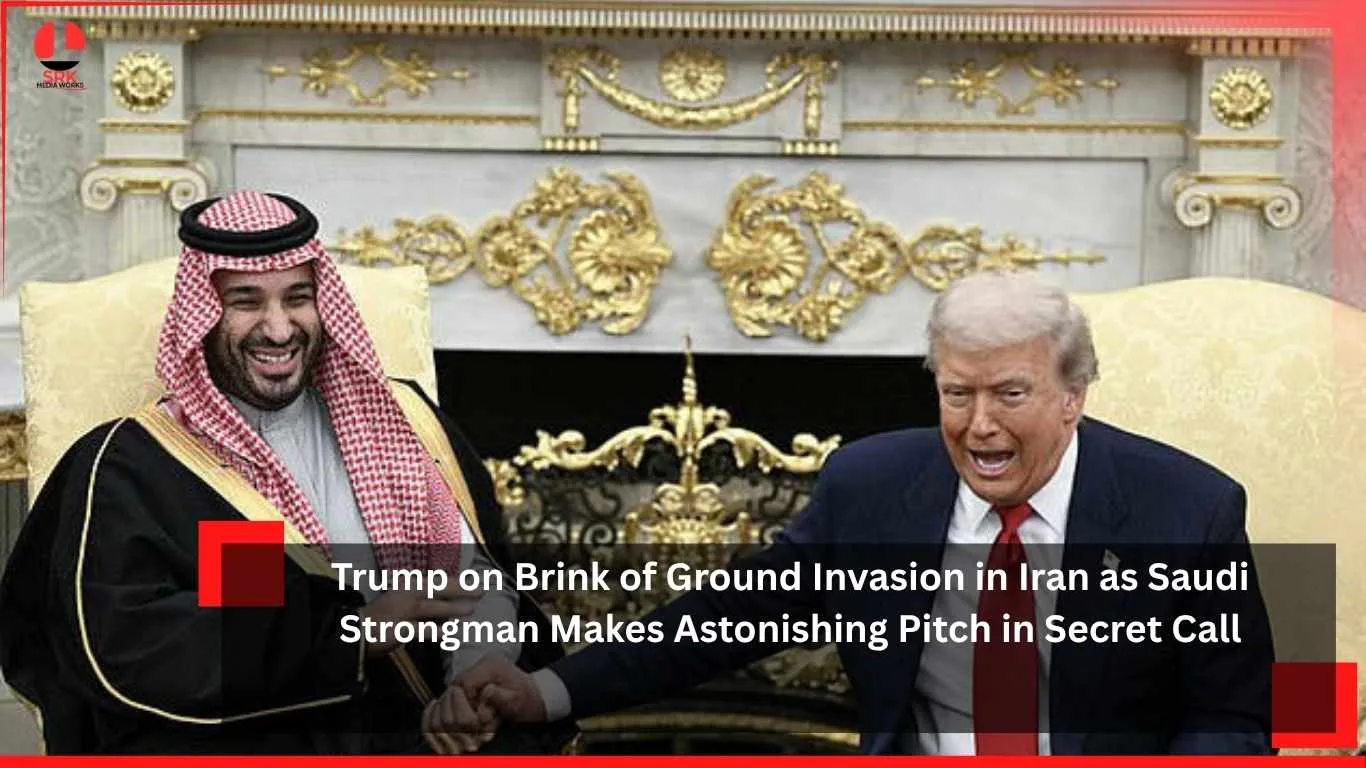
The geopolitical landscape in West Asia has entered a dangerous new phase, with reports suggesting that U.S. President Donald Trump is on the brink of authorizing a ground invasion in Iran. The development comes after a secret call in which a Saudi strongman allegedly made an astonishing pitch, urging Washington to escalate military operations. This revelation has sparked intense debate among analysts, who warn that such a move could destabilize the region and trigger global consequences.
Context of the Secret Call
According to insiders, the Saudi strongman’s pitch centered on the idea that a ground invasion would weaken Iran’s regional influence, disrupt its proxy networks, and reassert U.S. dominance in the Middle East. The timing of the call is significant, as tensions have already escalated following drone strikes, naval confrontations, and cyber warfare incidents.
Why a Ground Invasion Is Being Considered
- Strategic Pressure: The U.S. seeks to dismantle Iran’s military infrastructure and limit its nuclear ambitions.
- Regional Alliances: Saudi Arabia and other Gulf states view Iran as a direct threat to their security.
- Energy Security: Control over key oil routes remains a priority for Washington and Riyadh.
- Symbolic Power: A ground invasion would signal U.S. resolve, though at immense cost.
Comparative Analysis of Military Options
| Option | U.S. Strategy | Risks | Regional Impact |
|---|---|---|---|
| Air Strikes | Precision attacks | Civilian casualties, limited effect | Short-term disruption |
| Naval Blockade | Control sea routes | Escalation with Iran’s navy | Trade instability |
| Cyber Warfare | Target infrastructure | Retaliation risk | Disruption of systems |
| Ground Invasion | Direct military presence | High casualties, long-term conflict | Regional destabilization |
This table highlights why a ground invasion is considered the most aggressive option, but also the most dangerous.
Pivot in U.S.-Saudi Relations
The secret call underscores a pivot in U.S.-Saudi relations:
- From Diplomacy to Militarization: Saudi Arabia is pushing for direct military engagement.
- From Proxy Conflicts to Direct War: The pitch suggests bypassing indirect strategies.
- From Regional Balance to Escalation: A ground invasion risks tipping the balance toward chaos.
Sentiment Analysis
| Group | Sentiment Toward Ground Invasion | Likely Response |
|---|---|---|
| U.S. Military | Divided, cautious | Warn of high costs |
| Saudi Leadership | Supportive, aggressive | Push for escalation |
| Iranian Government | Defiant, resistant | Mobilize defenses |
| Global Observers | Alarmed | Call for restraint |
Lessons from Past Conflicts
- Iraq War (2003): Ground invasion led to prolonged insurgency and instability.
- Afghanistan War (2001–2021): Demonstrated the limits of military superiority in hostile terrain.
- Lebanon Conflict (2006): Showed how asymmetric warfare can challenge conventional forces.
These examples highlight the risks of repeating history with another ground invasion in Iran.
Broader Implications
- Regional Instability: A ground invasion could ignite conflicts across Iraq, Syria, and Lebanon.
- Global Energy Crisis: Oil prices may skyrocket due to disruptions in supply routes.
- Diplomatic Fallout: Allies in Europe may distance themselves from U.S. actions.
- Humanitarian Disaster: Civilian populations would face displacement and insecurity.
Conclusion
Trump’s brinkmanship in Iran, coupled with the Saudi strongman’s astonishing pitch, has brought the region to the edge of a potential ground war. While supporters argue it could weaken Iran’s influence, critics warn of catastrophic consequences. The terrifying truth is that a ground invasion would not only reshape West Asia but also reverberate across the global economy and diplomatic order.
Disclaimer
This article is intended for informational purposes only and does not represent official government policy or military analysis. The content is based on general geopolitical observations and public reports. Readers should note that claims made by political figures or insiders are subject to interpretation and verification.