





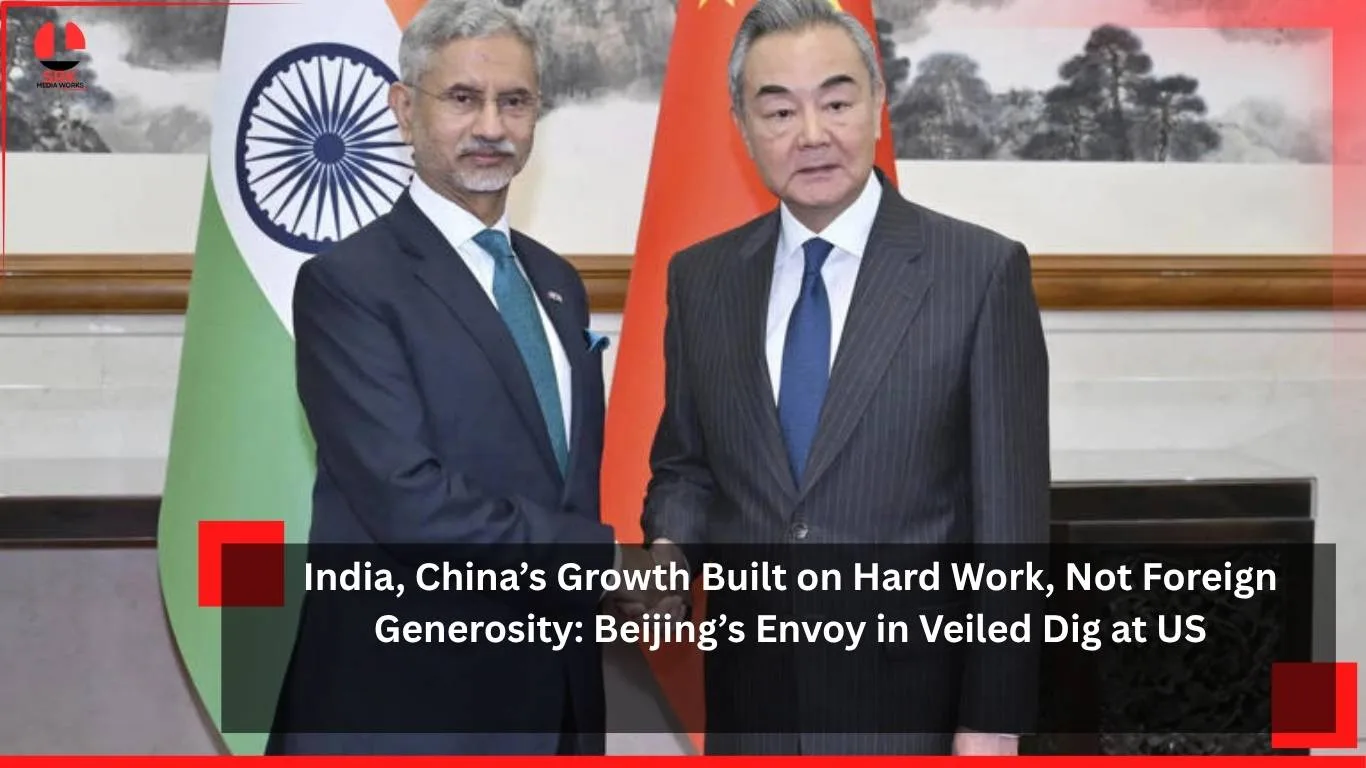
In a pointed statement, Beijing’s envoy has asserted that the economic rise of India and China is the result of sustained hard work, innovation, and domestic reforms, rather than foreign generosity. The remark, widely interpreted as a veiled dig at the United States, underscores the growing confidence of Asian economies in shaping global narratives about development and self-reliance.
Background of the Statement
The envoy’s comments came during a high-level forum on Asian economic cooperation. While praising India and China for their rapid growth trajectories, the envoy emphasized that neither country’s success was a product of external charity. Instead, he highlighted the role of domestic reforms, industrial expansion, and technological innovation.
Observers noted that the remarks were aimed at countering narratives that attribute Asia’s rise to Western aid, investment, or policy concessions.
Key Highlights of the Envoy’s Remarks
- Hard Work as the Foundation: India and China’s growth was credited to decades of effort in building industries, infrastructure, and human capital.
- Innovation and Reform: Both nations were praised for embracing reforms and investing in technology.
- Self-Reliance: The envoy stressed that Asian economies are increasingly charting independent paths.
- Veiled Dig at US: By dismissing “foreign generosity,” the envoy indirectly challenged U.S. claims of shaping global development.
Comparative Analysis of Growth Narratives
| Country/Region | Narrative Promoted | Envoy’s Counter-Narrative | Implication |
|---|---|---|---|
| United States | Asia benefited from Western aid/investment | Growth built on hard work and reforms | Challenges US-centric narrative |
| India | Rapid growth through reforms and IT boom | Success due to domestic innovation | Reinforces self-reliance image |
| China | Manufacturing and infrastructure-led rise | Driven by long-term planning | Strengthens Beijing’s global confidence |
| Global South | Dependent on external support | Can achieve growth independently | Encourages self-determination |
Pivot Analysis: Asian Growth vs Western Narratives
| Asian Growth Factor | Western Narrative Challenged | Expected Outcome |
|---|---|---|
| Hard work and reforms | Aid-driven development | Recognition of domestic achievements |
| Technological innovation | Reliance on foreign expertise | Strengthened global competitiveness |
| Infrastructure expansion | External funding dependency | Assertion of self-sufficiency |
| Policy independence | Western policy influence | Greater autonomy in global affairs |
Implications of the Statement
- Diplomatic Messaging: The envoy’s remarks signal Beijing’s intent to reshape global perceptions of Asian development.
- India-China Parallel: By grouping India and China together, the envoy highlights shared achievements despite political differences.
- US-China Tensions: The veiled dig at the U.S. reflects ongoing rivalry over influence in global economic narratives.
- Global South Confidence: The statement may inspire other developing nations to emphasize self-reliance.
Reactions
- India: Analysts in New Delhi welcomed the recognition of India’s reforms and innovation, though some noted the political undertones.
- China: Domestic media amplified the envoy’s remarks as proof of Asia’s growing strength.
- United States: While no official response was issued, observers noted that the comments challenge Washington’s narrative of global leadership.
- Global Community: Economists highlighted the importance of acknowledging domestic factors in development rather than attributing success to external aid.
Historical Context
India and China’s rise has often been framed in Western discourse as benefiting from globalization and foreign investment. However, both nations have consistently emphasized their own reforms, industrial policies, and innovation ecosystems. The envoy’s remarks reflect a broader effort to reclaim the narrative of self-driven growth.
Challenges Ahead
- Balancing Narratives: India and China must continue to assert their achievements while managing global perceptions.
- Sustaining Growth: Hard work and reforms must be maintained to ensure long-term success.
- Diplomatic Sensitivity: Statements challenging U.S. narratives may intensify geopolitical tensions.
- Global Cooperation: Despite self-reliance, collaboration remains essential for addressing global challenges.
Conclusion
Beijing’s envoy’s assertion that India and China’s growth is built on hard work, not foreign generosity, marks a significant diplomatic statement. It challenges U.S.-centric narratives and reinforces the image of Asian economies as self-reliant and innovative. As India and China continue to shape global economic trends, the emphasis on domestic achievement over external aid is likely to resonate across the Global South.
Disclaimer
This article is based on publicly available reports and expert commentary. It does not represent official government statements or insider accounts. Readers should interpret the content as journalistic analysis, recognizing that diplomatic narratives are fluid and subject to change.