

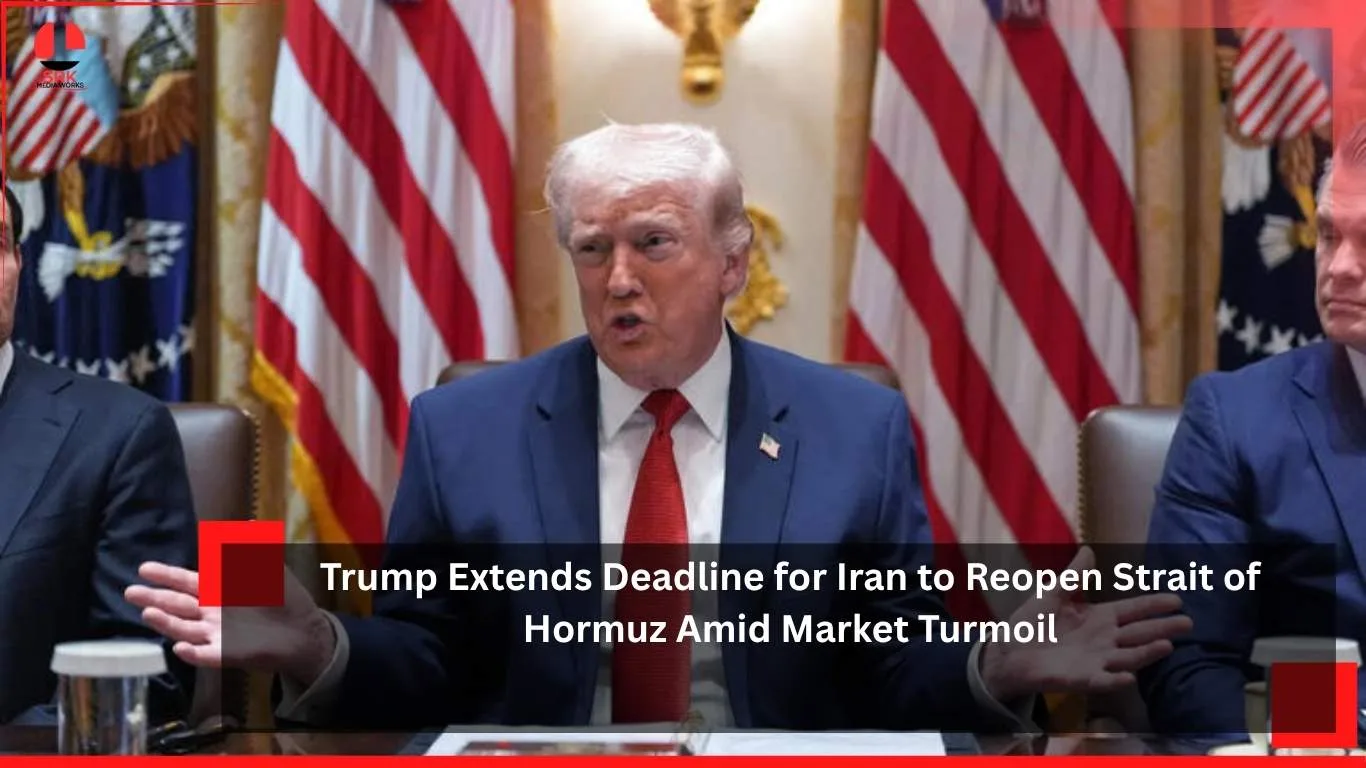
In a significant development, U.S. President Donald Trump has announced an extension of the deadline for Iran to reopen the Strait of Hormuz, a critical maritime chokepoint for global oil trade. The decision comes amid mounting market turmoil, with energy prices surging and investors expressing concern over prolonged instability in the Gulf region.
Background of the Strait of Hormuz Crisis
The Strait of Hormuz, situated between Oman and Iran, is one of the most strategically important waterways in the world. Nearly one-fifth of global oil shipments pass through this narrow strait, making it a lifeline for international energy markets. Any disruption in its operations has immediate and far-reaching consequences.
Iran’s closure of the strait, citing regional tensions and security concerns, triggered panic in global markets. Trump’s decision to extend the deadline for reopening reflects Washington’s attempt to manage the crisis while avoiding immediate escalation.
Key Highlights of Trump’s Announcement
- Extended Deadline: Iran has been given additional time to reopen the strait.
- Market Concerns: Oil prices surged as traders feared prolonged disruption.
- Diplomatic Pressure: The U.S. continues to push for international cooperation to resolve the crisis.
- Security Implications: Naval forces remain on high alert in the Gulf region.
Comparative Analysis of Stakeholder Positions
| Stakeholder | Position on Strait Closure | Impact on Strategy |
|---|---|---|
| United States | Demands reopening, extended deadline | Balances pressure with diplomacy |
| Iran | Closed strait citing security concerns | Gains leverage in negotiations |
| Global Markets | Fear prolonged disruption | Oil prices surge, investor anxiety |
| Gulf States | Seek stability and open trade routes | Support U.S. efforts for reopening |
Pivot Analysis: Security vs Market Stability
| Security Factor | Market Impact | Expected Outcome |
|---|---|---|
| Strait closure | Oil supply disruption | Price volatility, global panic |
| U.S. deadline extension | Temporary relief | Short-term stability, long-term risk |
| Naval presence | Ensures monitoring | Prevents escalation, reassures allies |
| Diplomatic negotiations | Potential reopening | Stabilization of markets |
Global Implications
- Energy Security: Prolonged closure threatens global oil supply chains.
- Investor Confidence: Market volatility may affect global economic growth.
- Regional Stability: Gulf states face heightened security risks.
- Diplomatic Pressure: International bodies may intervene to mediate.
Reactions
- United States: Trump emphasized the need for patience while maintaining pressure on Iran.
- Iran: Officials reiterated their security concerns, framing the closure as a defensive measure.
- Global Markets: Oil prices spiked, with traders closely monitoring developments.
- International Community: Calls for de-escalation and dialogue intensified.
Historical Context
The Strait of Hormuz has been a recurring flashpoint in global geopolitics. Past confrontations involving Iran, the U.S., and Gulf states have highlighted its vulnerability. Trump’s extension of the deadline reflects a familiar pattern of balancing military readiness with diplomatic engagement.
Challenges Ahead
- Maintaining Pressure: The U.S. must ensure Iran reopens the strait without escalating conflict.
- Market Stability: Prolonged uncertainty could destabilize global economies.
- Regional Diplomacy: Balancing relations with Gulf allies and Iran remains complex.
- Global Coordination: Ensuring multilateral cooperation is essential for long-term stability.
Conclusion
Trump’s decision to extend the deadline for Iran to reopen the Strait of Hormuz underscores the delicate balance between diplomacy and security in one of the world’s most critical waterways. While the move provides temporary relief to global markets, the underlying tensions remain unresolved. The coming weeks will be crucial in determining whether diplomacy can prevail over confrontation, ensuring stability in both regional politics and global energy supplies.
Disclaimer
This article is based on publicly available reports and expert commentary. It does not represent official government statements or classified intelligence. Readers should interpret the content as journalistic analysis, recognizing that geopolitical developments are fluid and subject to change.