





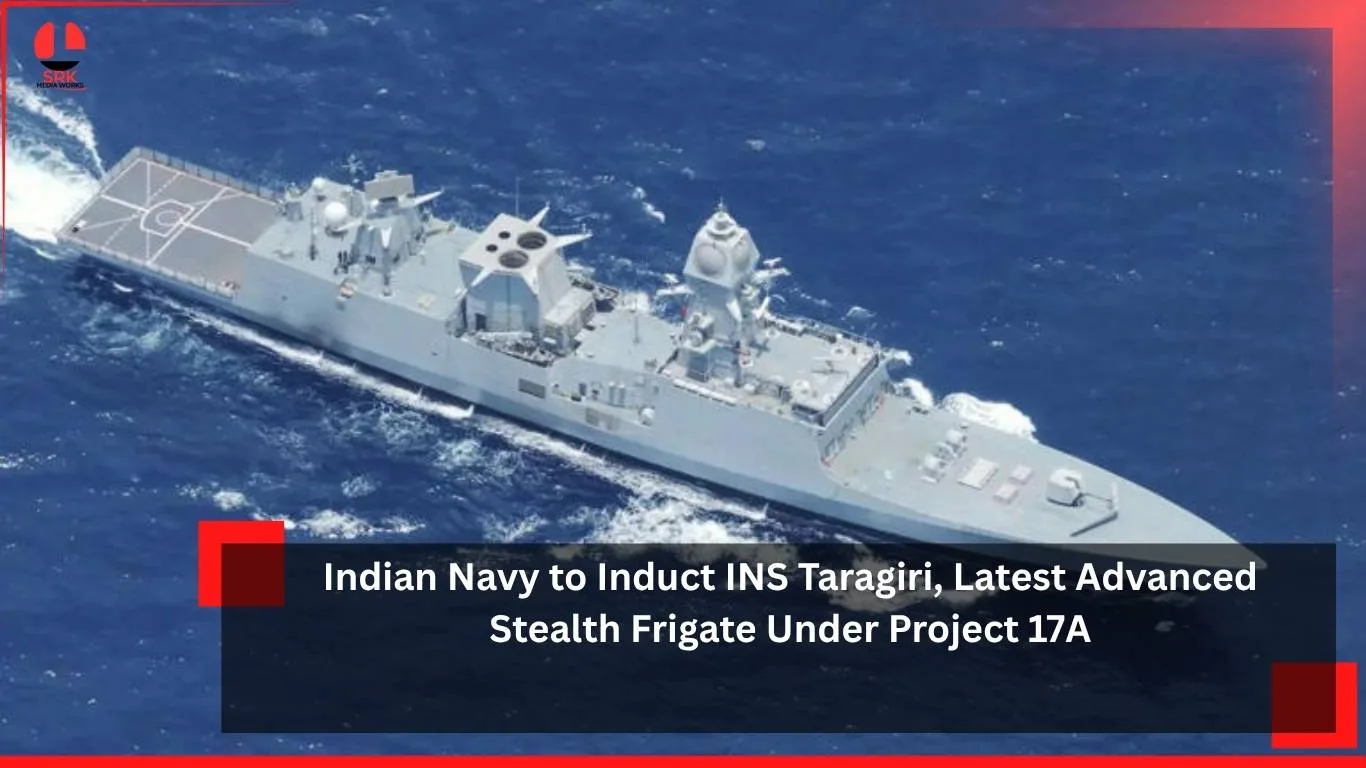
The Indian Navy is set to induct INS Taragiri, the latest advanced stealth frigate developed under Project 17A, marking a significant milestone in India’s naval modernization program. Designed with cutting-edge stealth features, enhanced weapon systems, and advanced sensors, INS Taragiri will bolster India’s maritime security and strengthen its presence in the Indian Ocean Region (IOR).
About Project 17A
Project 17A is a flagship initiative of the Indian Navy aimed at building next-generation stealth frigates. It is the successor to Project 17 (Shivalik-class frigates) and incorporates advanced technologies for improved survivability, combat capability, and operational efficiency.
- Total Ships Planned: 7 stealth frigates.
- Builders: Mazagon Dock Shipbuilders Limited (MDL) and Garden Reach Shipbuilders & Engineers (GRSE).
- Design Features: Reduced radar cross-section, advanced electronic warfare systems, and integrated platform management.
- Objective: Enhance India’s blue-water naval capabilities.
Key Features of INS Taragiri
- Stealth Design: Angular hull and radar-absorbing materials to minimize detection.
- Weapon Systems: Equipped with surface-to-air missiles, anti-ship missiles, and torpedoes.
- Sensors: Advanced sonar, radar, and electronic warfare suites.
- Speed & Range: Capable of speeds up to 28 knots with extended operational endurance.
- Crew Capacity: Designed to accommodate over 250 personnel.
Comparative Analysis: Project 17 vs Project 17A
| Feature | Project 17 (Shivalik Class) | Project 17A (INS Taragiri Class) |
|---|---|---|
| Stealth Capability | Moderate | Enhanced with advanced materials |
| Weapon Systems | Standard missile systems | Upgraded long-range missiles |
| Automation | Limited | Integrated platform management |
| Construction Technology | Conventional | Modular construction for faster build |
| Ship Numbers | 3 | 7 planned |
Strategic Importance of INS Taragiri
- Maritime Security: Strengthens India’s ability to monitor and secure sea lanes in the Indian Ocean.
- Deterrence: Enhances India’s capacity to deter adversaries with advanced strike capabilities.
- Regional Balance: Counters growing naval presence of China and Pakistan in the IOR.
- Indigenous Capability: Showcases India’s progress in self-reliant defence manufacturing.
Global Context: Stealth Frigates in Other Navies
| Country | Frigate Class | Key Features |
|---|---|---|
| India | INS Taragiri (Project 17A) | Advanced stealth, modular design |
| USA | Freedom-class LCS | Littoral combat, modular weapons |
| China | Type 054A | Long-range missiles, advanced radar |
| UK | Type 26 | Global combat ship, stealth design |
| France | FREMM | Multi-mission, advanced sensors |
India’s induction of INS Taragiri places it among global powers operating advanced stealth frigates.
Challenges Ahead
- Operational Integration: Seamless integration with existing fleet systems.
- Maintenance Costs: Advanced technology requires higher upkeep.
- Training: Preparing crew for sophisticated systems.
- Regional Tensions: Increased naval activity in the Indo-Pacific could heighten risks.
Conclusion
The induction of INS Taragiri under Project 17A marks a major leap in India’s naval modernization journey. With advanced stealth features, powerful weapon systems, and indigenous design, the frigate will significantly enhance India’s maritime strength. As regional tensions rise in the Indo-Pacific, INS Taragiri stands as a symbol of India’s commitment to safeguarding its maritime interests and asserting its role as a major naval power.
Disclaimer
This article is based on publicly available defence reports, naval analysis, and expert commentary. It is intended for informational purposes only and does not constitute official defence policy, financial advice, or professional guidance. Readers should verify details independently and follow official defence sources for updates.