
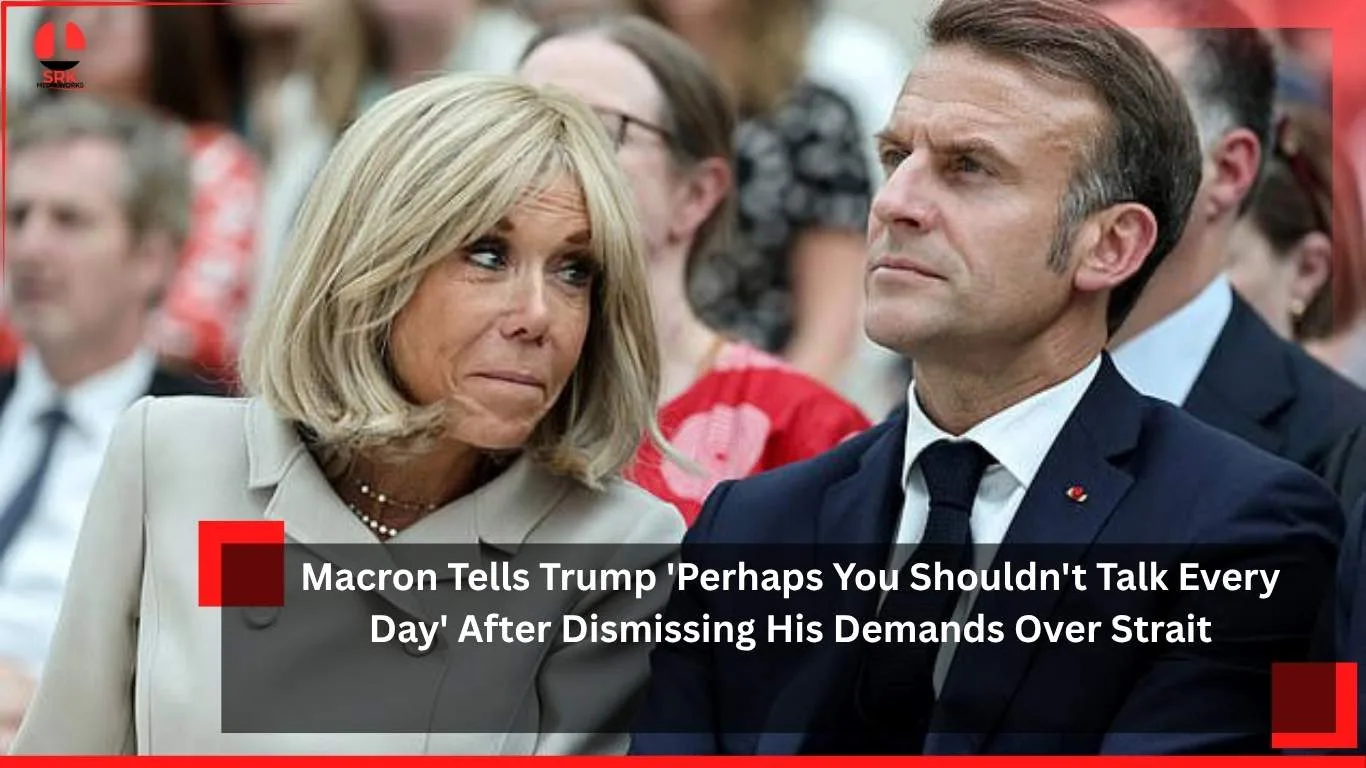
French President Emmanuel Macron has publicly rebuked U.S. President Donald Trump, telling him “perhaps you shouldn’t talk every day” after dismissing Trump’s demands regarding the Strait of Hormuz. The exchange highlights growing friction between Washington and Paris over how to handle escalating tensions in West Asia, particularly concerning maritime security and oil transit routes. Macron’s sharp remark reflects France’s effort to assert independence in foreign policy while signaling frustration with Trump’s frequent public statements on the crisis.
Background of the Dispute
The Strait of Hormuz, a vital chokepoint for global oil shipments, has become the epicenter of geopolitical tensions. Trump has repeatedly demanded that European allies, including France, take a tougher stance against Iran’s actions in the region. Macron, however, has emphasized diplomacy and restraint, rejecting calls for aggressive measures. His latest comment underscores France’s position that constant public pressure from Washington is counterproductive.
Macron’s Statement
- Direct Rebuke: Macron told Trump that “perhaps you shouldn’t talk every day,” suggesting that constant commentary inflames tensions rather than resolves them.
- Dismissal of Demands: France rejected Trump’s push for stronger military involvement in the Strait.
- Diplomatic Emphasis: Macron reiterated that dialogue and negotiation remain the best path forward.
Trump’s Position
President Trump has consistently argued that Iran’s actions in the Strait of Hormuz threaten global energy security. He has demanded that allies align with Washington’s tougher stance, including increased naval presence and sanctions. His frequent public remarks have drawn criticism from European leaders who prefer quieter diplomacy.
Comparative Analysis of US-France Exchanges
| Year | Issue | Trump’s Position | Macron’s Response |
|---|---|---|---|
| 2024 | NATO funding | Push for higher contributions | Called for balanced responsibility |
| 2025 | Iran sanctions | Demanded stricter enforcement | Advocated diplomatic engagement |
| 2026 | Strait of Hormuz | Urged military action | Dismissed demands, rebuked daily commentary |
This comparative view shows how U.S.-France disagreements have consistently revolved around strategy and tone.
Sector-Wise Impact of the Dispute
| Sector | Impact Level | Key Issues |
|---|---|---|
| Diplomacy | Very High | Strained U.S.-France relations |
| Security | High | Divergent approaches to maritime threats |
| Energy Markets | Medium | Concerns over oil supply disruptions |
| Public Perception | High | Macron seen as assertive, Trump as confrontational |
| Regional Stability | Very High | Risk of escalation without unified strategy |
Analytical Pivot
| Year | Global Oil Price (USD/barrel) | Strait of Hormuz Status | US-France Relations |
|---|---|---|---|
| 2024 | 75 | Stable | Cooperative but tense |
| 2025 | 85 | Rising tensions | Divergent strategies |
| 2026 | 95 (March) | Escalating crisis | Public rebuke, strained ties |
This pivot analysis highlights how disagreements over the Strait of Hormuz are directly influencing both global markets and diplomatic relations.
International Reactions
- European Union: Supported Macron’s call for diplomacy, emphasizing unity among European states.
- Middle Eastern Nations: Closely monitoring the dispute, wary of further escalation.
- Global Analysts: Noted that Macron’s rebuke reflects broader European frustration with Washington’s approach.
Possible Scenarios
- Diplomatic Resolution: France and the U.S. may find common ground through backchannel negotiations.
- Continued Friction: Public disagreements could weaken Western unity against Iran.
- Escalation: Divergent strategies may embolden Iran, complicating maritime security.
Future Outlook
Experts predict that U.S.-France relations will remain strained unless both sides adjust their approaches. Macron’s rebuke signals Europe’s determination to pursue independent diplomacy, while Trump’s insistence on daily commentary reflects Washington’s preference for public pressure. The balance between diplomacy and confrontation will shape the future of the Strait of Hormuz crisis.
Conclusion
Macron’s sharp remark to Trump — “perhaps you shouldn’t talk every day” — encapsulates the growing divide between Washington and Paris over handling tensions in the Strait of Hormuz. While Trump demands tougher action, Macron insists on diplomacy. The clash underscores broader challenges in transatlantic relations and highlights the importance of unified strategies in addressing global crises.
Disclaimer
This article is intended for informational purposes only. The content reflects current geopolitical developments and analysis based on publicly available information. Readers should not interpret this as official policy guidance or diplomatic advice. While accuracy has been prioritized, future developments may alter the situation. Independent verification is recommended before drawing conclusions.