





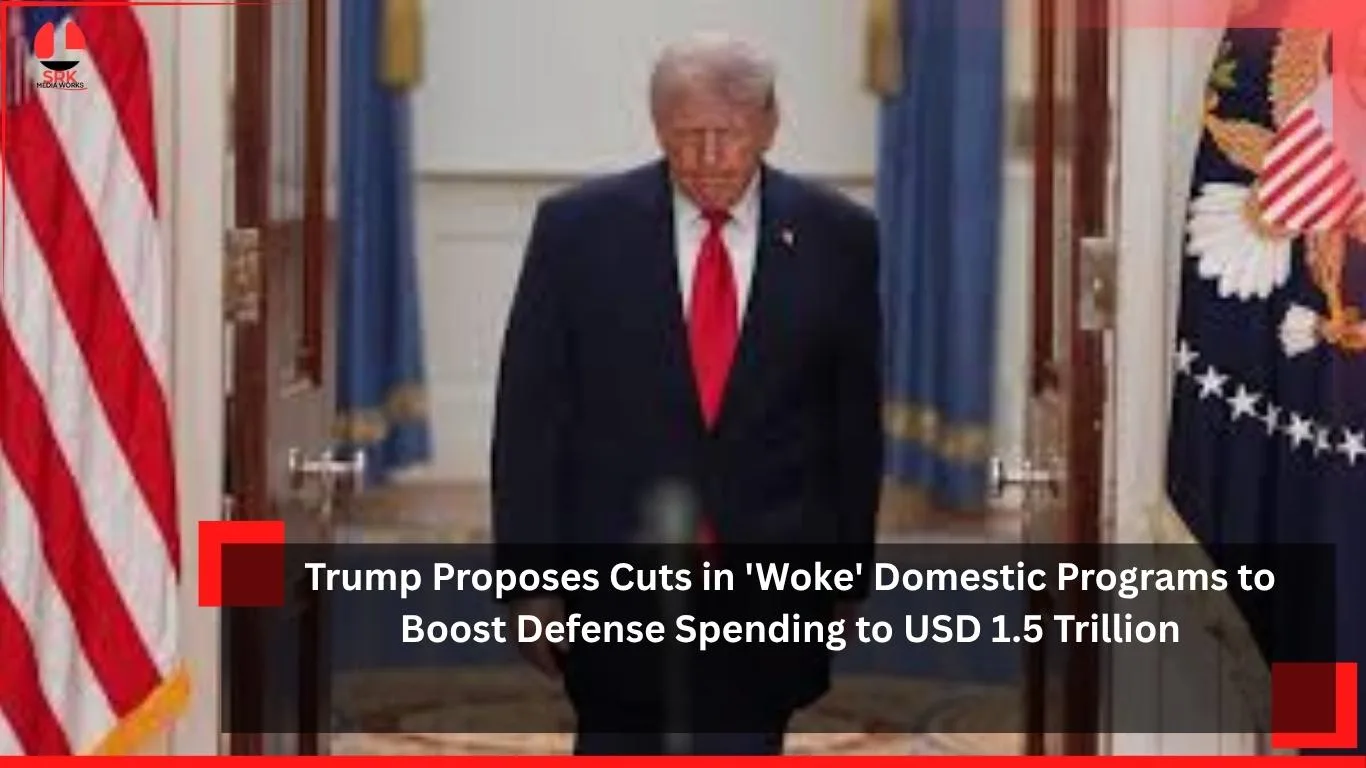
President Donald Trump has unveiled a sweeping proposal to cut funding for what he describes as “woke domestic programs” in order to redirect resources toward defense spending, raising the military budget to USD 1.5 trillion. This announcement has ignited fierce debate across political, economic, and social circles, with supporters praising the move as a necessary step for national security and critics warning of deep consequences for domestic welfare and social progress.
Understanding the Proposal
The plan involves reducing allocations to domestic initiatives such as diversity, equity, and inclusion programs, climate change initiatives, and certain social welfare expansions. Trump argues these programs are ideologically driven and drain resources that could otherwise strengthen America’s military readiness.
Defense Spending in Historical Context
Defense spending has long been a cornerstone of U.S. policy. During the Cold War, budgets soared to counter Soviet influence, while post-9/11 expenditures surged to support counterterrorism operations. Trump’s proposed USD 1.5 trillion allocation would mark the highest defense budget in U.S. history, surpassing even peak wartime expenditures.
Areas of Defense Investment
- Military Modernization: Upgrading fighter jets, naval fleets, and missile defense systems.
- Global Presence: Expanding troop deployments in strategic regions and strengthening alliances.
- Research and Development: Investing in artificial intelligence, robotics, and space defense.
- Cybersecurity: Enhancing digital defense against global cyber threats.
Domestic Programs Facing Cuts
The administration has identified several categories for reduction:
- Climate change programs and renewable energy subsidies.
- Diversity and inclusion initiatives in education and workplaces.
- Expanded healthcare and housing assistance programs.
Economic Impact
Economists warn that while defense spending can stimulate industries like aerospace and technology, cuts to domestic programs may affect education, healthcare, and social equity.
| Sector | Current Allocation (USD Billions) | Proposed Allocation (USD Billions) | Change (%) |
|---|---|---|---|
| Defense | 900 | 1500 | +66.7% |
| Climate Programs | 120 | 40 | -66.7% |
| Social Welfare | 600 | 400 | -33.3% |
| Education & Inclusion | 200 | 100 | -50% |
Political Reactions
- Supporters: Argue that national security must remain the top priority amid rising global tensions.
- Critics: Contend that labeling domestic initiatives as “woke” undermines essential social progress.
- Moderates: Suggest incremental increases in defense spending without drastic cuts to domestic programs.
Public Sentiment
Public opinion is sharply divided. Military families and defense contractors largely support the proposal, while educators, healthcare advocates, and environmentalists warn of erosion in social infrastructure.
| Group | Support (%) | Opposition (%) |
|---|---|---|
| Military Families | 75 | 25 |
| Defense Contractors | 80 | 20 |
| Educators | 20 | 80 |
| Healthcare Advocates | 25 | 75 |
| Environmentalists | 15 | 85 |
Global Implications
International observers are closely watching the proposal. Allies may welcome increased U.S. military spending as a sign of stronger commitments, while adversaries may view it as an escalation. The move could reshape global defense dynamics, particularly in regions like Eastern Europe, the South China Sea, and the Middle East.
Social Consequences
Cuts to domestic programs could have long-term effects:
- Reduced funding for climate initiatives may slow progress toward sustainability.
- Cuts to inclusion programs could widen inequality gaps.
- Healthcare and housing reductions may increase social vulnerability.
Balancing Security and Social Needs
The debate ultimately centers on balancing national security with domestic welfare. While Trump’s proposal emphasizes military strength, critics argue that true security also depends on strong social infrastructure.
Conclusion
Trump’s proposal to cut “woke” domestic programs and increase defense spending to USD 1.5 trillion represents one of the most ambitious reallocation plans in U.S. history. It underscores a fundamental debate about priorities: should America invest more in military might or in social progress? The answer will shape the nation’s trajectory for decades to come.
Disclaimer
This article is intended for informational purposes only. It provides an overview of political and economic proposals currently under discussion. The content does not endorse or oppose any political figure or policy. Readers are encouraged to seek multiple perspectives and verify information through trusted sources before forming conclusions.