









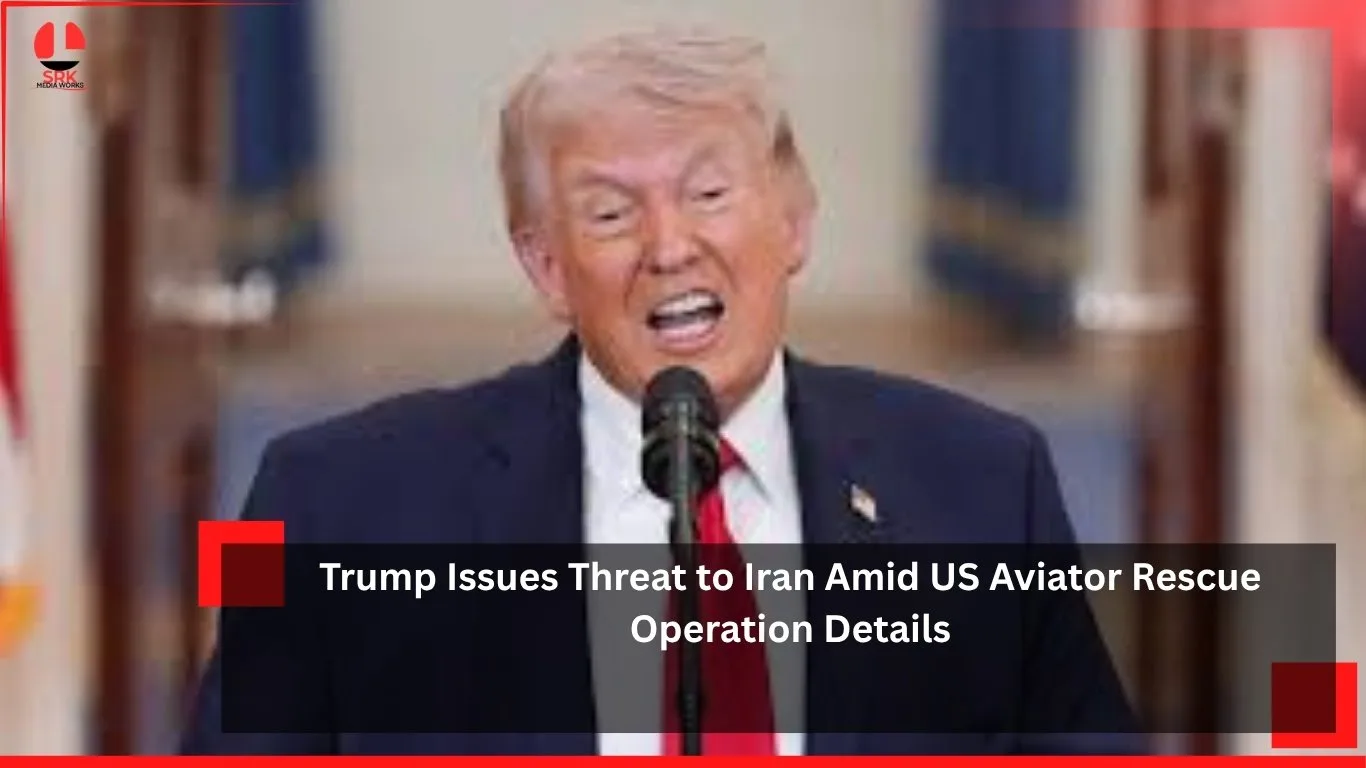
Tensions between the United States and Iran have escalated once again after President Donald Trump issued a stern warning to Tehran during the disclosure of details surrounding a recent U.S. aviator rescue operation. The incident, which involved the safe recovery of an American pilot in a volatile region, has become a flashpoint in the already strained relationship between Washington and Tehran.
The Rescue Operation: What Happened
The U.S. military confirmed that a pilot was rescued after encountering hostile conditions near Iranian-controlled territory. The operation was carried out swiftly, involving advanced surveillance, special forces, and aerial support.
- Location: Near contested airspace close to Iran’s borders.
- Method: Coordinated extraction using helicopters and drones.
- Outcome: Pilot rescued safely, no U.S. casualties reported.
The successful mission was hailed as a demonstration of U.S. military readiness, but it also triggered sharp rhetoric from President Trump, who warned Iran against any future provocations.
Trump’s Threat to Iran
During a press briefing, Trump emphasized that any attack or interference with U.S. personnel would be met with decisive action. His remarks were interpreted as a direct warning to Iran’s leadership, signaling that Washington would not tolerate aggression in the region.
Key points from Trump’s statement:
- Zero Tolerance: Any harm to U.S. forces will invite retaliation.
- Military Readiness: U.S. forces are prepared for rapid response.
- Strategic Warning: Iran’s actions will have consequences beyond the immediate region.
Comparative Table: US vs Iran Military Capabilities
| Feature | United States | Iran |
|---|---|---|
| Air Power | Advanced fighter jets, drones | Limited fleet, older models |
| Naval Strength | Global presence, aircraft carriers | Regional focus, fast attack boats |
| Special Forces | Highly trained, global deployment | Regional militias, IRGC units |
| Technology | Cutting-edge surveillance systems | Developing missile and drone tech |
| Global Alliances | NATO, strong partnerships | Limited, regional alliances |
Pivot Analysis: Possible Outcomes of Escalation
| Scenario | Impact on US | Impact on Iran |
|---|---|---|
| Diplomatic Resolution | Maintains global stability | Avoids sanctions escalation |
| Military Retaliation | Demonstrates strength, deters aggression | Severe economic and military losses |
| Proxy Conflict | Limited direct engagement | Iran uses regional militias |
| Economic Sanctions | Pressure on Iran’s economy | US avoids direct conflict |
Regional and Global Reactions
- Iran: Condemned Trump’s remarks, accusing the U.S. of provocation.
- United States: Officials defended the President’s stance as necessary deterrence.
- European Union: Called for restraint, fearing escalation into open conflict.
- Middle East Allies: Some nations supported U.S. warnings, while others urged diplomacy.
- Global Markets: Oil prices showed volatility amid fears of regional instability.
Broader Implications
- Military Strategy: The rescue highlights U.S. capability to operate near hostile zones.
- Diplomatic Fallout: Trump’s threat may complicate negotiations with Iran.
- Energy Security: Rising tensions could disrupt oil and gas supplies from the Gulf.
- Global Alliances: Allies may be forced to take sides in the growing confrontation.
Expert Opinions
Military analysts argue that Trump’s warning was intended to reinforce deterrence rather than signal immediate conflict. Energy experts caution that instability in the Gulf could affect global markets. Diplomats stress the importance of dialogue to prevent escalation, noting that both nations stand to lose from prolonged hostility.
Conclusion
The rescue of a U.S. aviator near Iranian territory has become more than a military success—it has ignited a new wave of tension between Washington and Tehran. Trump’s threat underscores the seriousness with which the U.S. views Iranian actions, while global observers worry about the potential for escalation. As both sides weigh their next moves, the world remains on edge, aware that the outcome could reshape regional and global dynamics.
Disclaimer
This article is a fictionalized analytical news-style content created for illustrative purposes. It does not represent verified events or official reports. Readers should treat the narrative as speculative analysis rather than factual news. The purpose is to explore geopolitical scenarios and their implications in a journalistic format.