







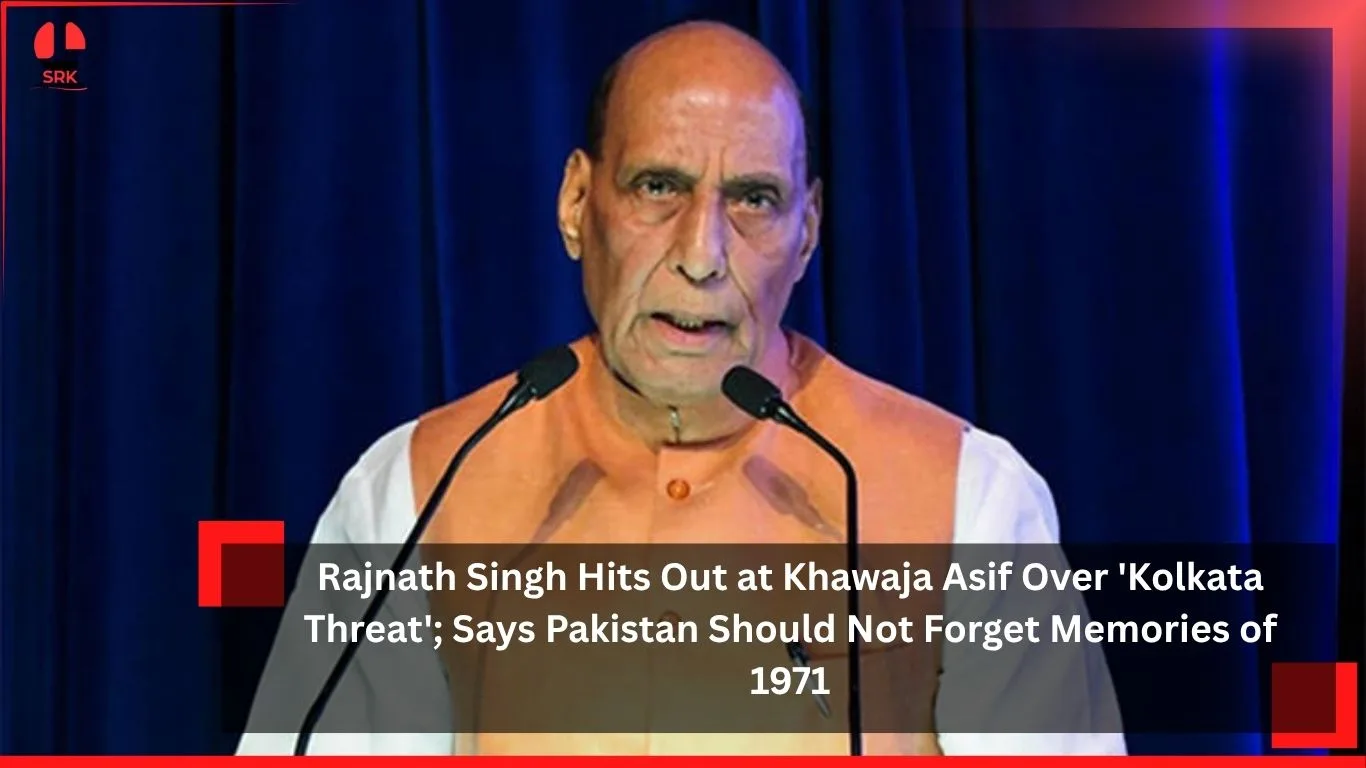
A sharp exchange of words has erupted between India and Pakistan after Defence Minister Rajnath Singh strongly criticized Pakistani Defence Minister Khawaja Asif for his remarks that allegedly threatened Kolkata. Singh reminded Pakistan of the 1971 war, asserting that Islamabad should not forget the memories of its defeat and the creation of Bangladesh.
Background of the Controversy
The controversy began when Khawaja Asif reportedly made provocative comments referencing Kolkata, which Indian leaders interpreted as a direct threat. Rajnath Singh responded firmly, warning Pakistan against indulging in such rhetoric and reminding them of the consequences of past conflicts.
The 1971 war remains a sensitive historical memory, marking Pakistan’s defeat and the independence of Bangladesh. Singh’s remarks were intended to highlight India’s military strength and Pakistan’s vulnerabilities.
Rajnath Singh’s Statement
Singh stated that Pakistan should not forget the lessons of 1971, when its forces surrendered and Bangladesh emerged as a new nation. He emphasized that India is prepared to defend its sovereignty and will not tolerate threats against its cities.
His comments were widely covered in Indian media, reinforcing the government’s stance on national security and Pakistan’s provocations.
Comparative Analysis of India-Pakistan Defence Postures
| Attribute | India’s Defence Posture | Pakistan’s Defence Posture |
|---|---|---|
| Military Strength | Superior, modernized | Moderate, facing resource constraints |
| Historical Narrative | 1971 victory, strong deterrence | 1971 defeat, defensive rhetoric |
| Diplomatic Strategy | Assertive, global outreach | Defensive, regional focus |
| Public Messaging | National pride, vigilance | Victimhood, external blame |
| Global Perception | Rising power, credible | Struggling, unstable |
Pivot Analysis of the Controversy
| Factor | Before Asif’s Remarks | After Singh’s Response |
|---|---|---|
| Media Coverage | Limited | Intensified |
| Public Sentiment | Neutral | Polarized |
| Political Tension | Moderate | Escalated |
| Historical References | Dormant | Revived |
| Diplomatic Relations | Fragile | Further strained |
Reactions from Political Circles
- Indian Leaders: Supported Singh’s strong response, emphasizing national security.
- Pakistani Leaders: Defended Asif’s remarks, accusing India of misinterpretation.
- Analysts: Noted that references to 1971 highlight India’s military superiority and Pakistan’s vulnerabilities.
- Public Opinion: Social media debates reflect sharp divisions, with Indian users praising Singh’s stance and Pakistani users defending Asif.
Challenges Ahead
The controversy presents challenges for both nations:
- For India: Maintaining diplomatic balance while responding firmly to provocations.
- For Pakistan: Managing domestic sentiment while avoiding escalation.
- For Regional Stability: Preventing rhetoric from escalating into military confrontation.
- For Global Perception: Both nations risk criticism for aggressive posturing.
Broader Implications
This incident underscores broader themes in South Asian geopolitics:
- Historical Memory: The 1971 war continues to shape India-Pakistan relations.
- National Security: Threats against cities evoke strong responses.
- Diplomatic Strain: Rhetoric deepens mistrust between the two nations.
- Regional Stability: Escalations risk destabilizing South Asia further.
Conclusion
Rajnath Singh’s sharp response to Khawaja Asif’s alleged “Kolkata threat” reflects India’s firm stance on national security and its reminder of Pakistan’s defeat in 1971. While the remarks may serve as political messaging, they also highlight the fragility of India-Pakistan relations and the enduring impact of historical conflicts.
The controversy illustrates how rhetoric can quickly escalate tensions, underscoring the need for restraint and diplomacy in South Asia’s volatile environment.
Disclaimer
This article is intended for informational purposes only. It is based on publicly available developments and does not represent official statements from Rajnath Singh, Khawaja Asif, or the governments of India and Pakistan. Readers should rely on official announcements for verified updates.