



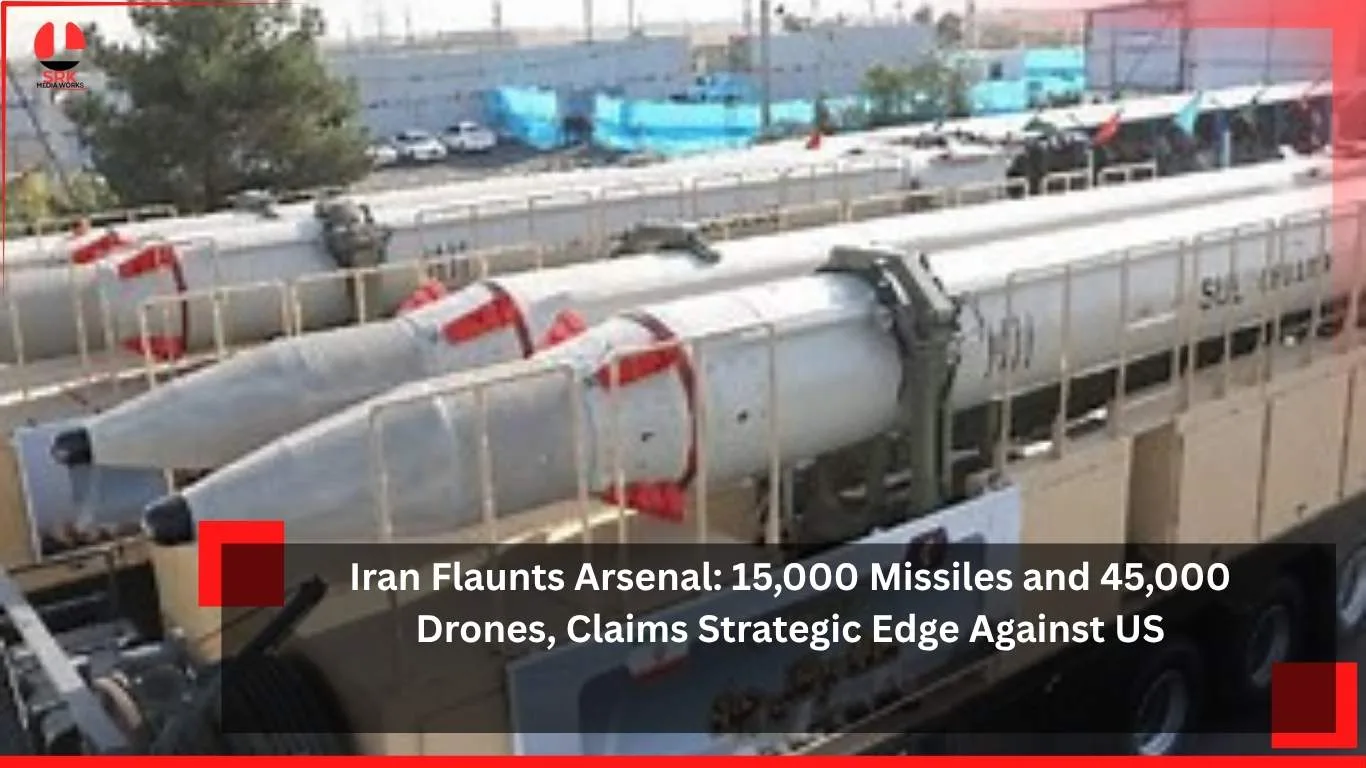
In a bold display of military strength, Iran has publicly showcased its vast arsenal, boasting over 15,000 missiles and more than 45,000 drones, signaling its belief that it is gaining a strategic advantage against the United States. This revelation has sparked global debate, raising concerns about regional stability, military balance, and the future of Middle Eastern geopolitics.
Iran’s Expanding Arsenal
Iran’s military doctrine has long emphasized asymmetric warfare, focusing on missile and drone technology rather than traditional air power. By unveiling such staggering numbers, Tehran aims to project deterrence and demonstrate its ability to challenge U.S. influence in the region.
Key Highlights:
- Missiles: Over 15,000, ranging from short-range ballistic missiles to medium-range systems capable of striking targets across the Middle East.
- Drones: More than 45,000, including surveillance UAVs, kamikaze drones, and advanced combat drones.
- Strategic Message: Iran claims these capabilities give it an upper hand in countering U.S. military presence and allied forces.
Historical Context
Iran’s missile program dates back to the 1980s during the Iran-Iraq war, when it began developing indigenous systems due to international sanctions. Over decades, Iran has refined its technology, often accused of reverse-engineering foreign systems and leveraging partnerships with non-state actors.
The drone program, meanwhile, has expanded rapidly in the past decade. Iranian drones have been deployed in conflicts across Syria, Iraq, and Yemen, often through allied militias, showcasing their effectiveness in asymmetric warfare.
Regional Implications
Iran’s announcement is not just about numbers—it is a strategic message to rivals and allies alike. The arsenal poses challenges for:
- Israel: Already under threat from Hezbollah and Hamas, both supplied with Iranian technology.
- Saudi Arabia: Targeted previously by Iranian-backed drone strikes on oil facilities.
- United States: With bases across the Middle East, U.S. forces remain within range of Iran’s missile systems.
Comparative Military Strength
To understand the scale of Iran’s claim, let’s compare missile and drone capabilities with other regional powers.
| Country | Missiles (Approx.) | Drones (Approx.) | Strategic Focus |
|---|---|---|---|
| Iran | 15,000+ | 45,000+ | Asymmetric warfare, deterrence |
| Israel | 5,000+ | 10,000+ | Precision strikes, defense tech |
| Saudi Arabia | 3,000+ | 8,000+ | Air defense, oil facility security |
| United States (Middle East presence) | 10,000+ | 20,000+ | Power projection, regional dominance |
Military Strategy: Drones as Game-Changers
Iran’s emphasis on drones reflects a shift in modern warfare. Drones are cheaper, harder to detect, and can overwhelm advanced defense systems through sheer numbers. By deploying swarms of drones, Iran believes it can neutralize U.S. air defenses and strike critical infrastructure.
Drone Categories:
- Surveillance UAVs: Used for intelligence gathering.
- Combat Drones: Armed with missiles or bombs.
- Kamikaze Drones: Designed for one-way missions, crashing into targets.
- Logistics Drones: Supporting supply chains in conflict zones.
Pivot Analysis: Missiles vs. Drones
| Weapon Type | Quantity | Strategic Role | Cost Efficiency | Threat Level |
|---|---|---|---|---|
| Missiles | 15,000+ | Long-range strikes | High cost per unit | High |
| Drones | 45,000+ | Surveillance & swarm attacks | Low cost per unit | Very High |
This pivot analysis shows Iran’s reliance on drones as a cost-effective yet highly threatening tool, complementing its missile arsenal.
Iran’s Confidence Against the US
Iran’s leadership has declared that its arsenal gives it a winning edge against U.S. forces. While this claim is debatable, it reflects Tehran’s confidence in its deterrence strategy. The belief is rooted in:
- Geographic Advantage: Proximity to U.S. bases in Iraq, Syria, and the Persian Gulf.
- Proxy Networks: Hezbollah, Houthis, and other groups equipped with Iranian technology.
- Psychological Warfare: Demonstrating numbers to intimidate adversaries.
Global Reactions
- United States: Officials have downplayed Iran’s claims but acknowledged the growing drone threat.
- Israel: Intensifying missile defense systems like Iron Dome and David’s Sling.
- Saudi Arabia: Strengthening alliances with the U.S. and investing in counter-drone technology.
- Russia & China: Observing closely, as Iran’s arsenal could shift regional power dynamics.
Challenges Ahead
Despite its claims, Iran faces challenges:
- Economic Sanctions: Limiting resources for sustained military expansion.
- Technological Gaps: Many systems are adaptations rather than cutting-edge innovations.
- International Isolation: Growing pressure from global powers to curb missile and drone proliferation.
Future Outlook
Iran’s arsenal signals a new era of military competition in the Middle East. The reliance on drones and missiles highlights the changing nature of warfare, where quantity and adaptability often outweigh traditional air superiority.
If tensions escalate, Iran’s strategy could test U.S. defenses in unprecedented ways. However, whether sheer numbers translate into battlefield success remains uncertain.
Conclusion
Iran’s declaration of 15,000 missiles and 45,000 drones is more than a military boast—it is a geopolitical statement. By flaunting its arsenal, Tehran aims to project strength, deter adversaries, and assert its belief that it is winning against U.S. influence in the region. The coming years will reveal whether this confidence is justified or merely a strategic bluff.
Disclaimer
This article is an analytical overview based on publicly available information and geopolitical assessments. It does not endorse or validate military claims made by any nation. Readers should note that figures and interpretations may vary depending on sources, and the content is intended for informational and educational purposes only.