









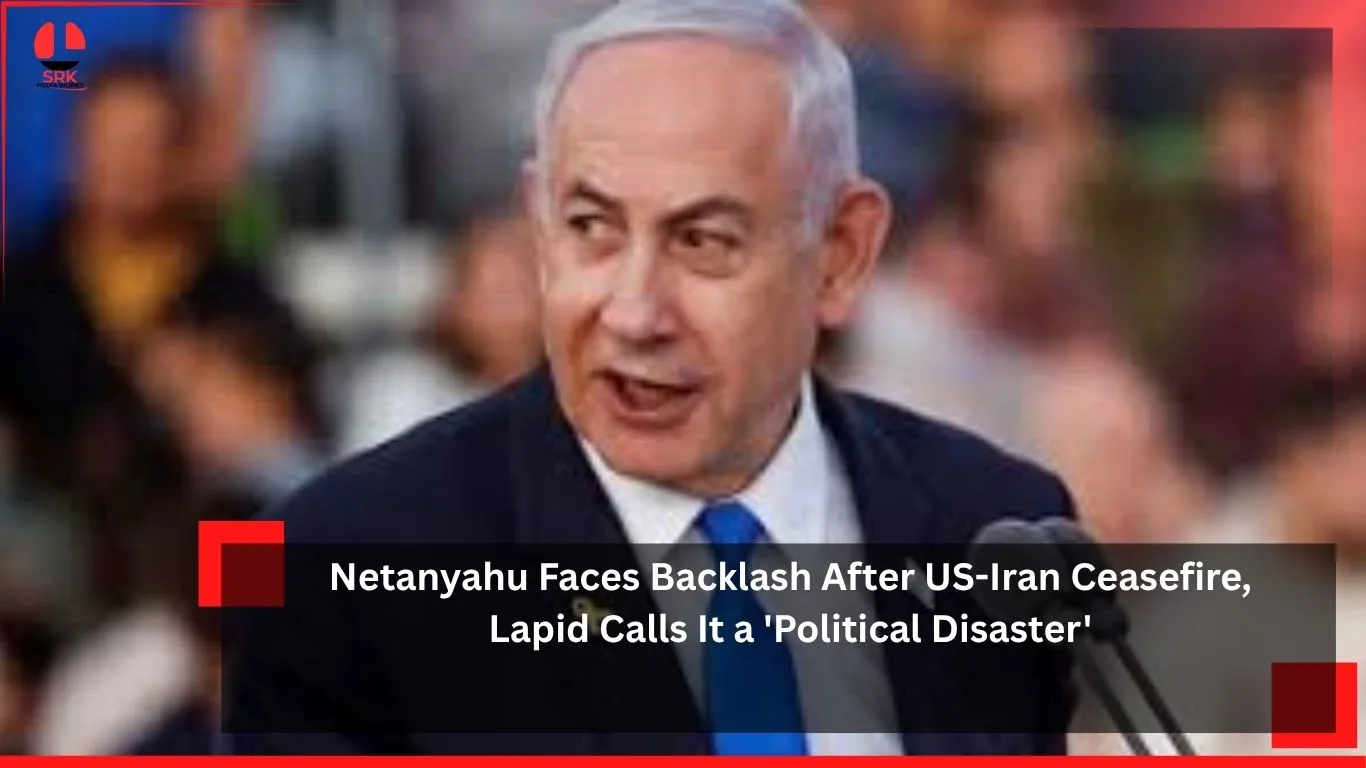
The recent announcement of a US-Iran ceasefire agreement has sent shockwaves through Israeli politics, sparking intense debate and criticism directed at Prime Minister Benjamin Netanyahu. Opposition leader Yair Lapid has labeled the development a “political disaster,” arguing that the ceasefire undermines Israel’s security interests and exposes weaknesses in Netanyahu’s leadership. This unfolding situation highlights the fragile balance of power in the Middle East and the complex interplay between diplomacy, military strategy, and domestic politics.
Background of the Ceasefire
The ceasefire between the United States and Iran marks a significant moment in regional diplomacy. After years of escalating tensions, Washington and Tehran have agreed to halt hostilities, focusing on de-escalation and potential pathways to broader negotiations. While the agreement has been welcomed internationally as a step toward stability, Israel views it with suspicion.
Netanyahu has long positioned himself as a staunch opponent of Iranian influence, warning that Tehran’s military capabilities and regional proxies pose existential threats to Israel. The ceasefire, therefore, is seen by critics as a blow to his narrative and a challenge to his credibility.
Lapid’s Criticism
Yair Lapid, leader of the opposition, wasted no time in condemning the ceasefire. He described it as a “political disaster”, accusing Netanyahu of failing to safeguard Israel’s strategic interests. According to Lapid, the agreement:
- Strengthens Iran’s regional position.
- Weakens Israel’s deterrence capabilities.
- Demonstrates Netanyahu’s inability to influence U.S. policy effectively.
Lapid’s remarks resonate with a growing segment of the Israeli public who fear that the ceasefire could embolden Iran and its allies, including Hezbollah and Hamas.
Domestic Political Fallout
Netanyahu now faces mounting pressure from multiple fronts:
- Opposition Parties: Criticizing his handling of relations with Washington.
- Coalition Partners: Some allies express concern about the implications for Israel’s security.
- Public Opinion: Citizens are divided, with some supporting diplomatic efforts while others demand stronger military postures.
This backlash could have long-term consequences for Netanyahu’s political standing, especially as Israel prepares for future elections.
Regional Security Concerns
Israel’s primary concern is that Iran may use the ceasefire to consolidate its military presence in Syria, Lebanon, and Gaza. The fear is that Tehran could redirect resources toward strengthening proxy groups, thereby increasing threats to Israeli territory.
Security Risks Identified:
- Missile Threats: Iran’s arsenal remains a major concern.
- Drone Warfare: Iranian drones have proven effective in past conflicts.
- Proxy Militias: Hezbollah and Hamas could gain renewed support.
Comparative Analysis: Ceasefire Impact
| Stakeholder | Perceived Benefit | Perceived Risk |
|---|---|---|
| United States | Reduced tensions, focus on diplomacy | Criticism from allies like Israel |
| Iran | Strategic breathing space, regional legitimacy | Risk of internal opposition |
| Israel | None identified | Increased vulnerability, weakened deterrence |
| Regional Allies (Saudi Arabia, UAE) | Potential stability | Fear of Iran’s growing influence |
Pivot Analysis: Political vs. Security Dimensions
| Dimension | Netanyahu’s Position | Lapid’s Position | Public Sentiment |
|---|---|---|---|
| Political | Claims Israel remains strong | Calls it a disaster | Divided |
| Security | Emphasizes deterrence | Warns of vulnerability | Concerned |
| Diplomatic | Stresses alliance with US | Says influence is lost | Skeptical |
This analysis shows the sharp divide between Netanyahu’s defense of his policies and Lapid’s critique, with public opinion caught in the middle.
International Reactions
- United States: Framing the ceasefire as a step toward peace, urging allies to support de-escalation.
- European Union: Welcoming the agreement, calling for broader negotiations on nuclear issues.
- Arab States: Mixed reactions, with some cautious optimism and others wary of Iran’s intentions.
Israel, however, remains isolated in its outright rejection of the ceasefire, highlighting the complexity of its security concerns.
Netanyahu’s Defense
In response to criticism, Netanyahu has argued that Israel will continue to defend itself regardless of international agreements. He insists that:
- Israel retains military superiority.
- The ceasefire does not limit Israel’s right to act against threats.
- Diplomatic setbacks will not compromise national security.
Despite these assurances, skepticism persists among both political rivals and the public.
Future Outlook
The US-Iran ceasefire could reshape Middle Eastern geopolitics in several ways:
- Diplomatic Pathways: Potential for renewed nuclear talks.
- Regional Balance: Iran may gain leverage, challenging Israel’s dominance.
- Israeli Politics: Netanyahu’s leadership will be tested as opposition voices grow louder.
Whether the ceasefire leads to lasting peace or renewed conflict remains uncertain, but its immediate impact on Israeli politics is undeniable.
Conclusion
The announcement of a US-Iran ceasefire has triggered a storm of criticism in Israel, with Yair Lapid branding it a “political disaster” and accusing Netanyahu of failing to protect national interests. As regional dynamics shift, Israel faces difficult choices between diplomacy and deterrence. Netanyahu’s ability to navigate this crisis will determine not only his political future but also Israel’s strategic position in an increasingly volatile Middle East.
Disclaimer
This article provides an analytical overview of recent geopolitical developments. It does not endorse or oppose any political figure or government. The content is based on interpretations of publicly available information and is intended solely for educational and informational purposes. Readers should consider multiple perspectives before forming conclusions.