









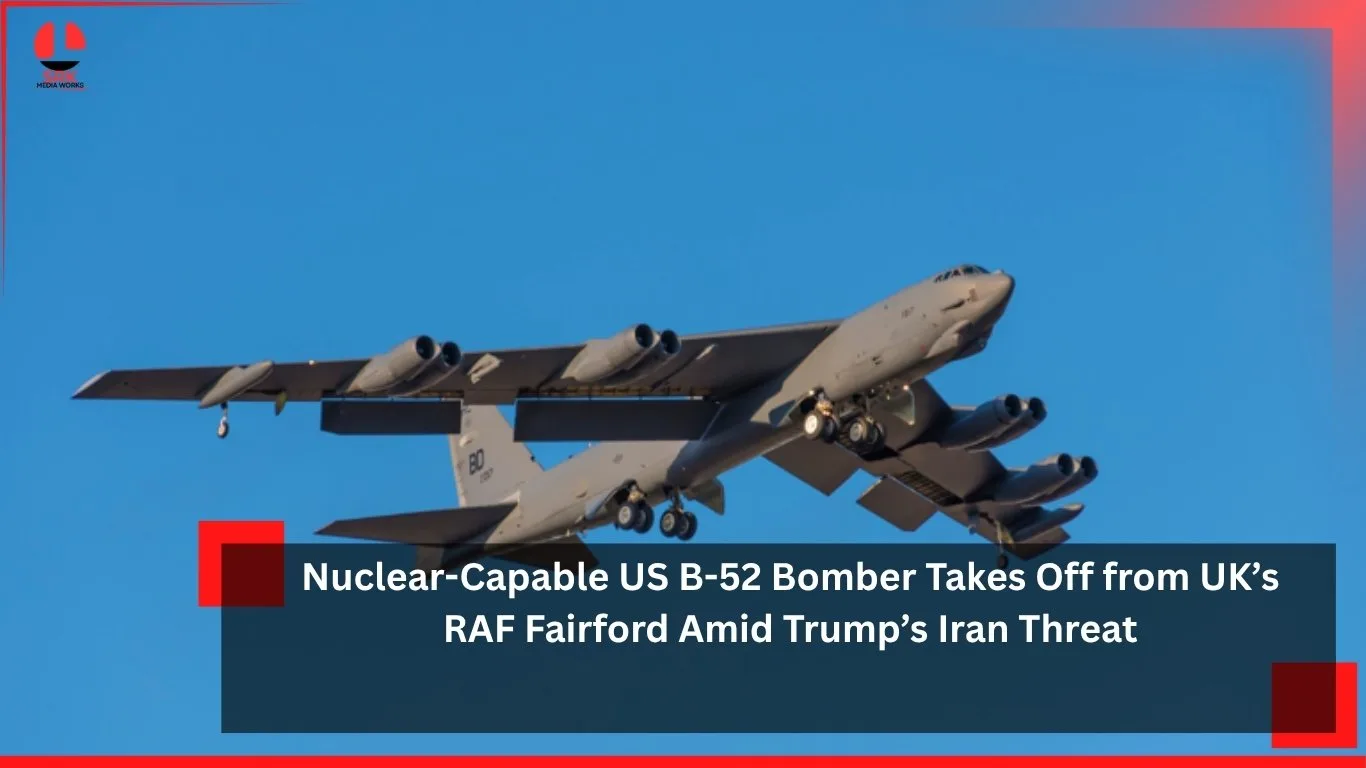
The geopolitical tensions between the United States and Iran have escalated once again, with a nuclear-capable US B-52 bomber taking off from RAF Fairford in the United Kingdom. This move comes amid President Donald Trump’s renewed warnings against Iran, signaling Washington’s readiness to project military power in the region. The deployment of such a strategic bomber highlights the seriousness of the situation and raises questions about the future of Middle Eastern stability.
The Symbolism of the B-52 Deployment
The B-52 Stratofortress is one of America’s most iconic long-range bombers, capable of carrying both conventional and nuclear weapons. Its deployment from RAF Fairford is not just a military maneuver but a symbolic show of force aimed at:
- Deterring Iran’s military ambitions.
- Reassuring US allies in Europe and the Middle East.
- Demonstrating Washington’s global reach and readiness.
The bomber’s presence in Europe underscores the interconnected nature of global security, where actions in the Middle East reverberate across NATO and beyond.
Trump’s Renewed Iran Threat
President Trump’s warnings against Iran have reignited fears of confrontation. His administration has consistently accused Tehran of destabilizing the region through:
- Support for proxy militias in Iraq, Syria, and Lebanon.
- Expansion of missile and drone programs.
- Nuclear ambitions that challenge international agreements.
The deployment of the B-52 serves as a tangible reminder of America’s willingness to back rhetoric with military capability.
RAF Fairford: A Strategic Base
RAF Fairford in Gloucestershire, UK, has long been a hub for US Air Force operations in Europe. Its strategic importance lies in:
- Runway capacity to handle heavy bombers like the B-52.
- Proximity to NATO allies for coordinated defense.
- Flexibility in supporting missions across Europe, the Middle East, and Africa.
The base’s role in hosting nuclear-capable bombers highlights the depth of US-UK military cooperation.
Comparative Military Postures
| Country | Strategic Asset | Purpose | Message Sent |
|---|---|---|---|
| United States | B-52 Bomber | Deterrence, global reach | Warning to Iran |
| Iran | Missiles & Drones | Regional dominance | Defiance against US |
| United Kingdom | RAF Fairford | Hosting US bombers | NATO solidarity |
| Israel | Missile Defense Systems | Protection against Iran | Alignment with US |
| Saudi Arabia | Air Defense & Bases | Countering Iran | Reliance on US support |
Pivot Analysis: Diplomacy vs. Military Escalation
| Dimension | Diplomatic Path | Military Escalation Path |
|---|---|---|
| Regional Stability | Negotiations, reduced tensions | Heightened conflict |
| US Position | Mediator, global leader | Aggressor, deterrent |
| Iran’s Response | Engagement in talks | Retaliation, proxy attacks |
| Global Impact | Positive for trade, energy | Oil market volatility, instability |
This analysis shows how the deployment of the B-52 tilts the balance toward military escalation, though diplomacy remains a possible alternative.
Reactions Across the Globe
- United States: Officials emphasize deterrence, framing the deployment as a defensive measure.
- United Kingdom: Supports the move, highlighting NATO’s commitment to collective security.
- Iran: Condemns the deployment, calling it provocative and threatening.
- European Union: Urges restraint, warning against escalation.
- Russia and China: Criticize the US, accusing it of destabilizing the region.
Domestic Impact in the US
Trump’s decision to deploy the B-52 has sparked debate at home:
- Supporters: Praise the show of strength, arguing it deters Iran.
- Critics: Warn of unnecessary provocation and risk of war.
- Military Analysts: Highlight the bomber’s symbolic value but caution against overreliance on military threats.
The Role of Nuclear Deterrence
The nuclear capability of the B-52 adds a layer of complexity. While the bomber is unlikely to be used in a nuclear strike, its presence signals:
- Credible deterrence against adversaries.
- Psychological pressure on Iran and its allies.
- Reaffirmation of US nuclear posture in global security.
Future Outlook
The deployment of the B-52 bomber amid Trump’s Iran threat raises critical questions:
- Will this lead to renewed negotiations or further escalation?
- Can diplomacy counterbalance military posturing?
- How will Iran respond to increased pressure?
The answers will shape not only US-Iran relations but also the broader stability of the Middle East.
Conclusion
The takeoff of a nuclear-capable US B-52 bomber from RAF Fairford amid Trump’s Iran threat marks a significant moment in global geopolitics. It reflects Washington’s determination to deter Iran while reassuring allies. Yet, it also risks escalating tensions and undermining peace-making efforts. The coming months will reveal whether this show of force leads to confrontation or compels diplomacy.
Disclaimer
This article is an analytical overview based on geopolitical assessments and publicly available information. It does not endorse or criticize any nation or political leader. The content is intended for educational and informational purposes only, and readers should consider multiple perspectives before forming conclusions.