


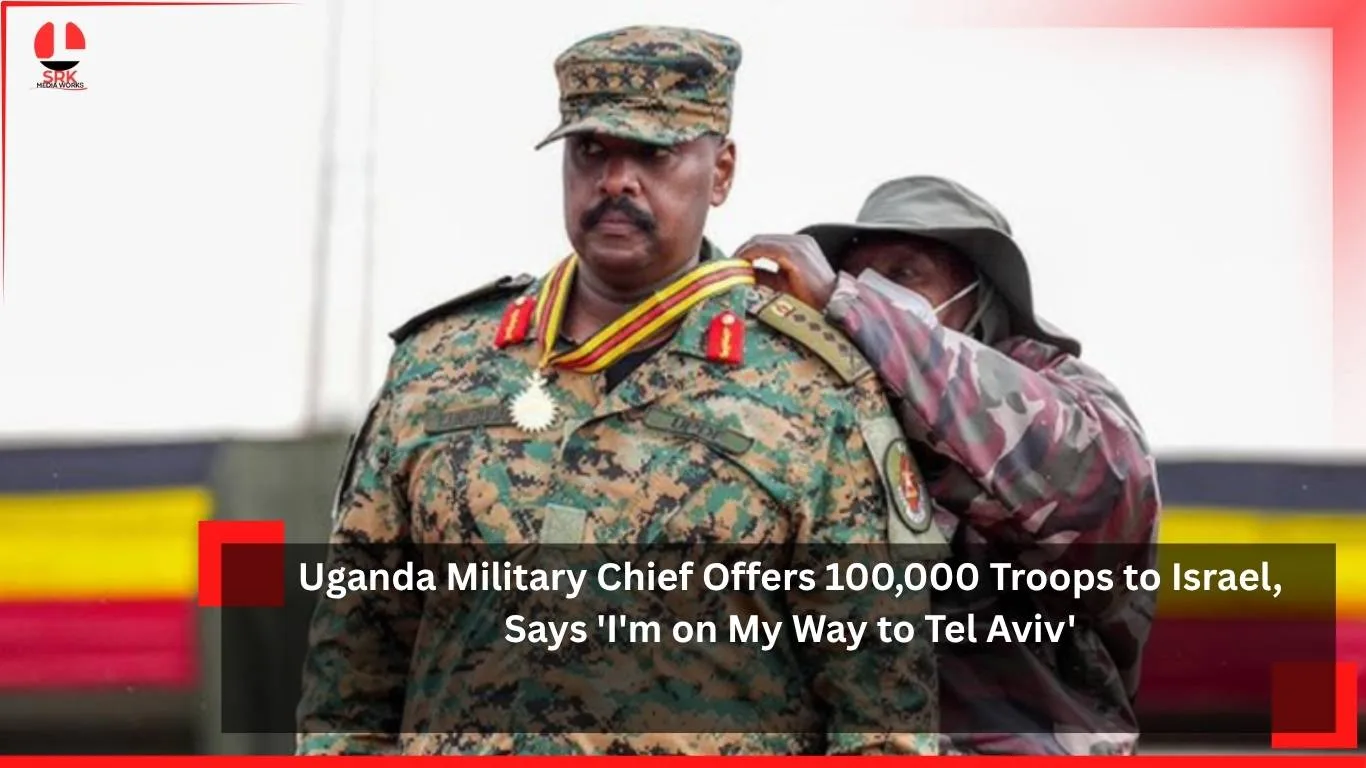
In a dramatic statement that has reverberated across international circles, Uganda’s military chief has reportedly offered 100,000 troops to Israel, declaring, “I’m on my way to Tel Aviv.” The announcement, though unverified by official channels, has sparked intense debate about Uganda’s foreign policy, Israel’s regional alliances, and the broader implications for global security.
The Statement and Its Context
The claim of deploying 100,000 Ugandan troops to Israel is unprecedented. Uganda has historically maintained a cautious foreign policy, balancing regional interests in East Africa with global partnerships. Such a large-scale military commitment, if realized, would represent a significant shift in Uganda’s international posture.
The statement also comes at a time when Israel faces heightened tensions in the Middle East. Uganda’s military support could be interpreted as a gesture of solidarity, but it also raises questions about feasibility, legality, and regional consequences.
Uganda’s Military Capacity
Uganda’s military, known as the Uganda People’s Defence Force (UPDF), is one of the most organized in East Africa. However, the figure of 100,000 troops is striking, given that Uganda’s active military personnel is estimated to be significantly lower.
Comparative Military Strength
| Country | Active Troops | Reserve Troops | Global Role |
|---|---|---|---|
| Uganda | ~46,000 | Limited | Regional peacekeeping, AU missions |
| Israel | ~170,000 | ~465,000 | Regional defense, global alliances |
| Kenya | ~24,000 | Limited | Regional security |
| Ethiopia | ~150,000 | Moderate | Regional conflicts |
This comparison highlights the scale of Uganda’s claim and the logistical challenges of deploying such a force abroad.
Historical Ties Between Uganda and Israel
Uganda and Israel share a complex history. In the 1960s, Israel provided military training to Ugandan forces. Relations soured under Idi Amin, particularly after the 1976 Entebbe raid, when Israeli commandos rescued hostages from Uganda. In recent years, ties have improved, with cooperation in agriculture, technology, and security.
The military chief’s statement could be seen as an extension of this renewed relationship, though its scale is unprecedented.
Regional Reactions
Uganda’s neighbors are likely to view the announcement with caution. East African nations often prioritize regional stability, and a massive troop deployment abroad could strain Uganda’s commitments at home.
- Kenya and Tanzania may worry about regional security gaps.
- Ethiopia and South Sudan could interpret the move as Uganda shifting focus away from African conflicts.
- African Union may question the legality of such a deployment without regional consensus.
Pivot Analysis: Uganda’s Troop Offer
| Dimension | Current Status | After Troop Offer | Implications |
|---|---|---|---|
| Uganda’s Foreign Policy | Regional focus | Global alignment with Israel | Shift in alliances |
| Military Capacity | Regional missions | Large-scale overseas deployment | Logistical strain |
| Regional Stability | Balanced | Potentially weakened | Security vacuum in East Africa |
| Israel’s Position | Strong regional defense | Enhanced with external support | Symbolic global backing |
This pivot analysis shows how Uganda’s statement could reshape both regional and global dynamics.
Global Implications
The offer of 100,000 troops carries symbolic weight even if not practically feasible. It signals Uganda’s willingness to align with Israel, potentially strengthening Israel’s diplomatic position. However, it also risks alienating other partners, including Arab nations and African states that support Palestinian causes.
Domestic Impact in Uganda
Within Uganda, the statement could spark debate about priorities. Citizens may question whether such a massive deployment abroad aligns with national interests, especially given domestic challenges like economic development, healthcare, and regional security.
Israel’s Perspective
For Israel, Uganda’s offer represents a rare show of military solidarity from an African nation. While Israel may not realistically expect 100,000 Ugandan troops, the symbolic gesture reinforces its global alliances.
Possible Scenarios
- Symbolic Gesture: The statement remains rhetorical, intended to signal support rather than actual deployment.
- Limited Deployment: Uganda sends a smaller contingent, focusing on symbolic presence.
- Strategic Partnership Expansion: Uganda and Israel deepen cooperation in military training, intelligence, and technology.
- Regional Backlash: African nations criticize Uganda, leading to diplomatic tensions.
Conclusion
The Ugandan military chief’s declaration of offering 100,000 troops to Israel is a bold statement with far-reaching implications. Whether symbolic or practical, it underscores Uganda’s evolving foreign policy and Israel’s expanding global alliances. The feasibility of such a deployment remains doubtful, but the political message is clear: Uganda seeks to position itself as a strong ally of Israel, even at the risk of regional and global controversy.
Disclaimer: This article is based on reported statements and political analysis. It does not confirm the authenticity of the troop offer but explores its potential implications for Uganda, Israel, and global security. The content is intended for informational purposes only, highlighting how symbolic gestures can influence international relations. Readers should interpret the situation with caution, as official details remain limited.