









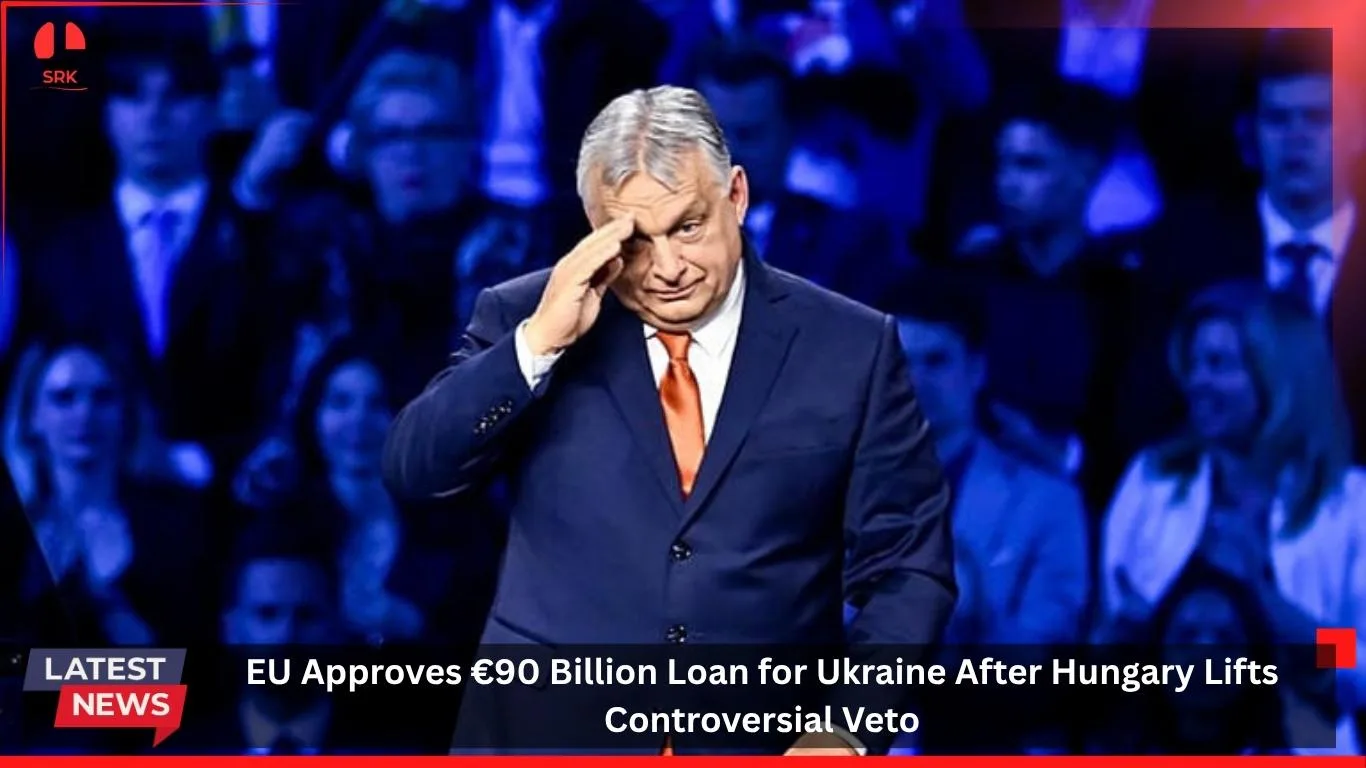
The European Union has approved a landmark €90 billion loan package for Ukraine after Hungary unexpectedly lifted its veto, ending weeks of tense negotiations. The financial aid is designed to support Ukraine’s economy, bolster its defense capabilities, and stabilize its institutions amid the ongoing war with Russia.
Hungary’s Role in the Negotiations
Hungary had previously blocked the loan, citing concerns over financial transparency and the distribution of funds.
- Initial Veto: Hungary argued that EU funds should not be misused.
- Diplomatic Pressure: Other EU member states applied significant pressure on Budapest.
- Final Decision: Hungary lifted its veto, allowing unanimous approval of the package.
Loan Breakdown
The €90 billion loan is structured to provide immediate relief and long-term support.
| Allocation Area | Amount (€ Billion) | Purpose |
|---|---|---|
| Defense Support | 30 | Weapons, logistics, training |
| Economic Stabilization | 25 | Currency support, inflation control |
| Infrastructure | 20 | Rebuilding roads, energy grids |
| Humanitarian Aid | 15 | Refugee support, medical supplies |
This distribution reflects the EU’s commitment to both military and civilian needs in Ukraine.
EU Leaders’ Statements
- European Commission: “This package demonstrates Europe’s unity in supporting Ukraine.”
- German Chancellor: “Hungary’s decision to lift its veto is a turning point for EU solidarity.”
- French President: “The loan is not just financial aid—it is a political signal to Russia.”
Ukraine’s Response
Ukrainian officials welcomed the loan, describing it as a lifeline for the nation’s survival.
- Economic Relief: Funds will stabilize Ukraine’s currency and prevent economic collapse.
- Military Boost: Defense allocations will strengthen Ukraine’s resistance against Russian aggression.
- Public Sentiment: Citizens expressed gratitude for EU solidarity, though concerns remain about long-term sustainability.
Historical Context of EU Aid to Ukraine
| Year | Aid Package | Amount (€ Billion) | Outcome |
|---|---|---|---|
| 2014 | Post-Crimea crisis | 11 | Stabilized economy |
| 2022 | War emergency fund | 50 | Supported defense and refugees |
| 2026 | Current loan | 90 | Largest package in EU history |
This timeline shows the increasing scale of EU support as the conflict escalates.
Expert Opinions
- Economists: “The loan will prevent immediate collapse but Ukraine’s debt burden will grow.”
- Security Analysts: “Defense allocations are crucial to maintaining Ukraine’s resistance.”
- Diplomatic Observers: “Hungary’s reversal shows the power of EU unity under pressure.”
Challenges Ahead
Despite the approval, challenges remain:
- Debt Sustainability: Ukraine must manage repayment in the long term.
- Transparency: EU demands strict monitoring of fund usage.
- Geopolitical Risks: Russia may escalate in response to increased EU support.
Conclusion
The EU’s approval of a €90 billion loan for Ukraine marks a historic moment in European solidarity, made possible after Hungary lifted its controversial veto. While the package provides immediate relief and strengthens Ukraine’s defense, questions about debt sustainability and geopolitical consequences remain. The decision underscores the EU’s determination to stand united in the face of Russian aggression.
Disclaimer
This article is based on publicly available information and commentary regarding the EU’s approval of a €90 billion loan for Ukraine and Hungary’s decision to lift its veto. It is intended for informational purposes only and does not represent official statements from governments or EU institutions. Readers should rely on official sources for verified updates.