








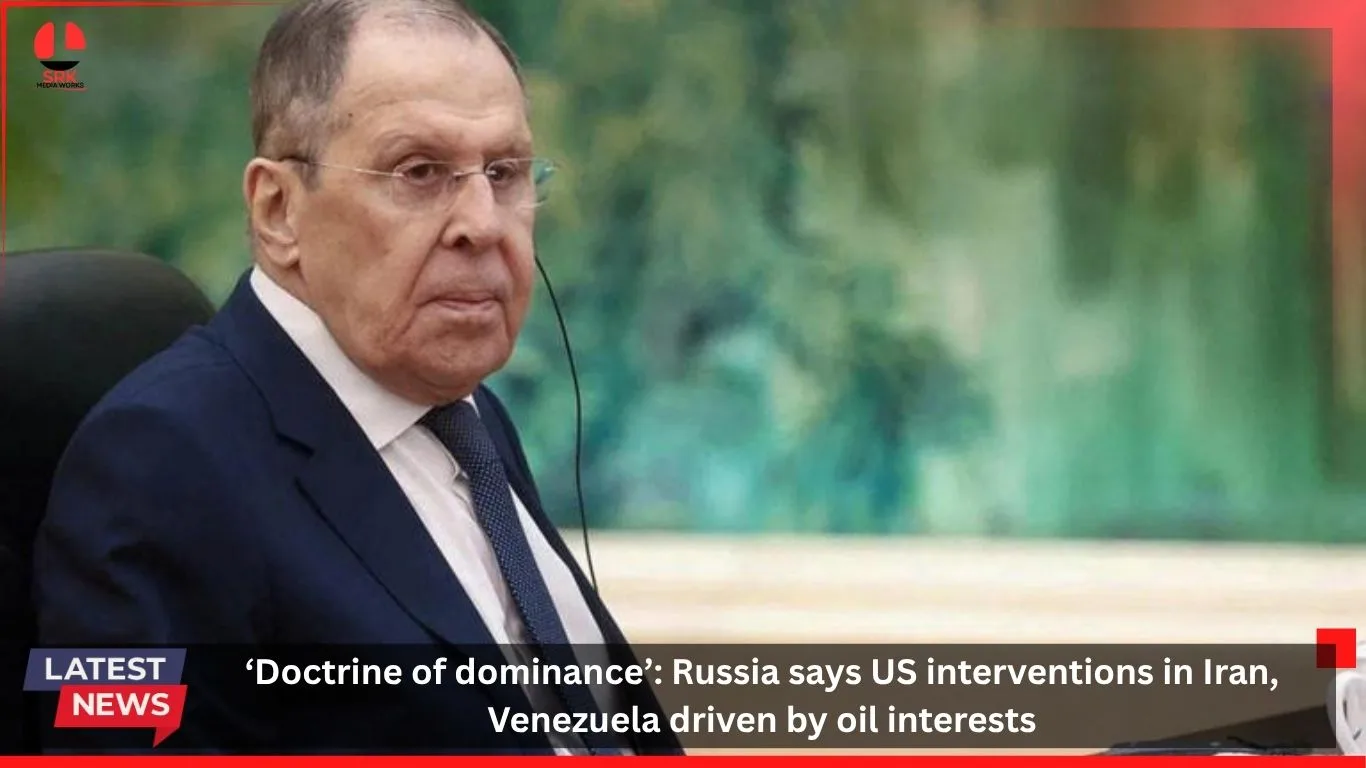
Russia has accused the United States of pursuing a “doctrine of dominance” in its foreign interventions, claiming that Washington’s actions in Iran and Venezuela are primarily driven by oil interests rather than democratic values or humanitarian concerns. The statement reflects Moscow’s broader narrative that U.S. foreign policy is shaped by energy geopolitics and the desire to control global resources.
Russia’s Position
Russian officials argue that U.S. interventions in energy-rich nations reveal a consistent pattern of prioritizing access to oil reserves. According to Moscow, Washington’s sanctions, military strategies, and diplomatic maneuvers are designed to weaken governments that resist American influence while securing control over vital energy markets.
Key Points from Russia’s Claim:
- Energy-Centric Strategy: U.S. actions in Iran and Venezuela are allegedly aimed at controlling oil flows.
- Sanctions as Tools: Economic restrictions are viewed as mechanisms to destabilize governments and redirect energy trade.
- Global Dominance: Russia asserts that the U.S. seeks to maintain its leadership in global energy markets by undermining rivals.
U.S. Policy in Iran and Venezuela
Washington has long maintained sanctions against Iran, citing concerns over nuclear development and regional destabilization. Similarly, Venezuela has faced heavy sanctions due to alleged corruption, human rights abuses, and suppression of democracy under Nicolás Maduro.
However, Russia contends that these justifications mask the true motive: securing influence over oil-rich nations.
Comparative Overview
| Country | U.S. Official Justification | Russia’s Interpretation |
|---|---|---|
| Iran | Prevent nuclear weapons, regional stability | Control over Middle Eastern oil markets |
| Venezuela | Promote democracy, counter corruption | Access to vast oil reserves |
Global Energy Geopolitics
Energy has long been a central factor in international relations. Control over oil reserves not only ensures economic stability but also strengthens geopolitical leverage. Russia’s claim highlights the broader competition between major powers for dominance in energy markets.
Pivot Analysis: U.S. Doctrine of Dominance vs. Global Energy Balance
| Factor | U.S. Approach (as per Russia) | Global Impact |
|---|---|---|
| Oil Market Control | Targeting energy-rich nations | Disruption of global supply chains |
| Sanctions Strategy | Economic pressure on rivals | Increased volatility in oil prices |
| Military Presence | Securing strategic regions | Heightened regional tensions |
| Diplomatic Influence | Promoting U.S.-aligned policies | Polarization in international relations |
Russia’s Counter-Narrative
Moscow positions itself as a defender of sovereignty, arguing that nations should have the right to manage their resources without external interference. Russia has deepened ties with both Iran and Venezuela, offering economic and military support to counter U.S. sanctions.
This narrative serves Russia’s own interests, portraying itself as a global alternative to U.S. dominance while strengthening alliances with energy-rich states.
Reactions from Global Powers
The claim has sparked debate among international observers. While some analysts agree that energy plays a central role in U.S. foreign policy, others argue that Washington’s actions are driven by broader concerns such as security, democracy, and human rights.
Reactions Overview
| Group/Community | Reaction to Russia’s Claim | Potential Impact |
|---|---|---|
| U.S. Officials | Reject accusations, emphasize democracy values | Reinforces existing policy narratives |
| European Allies | Mixed views, cautious alignment with U.S. | Balancing energy needs with diplomacy |
| Global South Nations | Sympathy for sovereignty narrative | Strengthened ties with Russia/Iran/Venezuela |
| Energy Analysts | Recognition of oil’s central role | Calls for diversified energy strategies |
Historical Context
Russia’s accusation is not new. Throughout history, U.S. interventions in regions like the Middle East have often been linked to energy interests. From the Gulf War to sanctions on Iran, oil has remained a recurring theme in critiques of American foreign policy.
Implications for Future Relations
The claim underscores the growing divide between Washington and Moscow. As energy markets evolve, competition between the two powers is likely to intensify. The U.S. continues to push for sanctions and diplomatic isolation of Iran and Venezuela, while Russia seeks to expand its influence by supporting these nations.
Looking ahead:
- Energy Competition: Oil and gas will remain central to U.S.-Russia rivalry.
- Sanctions vs. Alliances: Washington’s sanctions may deepen Moscow’s partnerships with targeted states.
- Global Polarization: Nations may be forced to align with either U.S. or Russian narratives.
Conclusion
Russia’s assertion that U.S. interventions in Iran and Venezuela are driven by oil interests under a “doctrine of dominance” reflects the enduring role of energy in global geopolitics. While Washington frames its actions around democracy and security, Moscow insists that oil remains the true motive. The debate highlights the complex interplay of power, resources, and ideology shaping international relations in the 21st century.
Disclaimer
This article is based on publicly available geopolitical commentary and analysis. It does not represent endorsement or criticism of any nation or policy. The content is intended for informational purposes only, highlighting the dynamics of energy politics, foreign policy strategies, and global competition. Readers are encouraged to explore diverse perspectives before forming conclusions.