
The political crisis in Manipur has deepened further with Kuki-Zo MLAs boycotting the formation of the new government following the resignation of Chief Minister N Biren Singh, while the state BJP leadership remains conspicuously silent on their concerns. This standoff is expected to worsen the existing ethnic rift between the Meitei and Kuki-Zo communities, which has already claimed over 220 lives since violence erupted in May 2023.
Context: Political vacuum amid ethnic unrest
On July 4, CM N Biren Singh tendered his resignation after weeks of speculation and pressure from multiple BJP factions demanding a leadership change to restore stability in the state. However, despite Union Home Minister Amit Shah’s intervention in the crisis, efforts to form a new government have stalled due to the boycott by ten Kuki-Zo MLAs, including eight from the ruling BJP and two from allied parties.
These MLAs have categorically stated that they will not participate in the formation of the new government until their demands for:
- A separate administration for Kuki-Zo dominated hill areas,
- Assurance of security for their people, and
- Rehabilitation of displaced families,
are addressed meaningfully by both the Centre and state leadership.
Manipur BJP chief’s silence raises concerns
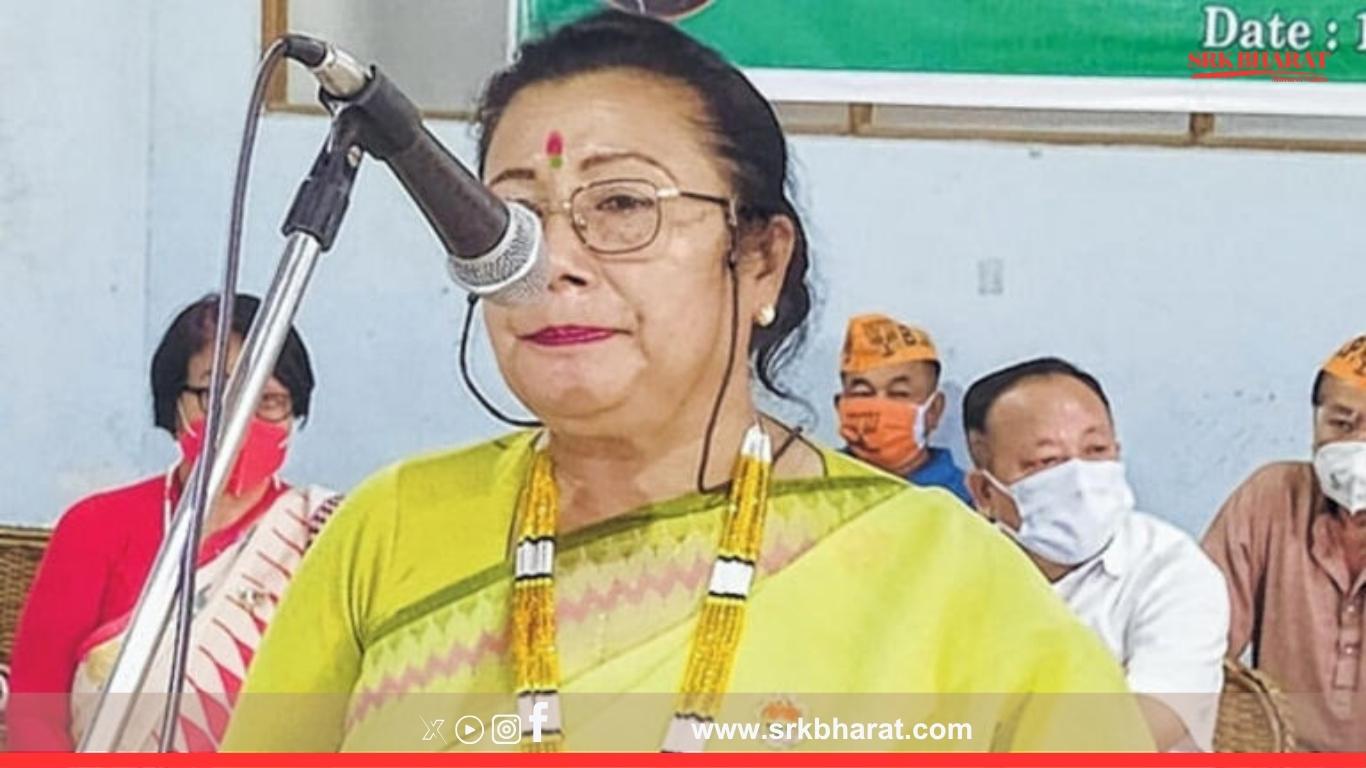
Surprisingly, A Sharda Devi, president of Manipur BJP, has refrained from making any statement regarding the boycott. During a press briefing on Monday evening, when asked about the Kuki-Zo MLAs’ demands, she responded briefly:
“The party is in discussion with all stakeholders. We will comment when an appropriate decision is reached.”
Her silence on their specific demands, however, has led to severe criticism from political observers and Opposition parties, who accuse the BJP of ignoring tribal grievances even as it seeks to stabilise its government in Imphal.
Kuki-Zo MLAs: Boycott as a strategic move
The Kuki-Zo MLAs’ boycott is seen as a strategic assertion of their long-pending political demands. In a joint statement released after their meeting in Churachandpur, they declared:
“We cannot be part of any government that fails to protect our people, restore normalcy, and ensure a dignified political future for the Kuki-Zo.”
They reiterated their support for a separate administration within Manipur under Article 244, or a Union Territory model, claiming the Meitei-dominated government has lost its legitimacy to govern hill areas.
BJP’s predicament in Manipur
| Manipur Assembly Composition (2025) |
|—|—|
| Total seats | 60 |
| BJP | 30 |
| NPP (ally) | 7 |
| NPF (ally) | 5 |
| Kuki People’s Alliance (ally) | 2 |
| Congress | 12 |
| Others | 4 |
With eight BJP Kuki-Zo MLAs boycotting, the BJP’s effective strength is reduced. While it still technically retains a majority with NPP and NPF support, the absence of Kuki-Zo representation in the cabinet formation process will:
- Further alienate tribal communities
- Undermine the legitimacy of any new CM among the hill districts
- Potentially encourage greater political assertion by Kuki-Zo civil society groups and militant organisations demanding a separate administration
Opposition’s reaction
Congress leader Jairam Ramesh criticised the BJP’s approach, stating:
“This silence on Kuki-Zo MLAs’ boycott shows the BJP’s insensitivity to tribal concerns. Peace is impossible without political dignity.”
Naga People’s Front (NPF) urged the BJP to address tribal demands before installing a new CM to avoid deepening communal divides.
Civil society concerns
Kuki Inpi Manipur (KIM) and the Indigenous Tribal Leaders’ Forum (ITLF) have declared they will not recognise any government formed without meaningful consultation with Kuki-Zo MLAs. An ITLF spokesperson stated:
“Ignoring our elected representatives is equal to denying our people democratic rights. Delhi and Imphal must engage with sincerity.”
Meitei organisations counter demands
Meanwhile, Meitei civil society groups like Courage Manipur have rejected calls for separate administration, calling it “balkanisation of the state”. They urged BJP leadership to form a government without “succumbing to divisive pressures.”
Centre’s dilemma: Negotiation or imposition?
The Union Home Ministry has thus far urged restraint and continues back-channel talks with Kuki-Zo leaders. However, insiders indicate Delhi is unwilling to accept any territorial division of Manipur. A senior BJP leader remarked:
“We are open to greater autonomy for Hill Councils, but division of state is non-negotiable.”
Experts analyse the silence
Political analyst Dr Ratan Debbarma noted:
“Manipur BJP chief’s silence indicates indecision at both state and central levels. The party is trapped between Meitei opposition to division and Kuki-Zo assertion of their demands as precondition for peace.”
Constitutional expert Indira Jaising added:
“Ignoring the boycott undermines democratic representation. Peace requires inclusive power sharing, not majoritarian imposition.”
Possible scenarios ahead
- New CM formation without Kuki-Zo MLAs: Will trigger widespread tribal protests and deepen ethnic polarisation.
- Negotiated settlement before government formation: Demands may include greater financial and administrative powers to Hill Areas Committee and ADCs under the Sixth Schedule framework.
- Imposition of President’s Rule: If consensus remains elusive, central rule remains a constitutional possibility, though politically undesirable.
Public sentiments
Social media in Manipur reflected polarised views:
- “Kuki-Zo MLAs are right to boycott. How can they sit with those who failed to protect them?”
- “BJP is ignoring tribals but wants their votes during elections.”
- “No to separate administration. One Manipur only.”
- “Peace must come with justice for all communities.”
Final thoughts
The silence of the Manipur BJP chief on Kuki-Zo MLAs’ boycott reflects the ruling party’s strategic dilemma in balancing ethnic interests to restore governance in the troubled state. With the scars of last year’s violence still raw, forming a government without addressing tribal grievances risks further destabilisation.
As Delhi weighs its options, the coming weeks will determine whether Manipur sees a healing political settlement or descends deeper into ethnic fragmentation, jeopardising both governance and peace prospects in the sensitive border state.
Disclaimer: This news article is for informational purposes only. It includes political statements, public data, and expert analyses based on field reports. Final government decisions, party strategies, and official negotiations remain subject to confirmation.