




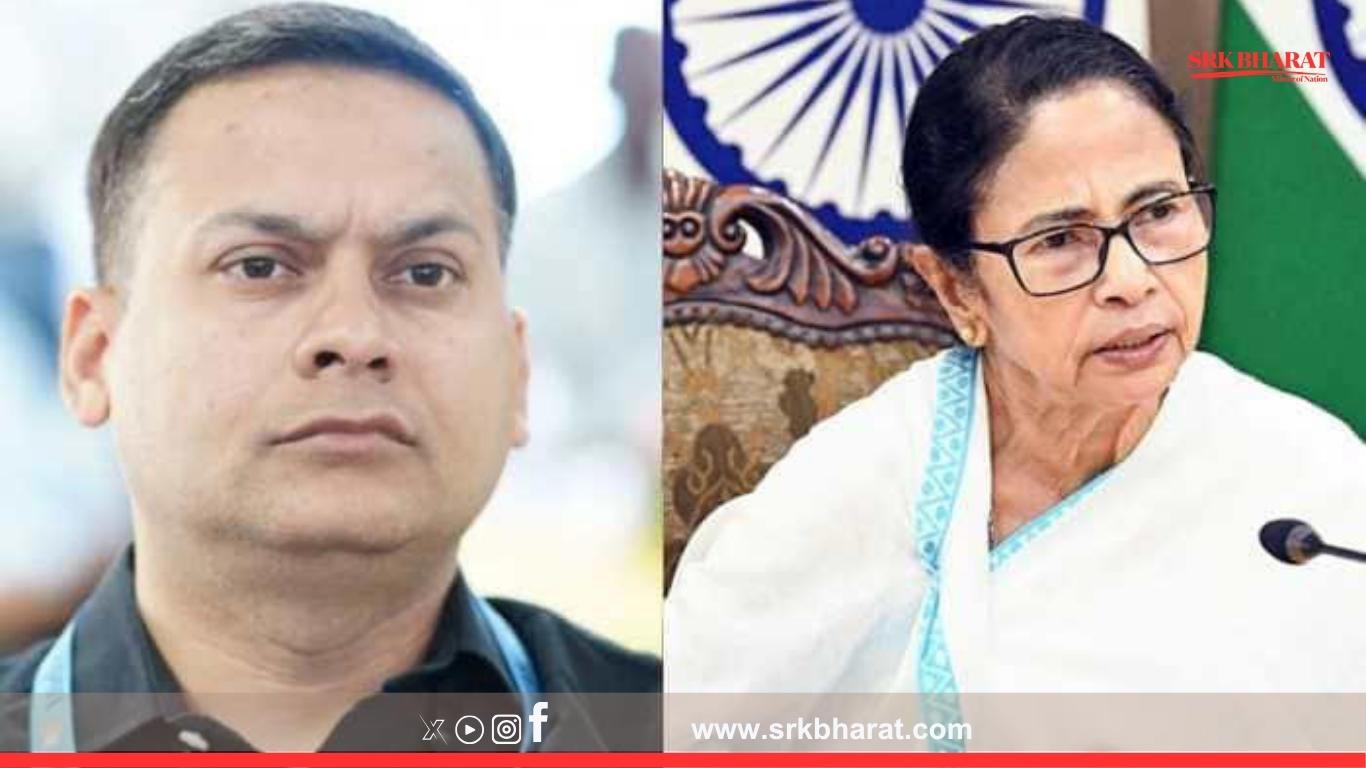
BJP IT Cell chief Amit Malviya has launched a scathing attack on West Bengal Chief Minister Mamata Banerjee, accusing her government of destroying the state’s higher education system, leading to an unprecedented exodus of undergraduate students to colleges outside Bengal. His remarks come amid growing concerns over the alarming trend of students from Bengal opting for universities in neighbouring states due to academic uncertainties, admission chaos, and rising campus violence in the state.
The controversy: Malviya’s sharp criticism
Taking to X (formerly Twitter) on Monday, Amit Malviya wrote:
“Bengal’s brightest are forced to flee to Delhi, Karnataka, Maharashtra, or even neighbouring states because Mamata Banerjee’s Trinamool Congress has completely ruined the higher education system. From syndicate-controlled admissions to violent student politics, Bengal’s campuses have become unsafe for academic growth.”
His comments triggered a political storm in Bengal, with Trinamool leaders hitting back, accusing the BJP of “distorting facts to malign the state’s education sector.”
The exodus in numbers
Recent reports from West Bengal Council of Higher Secondary Education and university admission data indicate:
| Year | Students applying to colleges outside Bengal | Key destinations |
|---|---|---|
| 2018 | ~20,000 | Delhi, Karnataka, Odisha |
| 2019 | ~25,000 | Maharashtra, Tamil Nadu |
| 2020 | ~28,000 | Assam, Karnataka |
| 2021 | ~35,000 | Delhi, UP, Haryana |
| 2022 | ~42,000 | Odisha, Karnataka, Delhi |
| 2023 | ~51,000 | Karnataka, Maharashtra, Delhi |
This sharp rise has been attributed to multiple factors:
- Limited seats in government colleges compared to annual HS pass-outs.
- UG admissions controversies due to new eligibility criteria and CUET-based confusion.
- Campus political violence, particularly in state universities.
- Concerns over academic credibility following frequent teacher recruitment scams and appointments tainted by corruption allegations.
- Better placements and exposure in out-of-state colleges, especially private universities.
Malviya’s direct allegations
Malviya alleged that syndicate raj in college admissions was destroying meritocracy:
“Poor students who cannot pay syndicate bribes are denied seats despite scoring well. TMC’s student wing has converted education into a political weapon.”
He also criticised the state’s refusal to implement Central University Entrance Test (CUET) effectively across colleges:
“While the entire nation is streamlining higher education with uniform entrance systems, Bengal remains trapped in outdated models to protect Trinamool’s campus hegemony.”
TMC hits back
In response, Trinamool MP Saugata Roy dismissed Malviya’s allegations as “baseless propaganda”:
“Students move for better opportunities everywhere. Bengal’s education system remains one of the best, with top institutions like Presidency, Jadavpur, and Calcutta University continuing their academic excellence.”
Education Minister Bratya Basu added:
“BJP should focus on NEET and CUET chaos before preaching to Bengal. Malviya has no moral right to speak on education.”
Educationists weigh in
However, several educationists have expressed concern over the rising exodus. Professor Sukanta Chaudhuri, a former faculty at Jadavpur University, noted:
“The trend is real. While political mudslinging is unhelpful, the government must address systemic weaknesses to retain talent. Increasing UG seats and ensuring clean recruitment are urgent needs.”
Students’ voices: What drives the migration?
Interviews with first-year UG students from Bengal studying in Delhi, Bangalore, and Pune reveal common factors:
- “In Kolkata, UG seats are few and cutoffs fluctuate without clarity.”
- “Hostel facilities are poor and unsafe in many state colleges.”
- “Private colleges in Bangalore offer better placements.”
- “My parents wanted me to study away from campus violence.”
A growing section of students from semi-urban districts like Bankura, Purulia, Murshidabad, and Malda are now choosing South Indian deemed universities for science and commerce courses due to perceived better industry links.
Opposition attacks intensify
West Bengal BJP President Sukanta Majumdar echoed Malviya’s views, saying:
“Trinamool has failed Bengal’s youth. From job scams to campus syndicates, they have shattered dreams. Our students deserve education with dignity.”
He also called for a comprehensive state education policy reform if BJP is voted to power in Bengal in 2026.
State government’s counter measures
The state higher education department has announced:
- Increasing UG seats in state universities by 20% in 2025-26.
- Infrastructure upgrades in district colleges under the Utkarsha Bangla scheme.
- Special career counselling cells to guide students on national-level exams and placements.
- Digital governance reforms to curb admission corruption and bring transparency.
Political implications ahead of 2026 polls
Analysts view Malviya’s direct attack as a part of BJP’s strategic shift to target Mamata Banerjee’s education policies ahead of the 2026 Assembly elections, with youth voters forming nearly 40% of Bengal’s electorate. Poll strategist Biswanath Chakraborty noted:
“Education is emerging as a critical plank for both BJP and TMC. If the exodus continues, it becomes a potent narrative against Trinamool’s governance claims.”
Final thoughts
The exodus of undergraduate students from Bengal to other states has exposed glaring gaps in the state’s higher education ecosystem, despite political claims to the contrary. While Amit Malviya’s criticism may carry partisan overtones, the underlying issue remains a harsh reality for lakhs of aspirational students.
For the Trinamool Congress, resolving admission irregularities, curbing campus violence, and improving placements will be crucial to retaining the confidence of Bengal’s youth – and by extension, their families – in the run-up to the politically decisive 2026 state elections.
Disclaimer: This news article is for informational purposes only. It includes political statements, public data, and expert analyses based on field reports. Final policy outcomes, student data, and party strategies remain subject to official confirmation and institutional disclosures.