



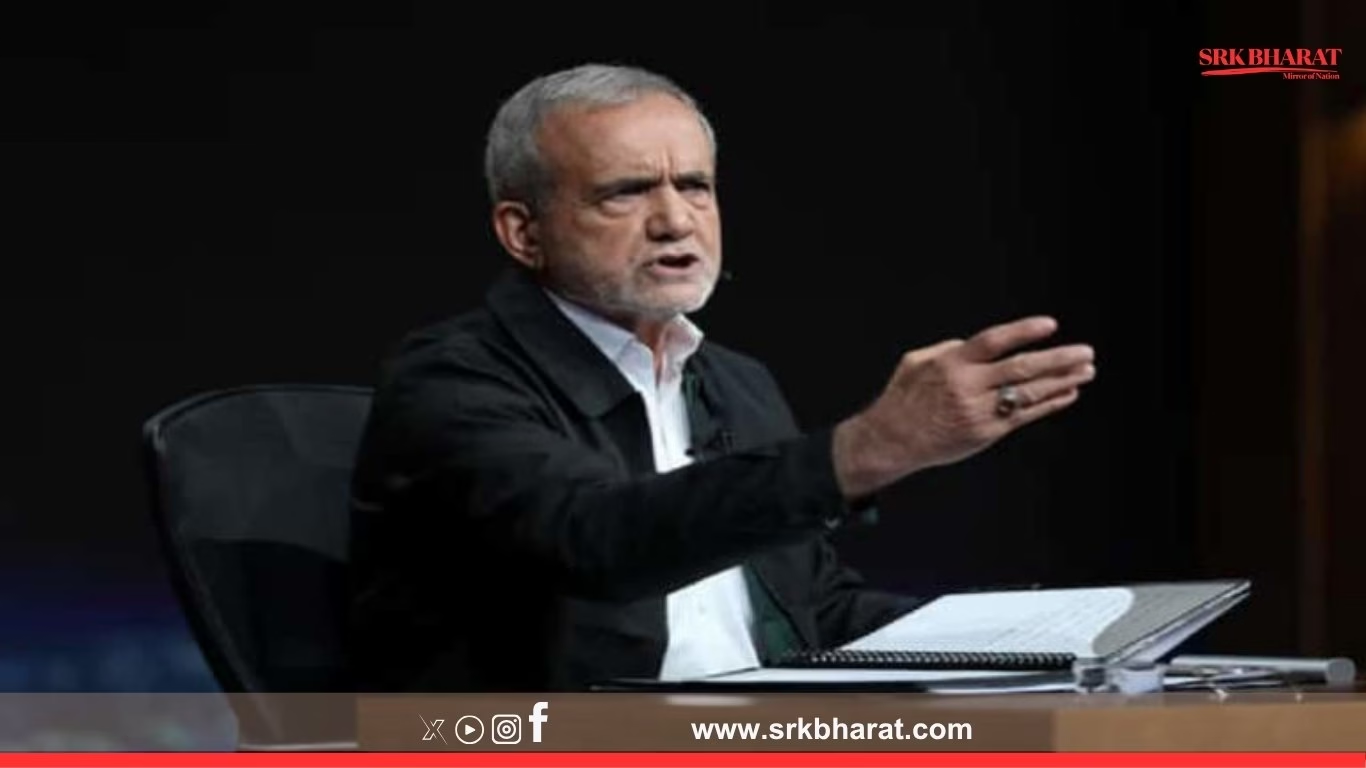
In a significant development amid rising tensions in West Asia, Iranian President Ebrahim Raisi arrived in Islamabad on a high-profile state visit, aimed at reinforcing diplomatic, economic, and security ties between Iran and Pakistan. The visit, marked by ceremonial welcomes and closed-door meetings, comes against a backdrop of regional instability, strained Iran-West relations, and evolving geopolitical alignments in the Middle East and South Asia.
The Iranian leader’s arrival on Pakistani soil signals a potential shift in regional diplomacy and bilateral cooperation, especially in the areas of border security, energy cooperation, counterterrorism, and connectivity projects. His visit has been described by Pakistani officials as a “turning point” in the trajectory of Pakistan-Iran ties.
Strategic Significance of Raisi’s Visit to Islamabad
President Raisi’s visit, the first since taking office in 2021, follows a pattern of increased Iranian outreach to neighbouring countries amid heightened global isolation. It is widely seen as a move to counterbalance diplomatic pressures from Western nations while strengthening ties with immediate neighbors such as Pakistan.
The timing of the visit is particularly noteworthy, coinciding with:
- Ongoing Israel-Gaza conflict and wider West Asia turbulence
- Renewed US sanctions and nuclear deal deadlock with Tehran
- China’s rising involvement in Middle East diplomacy
- Islamabad’s increasing energy needs and border challenges
Pakistan and Iran share a 900-km-long porous border, often troubled by smuggling, militant incursions, and unrest. Raisi’s engagements in Islamabad include high-level talks with Prime Minister Shehbaz Sharif, President Asif Ali Zardari, and top military officials, highlighting mutual concerns on security and economic cooperation.
Key Agendas Discussed During the Visit
| Agenda Item | Description |
|---|---|
| Border Security | Coordination on intelligence sharing, anti-terror operations, and fencing |
| Energy Cooperation | Gas pipeline project revival, electricity exports to Balochistan |
| Regional Connectivity | Enhancement of Chabahar-Gwadar integration and transit agreements |
| Trade Expansion | Increasing bilateral trade volume from $2 billion to $5 billion |
| Diplomatic Coordination | Joint stance on Israel-Palestine crisis, Afghanistan peace process |
| Religious Diplomacy | Cooperation on pilgrimage management and Shia-Sunni harmony |
During talks, both sides reaffirmed their commitment to reviving the Iran-Pakistan gas pipeline, also known as the “Peace Pipeline,” a stalled mega-project originally aimed at delivering Iranian natural gas to Pakistan to combat energy shortages. With the US still imposing sanctions on Iran’s energy exports, this topic remains diplomatically sensitive but strategically vital for Islamabad.
Context: West Asia on the Brink
President Raisi’s trip unfolds amid unprecedented tension in West Asia, especially following escalations between Iran-backed groups and Israeli forces. Regional analysts note that Iran is actively seeking to shore up relations with Muslim-majority neighbors to create a buffer against Western pressure and regional isolation.
This move mirrors Iran’s growing engagement with countries like Saudi Arabia (after Chinese-mediated talks), Iraq, Syria, and now Pakistan. The intent is to weaken the strategic influence of the United States in the Middle East while amplifying South-South cooperation.
Pakistan, on the other hand, finds itself balancing ties between Iran and Saudi Arabia, both of whom have recently repaired diplomatic relations. With its neutral stance on the Israel-Gaza war and focus on internal economic recovery, Islamabad appears keen to deepen regional connectivity without entering geopolitical fault lines.
Bilateral Trade: Vision for Expansion
Despite shared borders and cultural links, Pakistan-Iran trade has historically been underwhelming, primarily due to sanctions, currency constraints, and lack of formal banking channels. Currently, bilateral trade is estimated at approximately $2 billion annually, dominated by:
- Iranian LPG and crude oil exports
- Pakistani rice, textiles, and surgical instruments
| Year | Trade Volume (USD Billion) | Major Exports from Iran | Major Exports from Pakistan |
|---|---|---|---|
| 2019 | 1.3 | LPG, crude oil, fruits | Rice, textiles, surgical tools |
| 2021 | 1.7 | Electricity, cement | Food grains, sports goods |
| 2023 | 2.1 | Petrochemicals, metals | Pharma, construction materials |
During Raisi’s visit, both governments agreed on plans to enhance banking connectivity, establish barter trade mechanisms, and expedite the opening of new border markets. The long-discussed plan to settle trade in local currencies and digital payment platforms was revisited with renewed urgency.
Energy Projects in Focus
A central theme of the visit was Iran’s offer to help alleviate Pakistan’s energy crisis through expanded power supply and gas exports. Iran already provides electricity to parts of Balochistan, and discussions were held to upgrade transmission lines to power-deprived districts in southern Pakistan.
The Iran-Pakistan gas pipeline, though stalled due to international sanctions, remains a highly strategic project. Iran has completed its portion of the pipeline up to the border, and has pressured Pakistan to act on its delayed construction. Raisi reportedly proposed a phased implementation with legal protections, offering diplomatic cover to shield Pakistan from Western backlash.
Border Management: The Need for Coordination
Both nations have experienced sporadic militant attacks near the Baluchistan-Sistan border region. In January 2024, a brief military standoff erupted when both sides launched retaliatory strikes against militant bases along the border.
To address this, Raisi and Pakistani military leaders discussed:
- Joint patrolling mechanisms
- Real-time intelligence sharing
- Fencing and surveillance technologies
- Development of border trade hubs to reduce smuggling
| Border Challenge | Proposed Solution |
|---|---|
| Cross-border terrorism | Real-time intelligence exchange, joint exercises |
| Drug smuggling | Surveillance drones, fencing vulnerable points |
| Informal trade routes | Legal border markets with biometric systems |
| Refugee influx | Coordinated refugee registration and aid centres |
Religious and Cultural Engagement
Raisi also held meetings with Islamic scholars and leaders from various sects in Pakistan. Given Pakistan’s significant Shia population and Iran’s role as a Shia-majority nation, the visit sought to promote sectarian harmony and religious tourism.
A joint framework is in development to streamline Ziyarat pilgrimages to Iranian holy sites for Pakistani citizens, including plans for digital visa facilitation and secured transport corridors.
Regional Diplomatic Alignment
Observers say Raisi’s visit could help shape a new regional axis involving Pakistan, Iran, China, and Central Asian countries. This may involve projects like:
- North-South Transport Corridor
- Integration of Gwadar and Chabahar ports
- New pipelines and rail linkages
While geopolitical constraints persist, particularly from the West, Iran’s pivot to regional diplomacy and Pakistan’s economic compulsions may force greater alignment between the two nations.
Expert Opinions
Diplomats and foreign policy analysts in both countries consider Raisi’s visit a breakthrough opportunity to untangle economic, energy, and security knots. However, most stress that follow-through and institutional mechanisms will be key to actual progress.
Some also caution that Pakistan must tread carefully to avoid antagonizing Western allies or Gulf partners, especially amid a fragile IMF loan and Saudi investment assurances.
Conclusion
President Ebrahim Raisi’s state visit to Pakistan amid growing regional tension highlights the shared interests and mutual challenges facing both nations. While symbolic in nature, the engagements may catalyze long-awaited progress in trade, energy cooperation, and border security.
The visit also underscores a larger trend: West Asian powers are diversifying alliances and deepening ties across Asia—a shift that could redraw diplomatic and economic maps over the coming years.
Disclaimer: This article is based on publicly available information and official statements. Specific agreements and proposals are subject to change based on ongoing diplomatic negotiations and international regulations.