



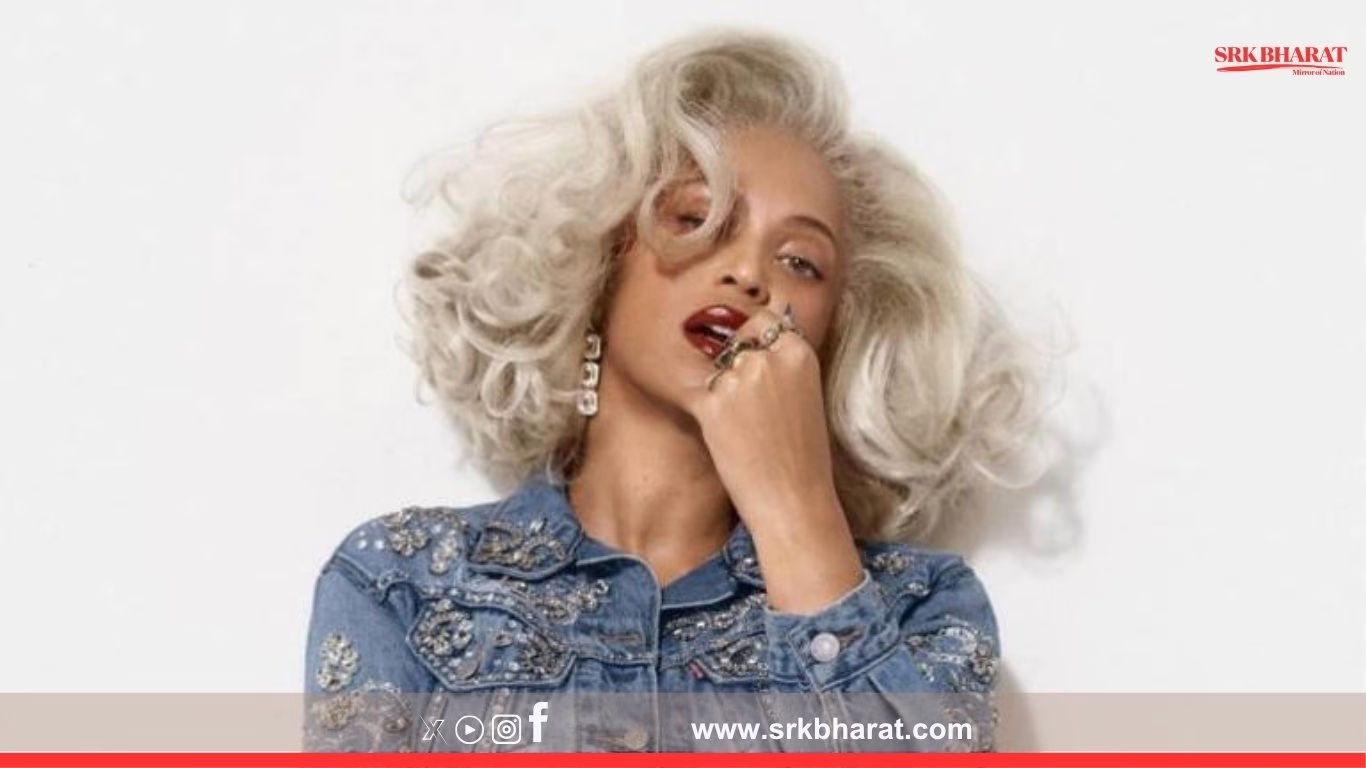
In yet another explosive opinion piece, British broadcaster and columnist Piers Morgan has taken aim at global music icon Beyoncé over her latest advertisement campaign, which appears to draw heavy inspiration from the legendary Hollywood actress Marilyn Monroe. Morgan criticized the ad as “tone-deaf” and “superficially glamorized,” accusing Beyoncé of appropriating Monroe’s image without fully understanding or acknowledging the deeper complexities of the late star’s life and legacy.
The ad, part of a luxury fragrance and fashion campaign, features Beyoncé styled in platinum blonde curls, draped in a figure-hugging white gown reminiscent of Monroe’s iconic look from The Seven Year Itch. The aesthetic nod immediately drew comparisons on social media, with fans and critics debating whether it was homage, appropriation, or artistic interpretation. However, it was Piers Morgan’s sharply worded take that truly ignited the controversy.
Piers Morgan’s Commentary: Cultural Commentary or Personal Vendetta?
Morgan’s criticism was published in his regular column, where he questioned Beyoncé’s intentions behind channeling Monroe, a woman whose public glamour belied deep personal trauma. “Marilyn Monroe wasn’t just a sex symbol; she was a tragic figure, a product of Hollywood’s cruelty and exploitation,” Morgan wrote. “To reduce her to just a look or a mood board for branding perfume is an insult.”
He further added, “This isn’t about homage. It’s about commodifying Monroe’s vulnerability to sell an image. Beyoncé, who’s often hailed as a feminist and cultural trailblazer, should know better than to glamorize a legacy rooted in pain.”
This isn’t the first time Piers Morgan has criticized a female celebrity over marketing choices or cultural statements. Known for his outspoken and often polarizing views, Morgan has previously lashed out at Meghan Markle, Kim Kardashian, and even pop icon Madonna. However, his comments about Beyoncé have stirred particular backlash, given Beyoncé’s stature as an artist deeply embedded in modern feminist and Black cultural movements.
The Advertisement: A Closer Look
The campaign in question features Beyoncé in a dreamlike vintage Hollywood setting—complete with satin sheets, glowing studio lights, and soft-focus cinematography. The visual campaign was clearly inspired by 1950s glamour and Monroe’s most iconic moments, particularly her famous white dress moment above the subway grate.
Luxury fashion insiders claim that the ad was designed to evoke timeless femininity and old-school charm. Beyoncé’s team, while not directly addressing Morgan’s comments, maintained that the concept was a “celebration of enduring beauty icons who redefined womanhood on their own terms.”
Public Reaction: Divided Yet Vocal
Public response to both the ad and Morgan’s critique has been sharply divided. While Beyoncé’s fan base—commonly referred to as the “BeyHive”—has rallied to her defense, arguing that homage is a form of flattery and that Beyoncé has always drawn from powerful female figures, others have echoed Morgan’s concerns.
| Reaction Category | Percentage of Online Sentiment |
|---|---|
| Support for Beyoncé | 48% |
| Agreement with Morgan | 27% |
| Mixed/Neutral | 15% |
| Critical of both parties | 10% |
Notably, feminist voices within the entertainment industry have chimed in, with some expressing disappointment at the glamorization of Monroe’s image without due context, while others have argued that Beyoncé, as an artist, has every right to draw inspiration from Monroe and reinterpret it through her own cultural lens.
Celebrity and Cultural Appropriation: A Larger Debate
Morgan’s critique has reignited the long-standing debate around cultural appropriation vs. appreciation, especially when modern celebrities—particularly Black women—reclaim or reinterpret symbols of past white cultural icons. Is it fair to accuse Beyoncé of misuse, or is it part of a larger conversation about who gets to own and reinvent popular imagery?
Academic and pop culture analyst Dr. Renee Charlton noted, “What Morgan fails to consider is that Beyoncé is not copying Monroe—she’s reframing her. There’s a cultural reclamation happening here. Monroe was a victim of her time. Beyoncé, as a powerful Black woman, is telling the world that she can own that image now, not as a victim, but as a boss.”
Beyoncé’s Track Record: Celebrating Women Through Visual Art
Throughout her career, Beyoncé has used her platform to highlight the lives and stories of influential women. From her Lemonade visual album to her Homecoming documentary, she has consistently woven in themes of empowerment, ancestry, and resilience. This latest campaign, while rooted in glamor, may be interpreted as another attempt to bridge the gap between eras, cultures, and perceptions of womanhood.
| Beyoncé’s Visual Influences | Notable Campaign/Work | Theme |
|---|---|---|
| Nefertiti | Coachella Performance | Black royalty and power |
| Josephine Baker | On The Run II Tour | Resistance and sensuality |
| Toni Morrison | Black Is King | Legacy and narrative voice |
| Marilyn Monroe | Fragrance Campaign 2025 | Femininity and pop iconography |
Media and Gender Double Standards
Another point that has emerged is the gendered lens through which such criticisms are delivered. Many argue that male celebrities who evoke the legacy of cultural icons are rarely scrutinized with such intensity. When Harry Styles appeared in gender-bending outfits inspired by Bowie or Jagger, it was hailed as bold and progressive. When Beyoncé channels Monroe, it’s deemed inappropriate?
Cultural sociologist Dr. Meera Sharma commented, “There’s always a tighter moral leash on women, especially women of color, in the public eye. Piers Morgan’s critique isn’t just about Monroe—it’s about controlling the narrative around Beyoncé and how far she’s ‘allowed’ to go artistically.”
Brands Stand Behind the Campaign
Despite the backlash, the luxury brand behind the advertisement has confirmed that the campaign has yielded a 24% surge in online engagement and a 12% spike in pre-orders for the featured fragrance line within 48 hours of its release.
| Impact Metric | Pre-Campaign | Post-Campaign | Growth (%) |
|---|---|---|---|
| Social Media Impressions | 6.1 million | 7.6 million | +24% |
| Fragrance Pre-Orders | 31,000 | 34,720 | +12% |
| Campaign Hashtag Usage | 2.3 million | 3.9 million | +69% |
Clearly, despite the controversy, the campaign has captured attention—and perhaps, that was the intent all along.
Conclusion: Controversy Meets Commerce
The clash between Piers Morgan and Beyoncé underscores the complexities of fame, legacy, and interpretation in today’s image-driven culture. While Morgan’s criticisms have sparked a necessary conversation about glamorization versus acknowledgment, Beyoncé’s creative team seems focused on reframing the narrative rather than erasing it.
As always, Beyoncé remains silent amid the firestorm—letting the visuals, the impact, and perhaps the profits, speak for themselves.
Disclaimer:
This article is for informational and editorial purposes only. The views expressed by public figures quoted herein do not reflect the opinions of the publisher. Data presented is based on public engagement metrics and industry reports.