





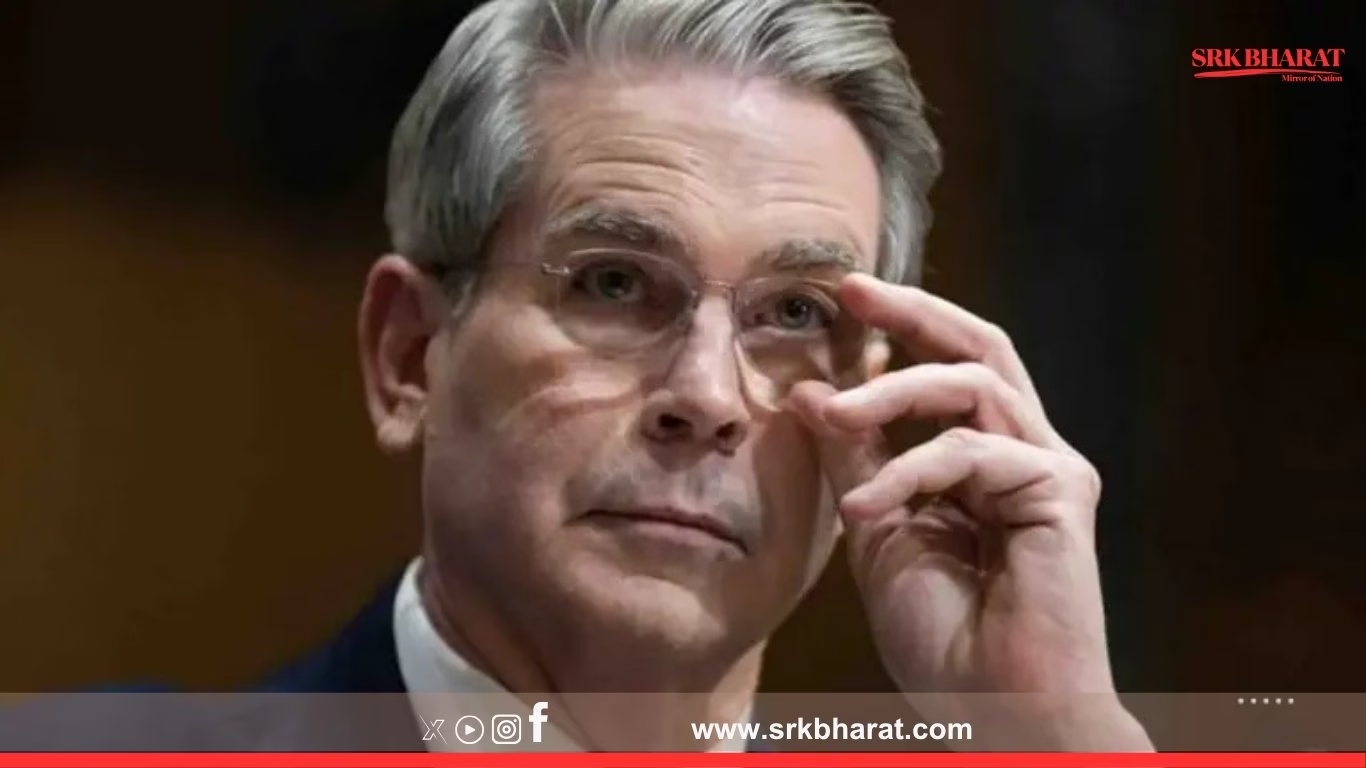
In a statement that could reshape perceptions of the ongoing global trade debate, US Treasury Secretary Scott Bessent has downplayed the unity of the BRICS bloc in response to former US President Donald Trump’s proposed tariff measures. Speaking to reporters on the sidelines of a high-level economic forum, Bessent said that despite vocal opposition to Washington’s trade policies, BRICS member nations still prioritise access to the lucrative US market, underscoring the enduring influence of the American economy.
Bessent’s comments come as trade tensions remain at the forefront of global economic discussions. Trump, who has repeatedly advocated for steep tariffs on imports from countries he accuses of unfair trade practices, has suggested that a second term in office would see even more aggressive trade measures—possibly including tariffs of up to 60% on certain goods. These proposals have drawn sharp criticism from BRICS members, who see them as protectionist moves that could disrupt global trade flows.
BRICS’ Public Unity vs. Economic Reality
While BRICS countries—Brazil, Russia, India, China, and South Africa—have publicly condemned tariff threats, Bessent argues that their economic strategies tell a different story.
“It’s easy to issue joint statements, but at the end of the day, each of these countries still wants and needs to sell to the United States,” Bessent stated. “The US market remains the most valuable destination for exporters worldwide, and that fact hasn’t changed.”
BRICS’ collective GDP represents a significant share of the global economy, but internal differences—ranging from political alignment to industrial competitiveness—often prevent the group from presenting a truly united front on trade.
| BRICS Member | Top US Export Product | US Market Share in National Exports |
|---|---|---|
| Brazil | Agricultural commodities | 14% |
| Russia | Energy & raw materials | 6% |
| India | IT services & pharmaceuticals | 17% |
| China | Electronics & manufactured goods | 18% |
| South Africa | Minerals & metals | 10% |
Trump’s Tariff Threats and Global Reactions
Donald Trump’s tariff proposals, part of his broader “America First” economic strategy, have been aimed at reducing the US trade deficit and boosting domestic manufacturing. However, economists warn that such measures could spark retaliatory tariffs, distort global supply chains, and increase costs for American consumers.
In past trade confrontations, such as the 2018–2019 US-China tariff war, American importers and consumers bore significant costs, while global economic growth slowed. Despite these risks, Trump’s proposals have resonated with parts of the US manufacturing sector, which view tariffs as a shield against low-cost imports.
Bessent’s Strategic Positioning
Scott Bessent’s remarks appear designed to reassure markets and signal that Washington remains confident in the US economy’s global draw. By framing BRICS’ unity as more rhetorical than real, Bessent is positioning the US as a trade partner whose market leverage is unmatched.
He also hinted at ongoing behind-the-scenes economic dialogues with several BRICS members, suggesting that practical trade relations often diverge from political posturing. “Countries can voice disagreement in international forums, but when it comes to actual trade deals, the reality is that everyone wants to stay connected to the US market,” he said.
Economic Interdependence: A Key Factor
The US remains one of the top destinations for BRICS exports, and American firms have deep investment ties in many BRICS economies. This interdependence complicates efforts to mount a unified pushback against US tariffs.
| Trade Metric (2024) | US | BRICS Total |
|---|---|---|
| US imports from BRICS (USD) | $1.4 trillion | 100% |
| US exports to BRICS (USD) | $680 billion | — |
| BRICS exports to US (% of GDP) | Average 12% | — |
| US share of BRICS total exports | 15% | — |
For countries like China and India, which maintain large trade surpluses with the US, any loss of access to American consumers could have significant economic repercussions.
Divergent National Priorities Within BRICS
While BRICS members often align on the need for a more multipolar world order, their economic priorities vary:
- China seeks to protect its manufacturing exports while expanding into technology and services.
- India aims to grow its IT services exports and benefit from supply chain diversification away from China.
- Brazil wants to maintain its agricultural export dominance in the US market.
- Russia remains constrained by Western sanctions, relying heavily on non-Western trade but still valuing indirect economic links.
- South Africa seeks to secure stable export markets for its minerals amid volatile commodity prices.
These differences make collective trade retaliation against the US challenging.
Potential Scenarios Moving Forward
Bessent’s comments suggest that Washington may continue to take a firm stance on tariffs without fearing a coordinated BRICS economic counteroffensive. However, several scenarios remain possible:
- Fragmented BRICS Response – Member states may choose individual negotiation strategies with Washington, undermining collective leverage.
- Targeted Retaliation – Some BRICS members could impose selective tariffs on politically sensitive US exports.
- Trade Diversification – BRICS may accelerate trade agreements with non-US partners to reduce reliance on the American market.
- Compromise and Negotiation – Quiet back-channel talks could result in tariff exemptions or sector-specific agreements.
The Global Trade Outlook
Despite political tensions, most analysts agree that decoupling from the US market is not a realistic option for BRICS economies in the near future. The US remains a consumer-driven economy with unparalleled purchasing power, advanced financial systems, and global influence in setting trade standards.
Bessent’s message, therefore, was as much about economic reality as it was about political optics—reinforcing the idea that, even in a multipolar trade world, the United States remains central to global commerce.
Disclaimer: This article is for informational purposes only and reflects publicly available data and expert analysis. It does not represent financial or political advice, nor does it endorse any particular policy stance.

перепланировка квартиры согласование http://www.soglasovanie-pereplanirovki-kvartiry3.ru .
медицинское оборудование медицинское оборудование .