


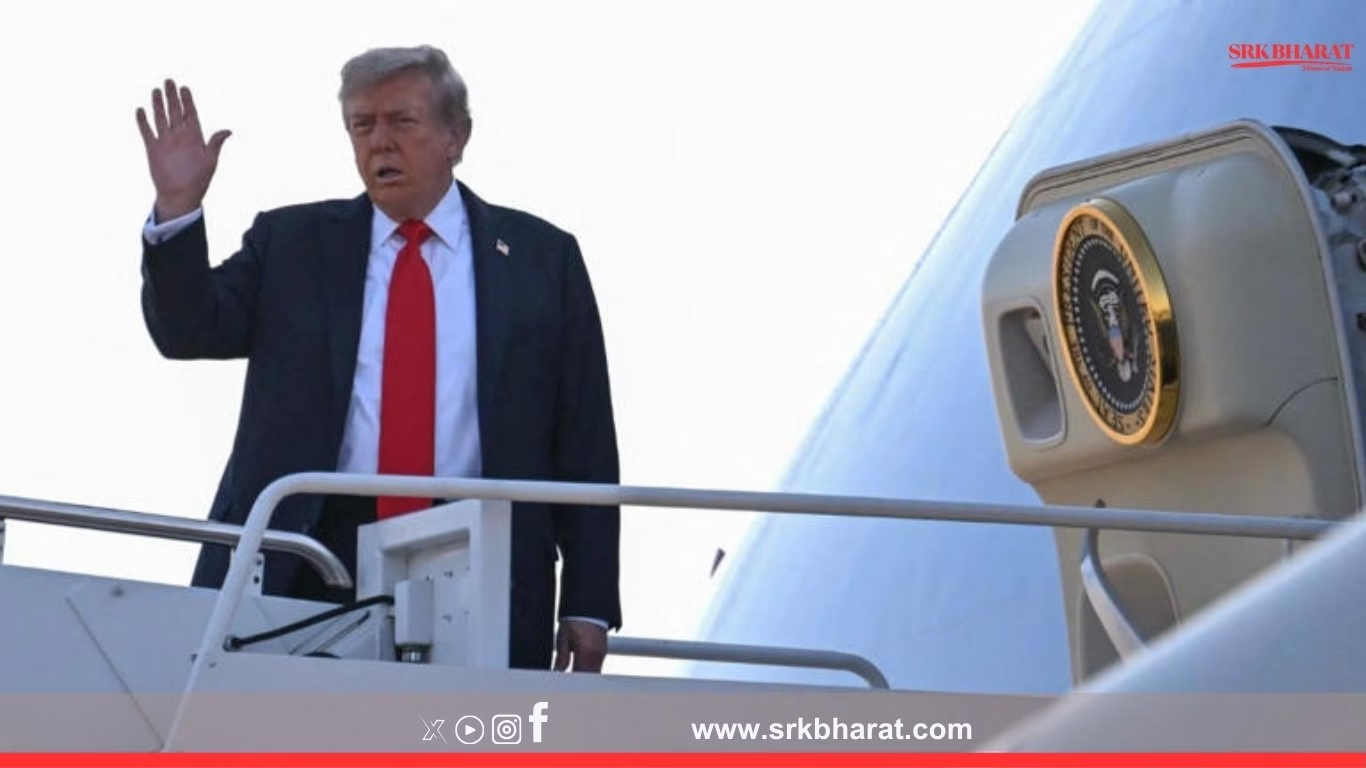
In a stunning revelation that has upended the narrative around war profiteering in the Russia-Ukraine conflict, U.S. President Donald Trump is reportedly earning a 10% commission on weapons sold to Ukraine via European intermediaries. The claim, made by U.S. Treasury Secretary Scott Bessent during a Fox News interview, has ignited controversy across diplomatic circles, especially after Bessent previously accused India of profiting from discounted Russian oil. The new disclosures suggest that Trump, not India, may be the real financial beneficiary of the prolonged war.
The report comes amid growing scrutiny of U.S. arms deals and the role of NATO countries in facilitating Ukraine’s defense procurement. With Ukrainian President Volodymyr Zelenskyy reportedly offering to purchase up to $100 billion in weapons from the U.S., Trump’s alleged 10% markup could translate into a staggering $10 billion personal cut.
🧭 Trump’s Commission Model: A New Form of War Profiteering?
According to Bessent, the U.S. is selling arms to European nations, who then resell them to Ukraine at a premium. Trump’s administration is allegedly taking a 10% commission on these transactions, effectively monetizing America’s military support without deploying ground troops.
| Transaction Flow | Description |
|---|---|
| U.S. Arms Manufacturers | Produce weapons for NATO allies |
| European Governments | Purchase weapons from U.S. at base price |
| Ukraine | Buys weapons from Europe at inflated price |
| Trump Administration | Takes 10% commission on total deal value |
This model has raised ethical and legal questions about the privatization of military aid and the monetization of geopolitical crises.
📉 India’s Role: Arbitrage, Not Aggression
In contrast, India has been accused of engaging in “arbitrage” by purchasing discounted Russian crude oil and refining it into petroleum products for resale. Bessent previously claimed India made $16 billion in “excess profits” from this practice. However, unlike Trump’s direct commission model, India’s trade is conducted through standard commercial channels and does not involve arms or military escalation.
| Country | Alleged Profit Mechanism | Nature of Trade |
|---|---|---|
| United States | 10% commission on arms sales | Military, indirect aid |
| India | Arbitrage on Russian oil | Commercial, energy trade |
The comparison has sparked debate over the definition of profiteering and whether India’s actions constitute exploitation or strategic energy diplomacy.
🧠 Strategic Implications: U.S. Military as a Revenue Tool
Trump’s approach to Ukraine’s defense has been described as transactional. He has refused to send American troops but has offered air cover—at a cost. The U.S. military, under this model, functions more like a private security firm than a national defense institution.
| Trump’s Security Offerings | Terms and Conditions |
|---|---|
| Air Cover for Ukraine | Operated from neighboring NATO countries |
| No Ground Troops | Avoids direct combat involvement |
| Article 5-Type Guarantees | Conditional, outside NATO framework |
| Commission-Based Aid | 10% markup on weapon deals |
This monetization of military support has alarmed NATO allies and raised concerns about the future of collective defense principles.
📊 Ukraine’s Arms Procurement: A $100 Billion Bonanza
Zelenskyy’s administration is reportedly negotiating arms purchases worth up to $100 billion from the U.S. and its allies. If Trump’s commission model holds, he could personally benefit by up to $10 billion—excluding taxes and other government revenues.
| Procurement Category | Estimated Value | Commission to Trump |
|---|---|---|
| Missiles & Artillery | $40 billion | $4 billion |
| Drones & Surveillance | $20 billion | $2 billion |
| Tanks & Vehicles | $25 billion | $2.5 billion |
| Ammunition & Gear | $15 billion | $1.5 billion |
| Total | $100 billion | $10 billion |
This scale of profit has led critics to label Trump as the “real profiteer” of Russia’s war on Ukraine.
🔍 Global Reactions: Allies and Critics Respond
The revelations have triggered mixed reactions globally. While some European leaders have defended the transactional model as necessary for sustaining long-term support, others have expressed discomfort with the commodification of military aid.
| Country/Entity | Reaction Summary |
|---|---|
| Poland | Supports U.S. air cover, hosts fighter jets |
| Germany | Concerned about ethical implications |
| Canada | Exploring independent security frameworks |
| Mexico | Criticized U.S. for undermining sovereignty |
| Israel | Focused on Gaza, silent on Ukraine deals |
Meanwhile, India has remained diplomatically neutral, continuing its energy trade with Russia while avoiding entanglement in the arms economy.
🧠 Ethical Debate: War, Profit, and Responsibility
The Trump commission model has reignited ethical debates about war profiteering. Critics argue that monetizing military aid undermines the moral foundation of international support and turns humanitarian crises into business opportunities.
| Ethical Concern | Description |
|---|---|
| Monetization of Aid | Treating military support as a revenue stream |
| Lack of Transparency | No public disclosure of commission terms |
| Undermining Sovereignty | Using aid to influence foreign policy |
| Erosion of Trust | Allies question U.S. motives and reliability |
Human rights organizations have called for greater oversight and transparency in arms deals, especially those involving conflict zones.
🧠 Expert Commentary
Defense analysts and economists have weighed in on the controversy. Dr. Anjali Menon, a strategic affairs expert, said:
“Trump’s commission model is unprecedented. It blurs the line between statecraft and profiteering.”
Energy economist Rakesh Sharma added:
“India’s oil trade is opportunistic but legal. Comparing it to arms commissions is misleading.”
These perspectives highlight the need to distinguish between commercial strategy and political exploitation.
📌 Conclusion
The revelation that Donald Trump is allegedly earning a 10% commission on Ukraine weapon sales has shifted the spotlight from India’s energy trade to America’s military monetization. As the Russia-Ukraine war continues, the ethics of profit-making in conflict zones are under renewed scrutiny.
While India’s arbitrage on Russian oil may raise eyebrows, it pales in comparison to the scale and directness of Trump’s alleged profiteering. In the battle of narratives, the real question is not who profits—but how, and at what cost to global stability.
—
Disclaimer: This article is based on publicly available news reports and expert commentary as of August 21, 2025. It is intended for informational purposes only and does not constitute political or financial advice.