





In a move that has sparked diplomatic tension and economic debate, the United States under President Donald Trump has imposed an additional 25% tariff on Indian goods—raising the total duty to 50%—while sparing China from similar penalties despite both nations importing Russian oil. The Trump administration has justified the decision by accusing India of “profiteering” from the Russia-Ukraine war, citing a dramatic surge in discounted oil imports and subsequent resale of refined products.
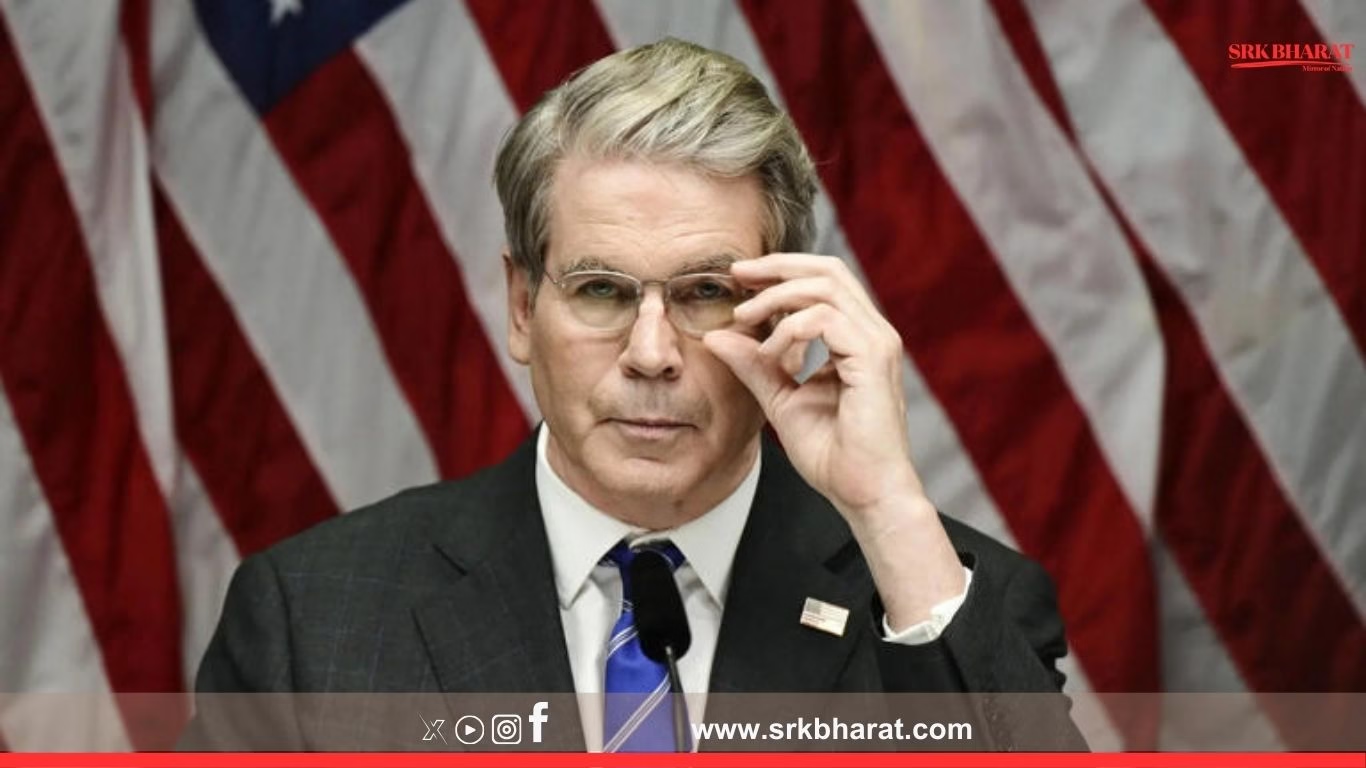
US Treasury Secretary Scott Bessent and Secretary of State Marco Rubio have defended the differential treatment, arguing that China’s increase in Russian oil imports is “suboptimal” and reflects diversification, while India’s spike from less than 1% to over 42% constitutes opportunistic arbitrage. The decision has triggered backlash from Indian officials and raised questions about Washington’s geopolitical calculus.
🧭 The Profiteering Accusation: India vs China
According to Bessent, India’s oil imports from Russia surged from under 1% pre-2022 to 42% in 2025, enabling Indian refiners to earn an estimated $16 billion in “excess profits” by reselling refined petroleum products to Europe, Africa, and Asia. He labeled this practice “Indian arbitrage” and deemed it “unacceptable” amid global efforts to isolate Moscow economically.
| Country | Russian Oil Import (Pre-2022) | Russian Oil Import (2025) | US Assessment |
|---|---|---|---|
| India | <1% | 42% | Profiteering, resale |
| China | 13% | 16% | Diversification, suboptimal |
Rubio added that imposing tariffs on China could destabilize global energy prices, as China refines Russian oil and sells it into the global marketplace. “If you go after China’s oil trade, everyone pays more,” he said.
📉 Tariff Breakdown: India Hit Hard, China Spared
The new tariff regime targets Indian exports across sectors including textiles, chemicals, gems, and auto components. The 25% hike comes on top of existing duties, pushing the effective rate to 50%. In contrast, Trump extended a tariff truce with China for another 90 days, citing ongoing trade negotiations and supply chain stability.
| Country | Tariff Status (Aug 2025) | Affected Sectors | Justification Provided |
|---|---|---|---|
| India | 50% combined tariff | Textiles, gems, chemicals, auto | Russian oil profiteering |
| China | Tariff truce extended | Electronics, machinery, semiconductors | Global energy price risk |
The decision has led to sharp criticism from Indian trade bodies and exporters, who warn of reduced competitiveness and potential job losses.
🧠 India’s Response: Strategic Autonomy and Energy Security
India’s Ministry of External Affairs responded firmly, stating that its energy imports are guided by affordability and national interest. “We buy from the cheapest source to ensure price stability for our citizens,” the ministry said in a statement on August 4.
Indian officials have also pointed out that the country’s refining capacity allows it to meet domestic demand and support global supply chains, especially in developing nations. The government maintains that its trade practices are legal, transparent, and aligned with international norms.
| Indian Position | Explanation |
|---|---|
| Energy Security | Buying discounted oil to control inflation |
| Strategic Autonomy | Non-aligned foreign policy |
| Legal Trade Practices | No violation of sanctions or WTO rules |
| Global Supply Contribution | Exporting refined products to needy nations |
India has not retaliated with counter-tariffs but is reportedly reviewing its trade strategy with the US and exploring deeper ties with Russia, the UAE, and ASEAN nations.
🔍 Global Reactions: Mixed Signals from Allies
The US decision to penalize India while sparing China has drawn mixed reactions globally. European nations have expressed concern over the impact on energy prices and supply chains, while some Asian countries view the move as politically motivated.
| Region/Country | Reaction Summary |
|---|---|
| European Union | Concerned about refined product shortages |
| ASEAN | Neutral, watching India’s next steps |
| Russia | Welcomes India’s continued oil purchases |
| Ukraine | Criticizes India’s engagement with Moscow |
| China | Silent, benefits from tariff truce |
The controversy has also reignited debates over the fairness and consistency of US trade policy, especially in the context of global conflict.
📊 Impact on Indian Trade and Economy
India’s exports to the US stood at $85 billion in FY25, making it one of the country’s largest trading partners. The new tariffs could affect nearly $30 billion worth of goods, with textiles, gems, and chemicals among the hardest hit.
| Sector | Export Value to US (FY25) | Tariff Impact | Risk Level |
|---|---|---|---|
| Textiles | $12 billion | High | Severe |
| Gems & Jewelry | $9 billion | Moderate | High |
| Chemicals | $6 billion | High | Severe |
| Auto Components | $3 billion | Moderate | Medium |
Exporters are urging the Indian government to negotiate tariff relief or offer domestic incentives to offset losses.
🧠 Expert Commentary: Strategic vs Economic Lens
Trade analysts and geopolitical experts are divided on the rationale behind the US move. While some argue that India’s arbitrage undermines sanctions, others believe the decision is driven by strategic calculations and domestic politics.
Dr. Radhika Menon, a trade policy expert, said:
“India’s oil trade is opportunistic but legal. The US is using tariffs as a geopolitical tool, not just an economic lever.”
Energy economist Rakesh Sharma added:
“China’s refining model is no less profitable. The differential treatment reflects strategic priorities, not trade ethics.”
These perspectives highlight the complexity of balancing national interest with global diplomacy.
📌 Conclusion
The US decision to impose steep tariffs on India while sparing China has exposed fault lines in global trade diplomacy. By labeling India a “profiteer” for its Russian oil arbitrage, the Trump administration has triggered a broader debate on fairness, consistency, and strategic autonomy.
As India recalibrates its trade partnerships and defends its energy strategy, the episode underscores the need for transparent, rules-based global commerce. For now, the spotlight remains on Washington’s motives—and New Delhi’s next move.
—
Disclaimer: This article is based on publicly available news reports and official statements as of August 21, 2025. It is intended for informational purposes only and does not constitute legal, political, or financial advice.


1x bet giri? https://www.1xbet-giris-6.com .