




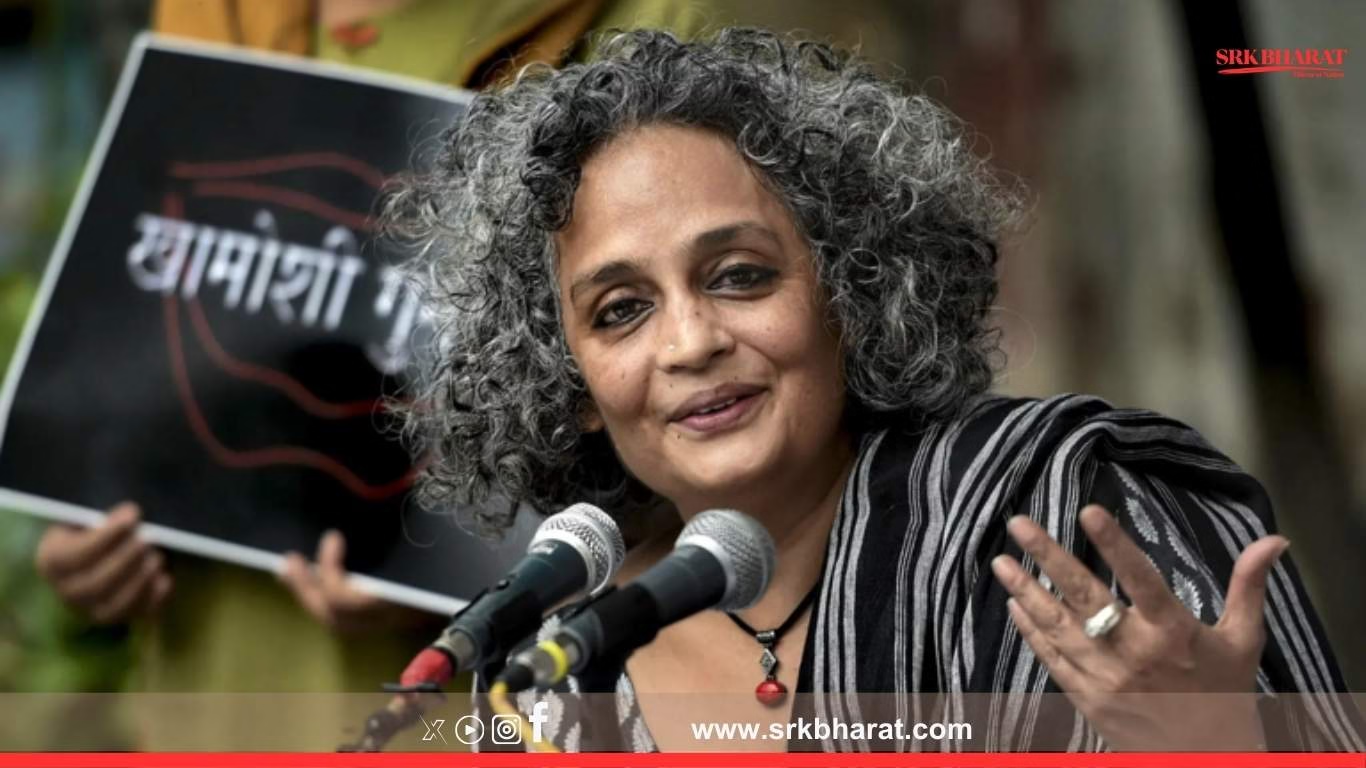
Renowned author and activist Arundhati Roy has launched her latest memoir, making headlines for her bold critique of India’s political and economic elite. In a statement that has stirred public debate, Roy claimed that “99% of the so-called great nationalists are dodging taxes”, pointing fingers at prominent individuals she believes have amassed wealth while avoiding civic responsibilities.
Roy’s Memoir and Its Provocative Themes
Roy’s memoir, which blends personal experiences with sharp political commentary, is being described as a mix of autobiography and social critique. Key themes include:
- Economic inequality in India and the role of the elite in perpetuating it.
- Tax evasion and financial opacity among wealthy industrialists, politicians, and public figures.
- Critique of nationalism that, according to her, masks self-interest and exploitation.
- Environmental degradation and corporate malpractice, which she has consistently addressed in her prior works.
In interviews, Roy highlighted that the memoir aims to spark a conversation about accountability and moral responsibility, particularly among the powerful segments of society.
Statement on ‘Great Nationalists’
At the launch event in Delhi, Roy elaborated on her controversial statement:
“We live in a country where nationalism is glorified, but 99% of these so-called great patriots are dodging taxes, accumulating wealth, and bypassing their moral duty to society. My book challenges this hypocrisy.”
She criticized the intertwining of political power and financial privilege, emphasizing that true nationalism should include fair contribution to the nation’s economy.
Public and Media Reactions
The statement has provoked a mixed reaction:
- Supporters: Praise Roy for calling out systemic corruption and the moral failings of the elite. Social activists have echoed her concerns about tax evasion and economic inequality.
- Critics: Accuse her of sweeping generalizations and allege that the memoir is designed more for publicity than constructive debate.
- Media Analysts: Note that Roy has a history of provocative commentary, and this memoir continues her tradition of challenging political and social orthodoxies.
On social media, her statement has trended nationally, with users debating the ethics of wealth accumulation versus civic duty.
Memoir Highlights
Some notable aspects of Roy’s memoir include:
| Chapter/Section | Focus Area | Key Message |
|---|---|---|
| Early Life & Family | Personal background | Roots of her social awareness and activism |
| Corporate India | Industrialists and wealth | Critique of tax avoidance and opaque financial practices |
| Nationalism & Politics | Political elite | Exposing contradictions in patriotic rhetoric |
| Environment & Society | Activism & campaigns | Linking economic exploitation to environmental degradation |
| Memoir Reflections | Lessons learned | Encouraging civic responsibility and awareness |
The book reportedly combines personal anecdotes with investigative research, highlighting high-profile cases of tax avoidance and financial misconduct.
Context of Roy’s Commentary
Arundhati Roy has long been known for her outspoken views on India’s socio-political landscape, including:
- Criticism of large-scale industrial projects and their impact on local communities.
- Advocacy for tribal rights and environmental protection.
- Opposition to policies she perceives as favoring the wealthy or undermining democratic norms.
Her latest work extends this trajectory, blending memoir-style narration with pointed political critique.
Economic Accountability and Public Debate
Roy’s allegation that a vast majority of nationalists evade taxes brings focus to broader issues of financial accountability in India:
- Direct tax compliance rates remain a topic of public debate.
- Critics argue that wealthy individuals and corporate entities often exploit loopholes, avoiding fair contributions to public revenue.
- The discussion aligns with governmental pushes for tax transparency and reform.
Experts suggest that Roy’s statement, while provocative, resonates with ongoing debates about fairness, inequality, and civic duty.
Political Repercussions
Given Roy’s influence, her memoir may have political ramifications:
- Increased scrutiny of elites: Public and media may focus on financial transparency among politicians and industrialists.
- Debate on nationalism: Her definition of patriotism emphasizes ethical responsibility, potentially challenging popular narratives.
- Activism momentum: Civil society organizations may leverage the memoir to highlight corporate and political accountability issues.
Some analysts argue that the memoir could shape discourse ahead of upcoming elections, particularly regarding taxation and economic ethics.
Roy’s Approach and Literary Style
Arundhati Roy’s style is known for:
- Direct, unfiltered critique of social and political systems.
- Narrative blending of personal experience with investigative insight.
- Provocative, headline-making statements that stimulate public debate.
In this memoir, she continues this approach, seeking to challenge the status quo and encourage informed citizenry.
Conclusion
Arundhati Roy’s new memoir has reignited debates on nationalism, wealth, and accountability in India. Her claim that “99% of great nationalists are dodging taxes” is controversial but underscores a broader conversation on economic and civic responsibility. As readers engage with her book, it is likely to fuel discussions on transparency, ethical leadership, and societal priorities.
The memoir positions Roy not just as a writer but as a provocative social commentator, continuing her tradition of holding the powerful accountable through words and ideas.
Disclaimer: This article is intended for informational and journalistic purposes only. Readers should consult verified sources and official data for legal, financial, or political decisions.