




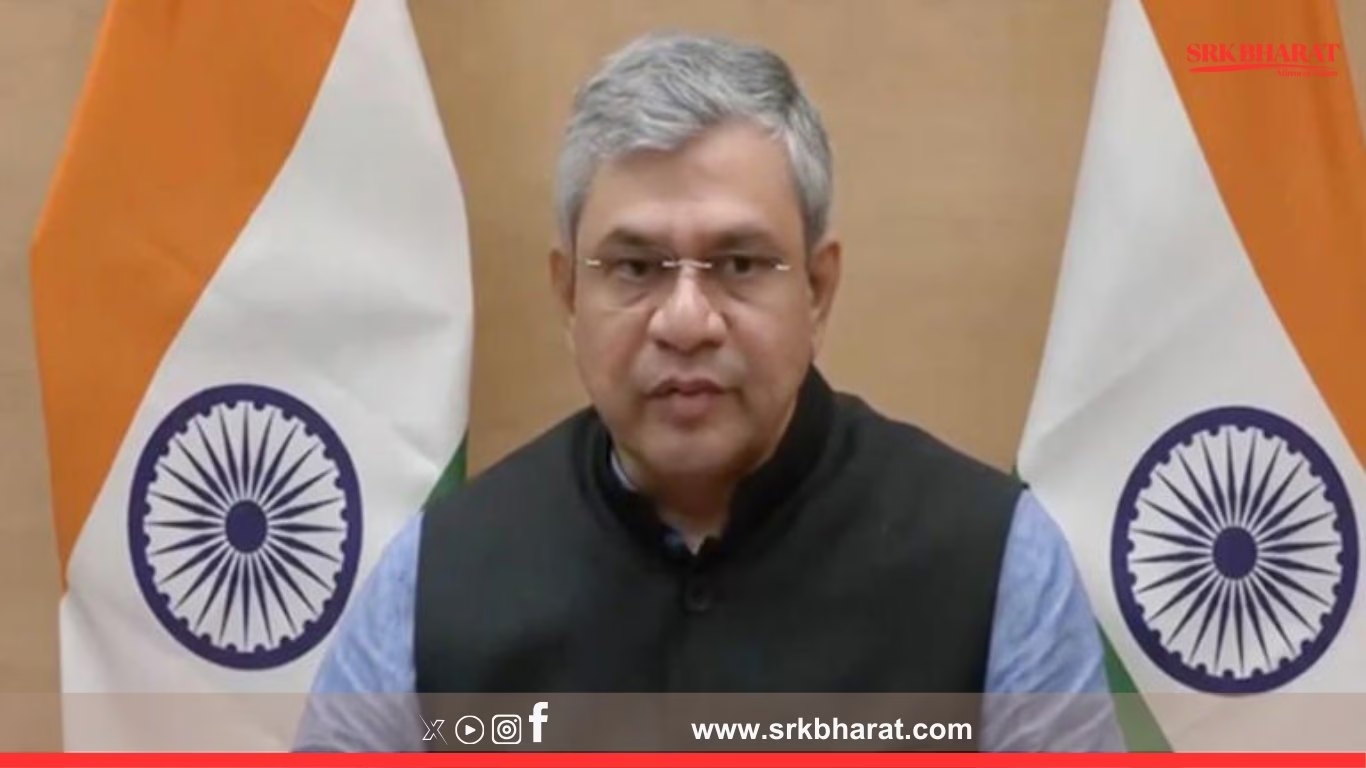
Union Minister for Electronics and Information Technology Ashwini Vaishnaw inaugurated India’s first tempered glass manufacturing facility for mobile devices in Noida, marking a major milestone in the country’s journey toward self-reliance in electronics. The facility, set up by Optiemus Electronics in collaboration with US-based Corning Incorporated, will produce high-quality tempered glass under the globally recognized “Engineered by Corning” brand for both domestic and export markets.
Speaking at the launch, Vaishnaw declared that India is now poised to manufacture “every component of mobile devices,” including chips, cover glasses, laptops, and servers. He emphasized that this development is a critical step in the Make in India and Atmanirbhar Bharat initiatives, aimed at reducing import dependency and building a robust domestic electronics ecosystem.
🧭 Facility Overview: India’s First Tempered Glass Plant
| Feature | Details |
|---|---|
| Location | Noida, Uttar Pradesh |
| Developer | Optiemus Electronics in partnership with Corning Incorporated |
| Brand | Engineered by Corning |
| Phase 1 Investment | ₹70 crore |
| Phase 1 Capacity | 25 million units annually |
| Phase 1 Employment | 600 direct jobs |
| Phase 2 Investment | ₹800 crore |
| Phase 2 Capacity | 200 million units annually |
| Phase 2 Employment | Over 4,500 direct jobs |
The plant integrates advanced processes such as shaping, polishing, chemical tempering, coating, and lamination under strict quality controls, bringing world-class tempered glass production to India for the first time.
📊 India’s Electronics Manufacturing Growth
| Metric | Value (2025) | Growth Since 2014 |
|---|---|---|
| Electronics Production | ₹11.5 lakh crore | 6x increase |
| Electronics Exports | ₹3 lakh crore | Significant rise |
| Employment (Direct & Indirect) | 2.5 million | Major job creation |
| Mobile Accessories Market | ₹20,000 crore (tempered glass) | High import dependency historically |
| Global Tempered Glass Market | $60 billion | India entering global competition |
Vaishnaw highlighted that India’s electronics sector has grown sixfold in the past 11 years, with exports surging and employment expanding rapidly. He also cited India’s design capabilities, referencing an IIT Madras-incubated startup that developed the country’s first microcontroller.
🔍 Strategic Significance: From Import Substitution to Global Hub
India is one of the largest smartphone markets in the world, yet tempered glass has historically been imported. The Noida facility aims to reverse this trend by offering BIS-certified, Made in India tempered glass to every Indian consumer. More importantly, it positions India as a competitive exporter in the global tempered glass market.
| Strategic Goal | Impact on Sector | Long-Term Vision |
|---|---|---|
| Import Substitution | Reduces dependency on China, Vietnam | Strengthens domestic supply chain |
| Export Capability | Targets global markets | Enhances India’s electronics brand |
| MSME Participation | Labour-intensive segment | Boosts employment and local innovation |
| Component Ecosystem | Chips, glass, servers, laptops | Full-stack electronics manufacturing |
The facility is expected to catalyze MSME involvement and support India’s ambition to become a global hub for mobile accessories manufacturing.
📉 Phase-Wise Expansion and Job Creation
| Phase | Investment (₹ Crore) | Capacity (Units/Year) | Jobs Created |
|---|---|---|---|
| Phase 1 | ₹70 | 25 million | 600 |
| Phase 2 | ₹800 | 200 million | 4,500+ |
Optiemus Chairman Ashok Kumar Gupta stated that the launch is a landmark moment for Indian electronics manufacturing. He emphasized that the facility is not just about import substitution but about building world-class capabilities for global markets.
🔥 Government’s Vision: Atmanirbhar Bharat and Viksit Bharat 2047
Vaishnaw reiterated the government’s commitment to Atmanirbhar Bharat and Viksit Bharat 2047, calling upon youth to contribute to India’s innovation-driven economy. He noted that India’s GDP growth of 7.8% in Q1 FY26 reflects a vibrant and stable economic environment conducive to industrial expansion.
| Vision Element | Policy Focus | Expected Outcome |
|---|---|---|
| Atmanirbhar Bharat | Self-reliance in electronics | Reduced import bills |
| Viksit Bharat 2047 | Long-term industrial transformation | Global leadership in tech manufacturing |
| Youth Engagement | Innovation, R&D, entrepreneurship | Talent-driven growth |
| Design-Led Manufacturing | Indigenous microcontrollers | IP creation and export potential |
The minister also highlighted India’s growing export footprint in railway equipment, which is now reaching European markets, showcasing the country’s rising manufacturing standards.
🧠 Expert Reactions and Industry Response
| Expert Name | Role | Comment |
|---|---|---|
| Ashok Kumar Gupta | Chairman, Optiemus Infracom | “This is about world-class capabilities, not just import substitution.” |
| Pankaj Mahindroo | Chairman, ICEA | “Tempered glass is labour-intensive and ideal for MSME growth.” |
| Dr. Rakesh Sinha | Trade Economist | “India’s entry into tempered glass manufacturing is a strategic leap.” |
Industry leaders hailed the move as transformative, with potential to generate thousands of jobs and reduce India’s reliance on imported mobile components.
📌 Conclusion
The inauguration of India’s first tempered glass manufacturing facility in Noida is more than a milestone—it’s a signal of India’s intent to dominate the global electronics supply chain. With plans to manufacture every mobile component domestically, from chips to cover glass, the country is laying the foundation for a full-stack electronics ecosystem.
As India steps into the global arena with high-quality, BIS-certified tempered glass, the vision of Atmanirbhar Bharat and Viksit Bharat 2047 inches closer to reality. The Noida facility is not just a plant—it’s a promise of innovation, employment, and self-reliance.
—
Disclaimer: This article is based on publicly available news reports and official statements as of September 1, 2025. It is intended for informational purposes only and does not constitute investment, manufacturing, or policy advice.