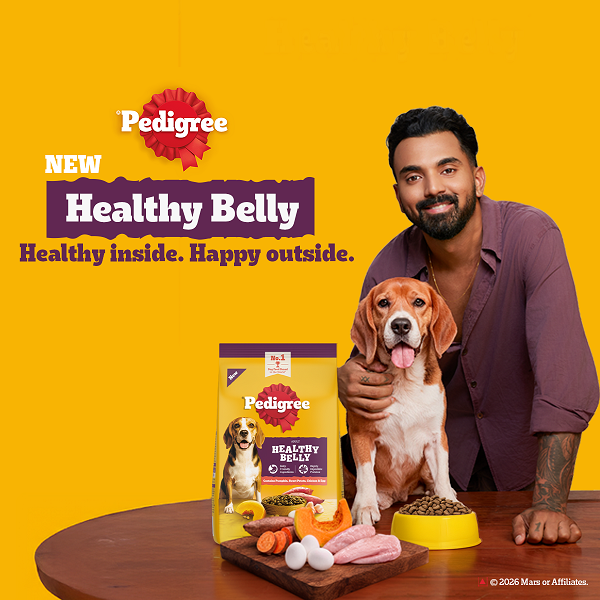

PEDIGREE®, India’s leading dog food brand from Mars Pet Nutrition, has launched PEDIGREE® Healthy Belly, a new complete and balanced food for adult dogs developed to support healthy digestion.
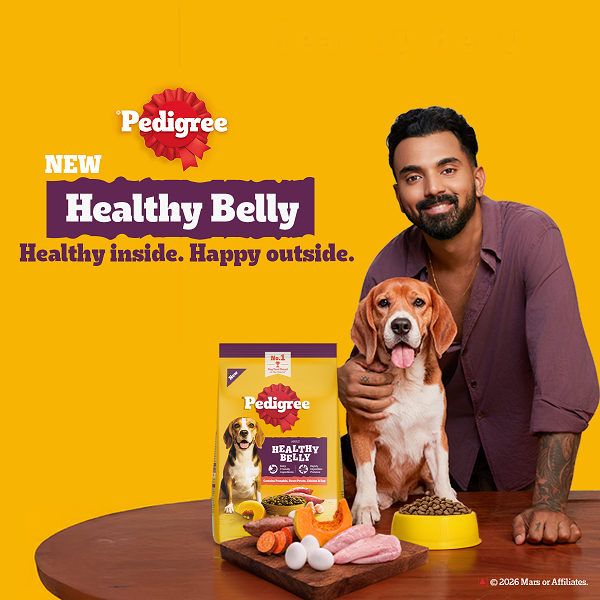 |
KL Rahul joins hands with Pedigree for the Healthy Belly Campaign
The product brings together belly-friendly ingredients such as pumpkin and sweet potato; highly digestible proteins from chicken and egg; and prebiotics and fibres that help promote optimal digestion, increase good gut bacteria and support the immune system. It also introduces PEDIGREE® India’s first belly-shaped kibble, giving the product a distinctive form inspired by the digestive-health need it is designed to address.
The launch responds to an emerging concern among dog parents in India. In an internal study*, nearly one in four pet parents (26%) feeding home-cooked meals reported observing digestive issues in their pets. As pet parents become more attentive to their dogs’ everyday wellbeing, they are increasingly looking for nutrition that supports specific health needs rather than addressing concerns only after they arise.
A dedicated Healthy Belly microsite will also help pet parents understand canine digestive health and the role appropriate nutrition can play in supporting it.
Ayesha Huda, Chief Marketing Officer, Mars Pet Nutrition India, said, “Our insight is that digestive health is an important concern for Indian pet parents, particularly among those relying on home-cooked meals. We therefore looked at how nutrition science could help us create a bespoke solution for everyday feeding. We choose ingredients with known belly friendly impact such as pumpkin and sweet potato, highly digestible proteins from chicken and egg, and prebiotics to support healthy digestion and good gut bacteria.. As the brand that helped build the pet-food category in India, we want to continue advancing it through science-backed innovation that responds to the changing needs of pets and their parents.”
The product launch is supported by a new brand film featuring Indian cricketer KL Rahul and his dog. Using the relatable subject of a dog’s bowel habits, the film encourages pet parents to pay closer attention to digestive health and introduces PEDIGREE® Healthy Belly as a nutritional solution designed to support it.
KL Rahul said, “Anyone who lives with a dog knows how closely you pay attention to their health and everyday behaviour. Digestive health is an important part of their overall wellbeing, and nutrition can play a significant role in supporting it. As an athlete, I understand how much the right nutrition matters to energy, health and performance. PEDIGREE® Healthy Belly makes it easier for pet parents to understand and support this important aspect of their dog’s wellbeing.”
Shyam Nair, Executive Creative Director, 22feet, part of Omnicom Advertising India, said, “PEDIGREE Healthy Belly is built on one honest pet-parent truth, you may have a hundred worries, but your dog’s number two is always number one. From chewed-up shoes to muddy furniture, raising a dog comes with its share of challenges. But the moment their tummy seems off, every other worry pales in comparison. The campaign turns this familiar, slightly unglamorous reality into a playful reminder that a healthy dog begins with a healthy belly.”
Learn more about PEDIGREE® Healthy Belly.
Link to the Film: www.instagram.com/p/Dcp4l54gWqO/?hl=en
For more information about Mars, please visit www.mars.com. Join us on Facebook, Instagram, LinkedIn and YouTube.
Disclaimer: *Source: Mars internal consumer survey conducted in 2025 among home-cooked food (HCF) dog feeders in India (n=253).