




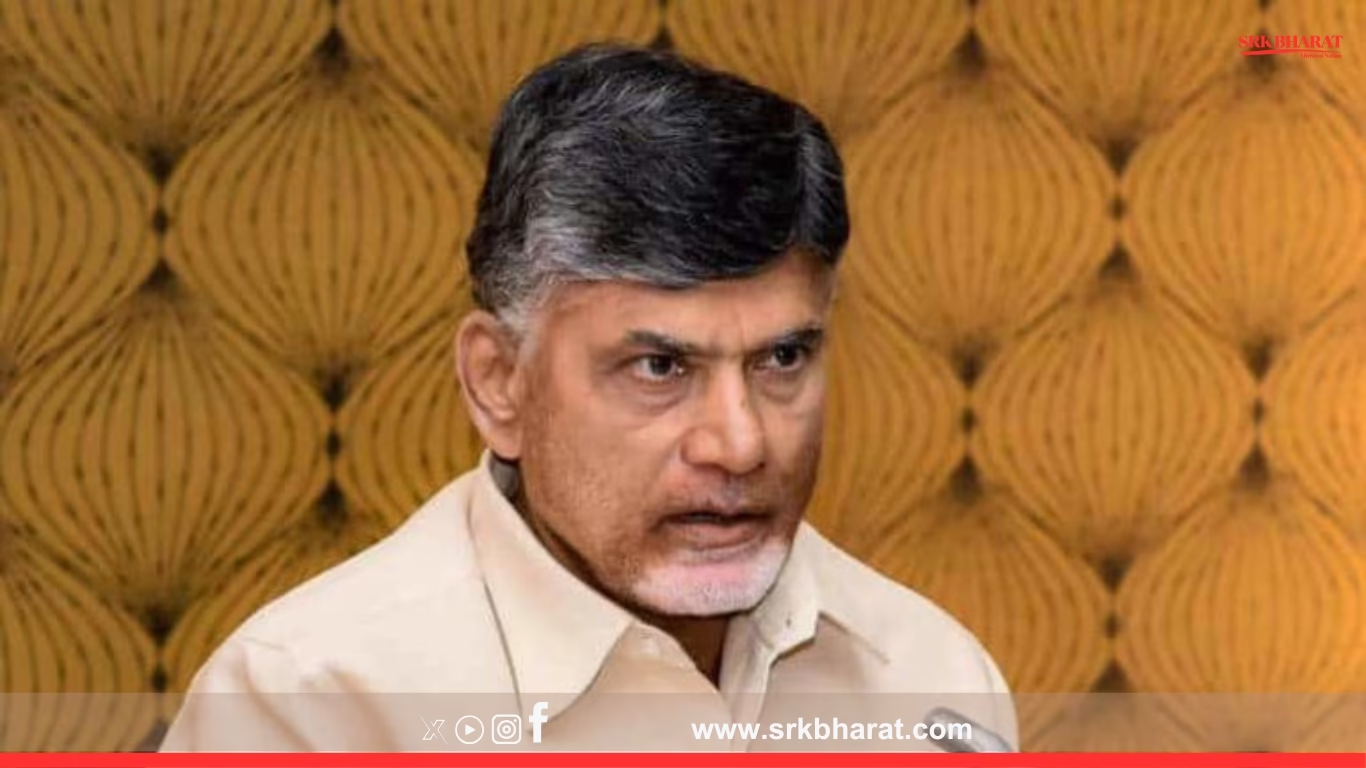
In a departure from the grand unveilings of the past, Andhra Pradesh Chief Minister N. Chandrababu Naidu has quietly showcased the next phase of Amaravati’s capital development—Amaravati 2.0. The low-key reveal, held at the 11th Amaravati Property Festival in Vijayawada, featured miniature models of the proposed government complexes, transport infrastructure, and urban planning elements that promise to redefine the state’s administrative and civic landscape.
Unlike the earlier regime’s dramatic presentations of diamond-shaped legislative buildings and Buddhist stupa-inspired high courts, the new models reflect a shift toward clean lines, functional design, and futuristic aesthetics. The Andhra Pradesh Capital Region Development Authority (APCRDA) emphasized that the new vision retains the ambition of the original master plan while adapting to contemporary needs and budgetary realities.
Amaravati 2.0: Key Infrastructure Highlights
| Project Component | Description |
|---|---|
| Legislative Assembly Complex | Sleek, modern design replacing diamond dome concept |
| High Court Building | Functional layout with improved accessibility |
| AP State Secretariat | 50-storey tower, tallest in the region |
| Head of Department (HoD) Towers | Four towers, each 42 storeys high |
| General Administration Department | Centralized complex for streamlined governance |
| Metro Rail Network | Advanced metro lines connecting sub-cities |
| Iconic Bridge | Landmark structure over Krishna River |
| Central Vista | Parks, boulevards, waterbodies, and public spaces |
The models are currently on display at the property festival and will later be relocated to the APCRDA Project Office in Lingayapalem for public viewing.
Design Philosophy: From Symbolism to Functionality
| Design Element | Amaravati 1.0 (2014–2019) | Amaravati 2.0 (2025–Present) |
|---|---|---|
| Assembly Complex | Diamond-shaped dome | Clean-lined modern structure |
| High Court | Buddhist stupa-inspired | Accessible, minimalist design |
| Urban Layout | Grand symbolism | Practical, scalable planning |
| Public Spaces | Limited integration | Central to city design |
The new models reflect a pragmatic approach, focusing on sustainability, ease of construction, and long-term maintenance. The central vista, with its emphasis on green spaces and walkability, is designed to foster civic engagement and community well-being.
Land Pooling Scheme 2.0: Expanding the Capital’s Footprint
To support Amaravati’s transformation into a mega city, the government has announced Land Pooling Scheme 2.0. While the first phase saw 33,000 acres pooled from 29,000 farmers, the new phase aims to expand the capital region to include Guntur, Tenali, and Vijayawada.
| Land Pooling Phase | Area Pooled | Objective |
|---|---|---|
| LPS 1.0 (2015) | 33,000 acres | Initial capital development |
| LPS 2.0 (2025) | Additional land from surrounding districts | Expansion into mega city |
Naidu assured farmers that the scheme would be a win-win, offering higher land value and long-term benefits through infrastructure and institutional development.
Education and Knowledge Hub Vision
Amaravati 2.0 is envisioned as a global knowledge hub, with several universities already operational and more in the pipeline.
| Institution | Status |
|---|---|
| SRM University | Operational |
| VIT University | Operational |
| Amrita University | Operational |
| SLRI, BITS Pilani | Under development |
| Tokyo University, Stanford | Proposed |
The government aims to attract top-tier institutions to create a vibrant academic ecosystem that complements the capital’s administrative functions.
Urban Planning and Flood Management
Situated along the Krishna River, Amaravati’s master plan includes robust flood management systems.
| Flood Management Element | Description |
|---|---|
| Kondaveeti Vaagu & Paala Vaagu | Natural canals widened and deepened |
| Gravity Drainage Channel | North-south channel to manage excess water |
| Green Buffer Zones | Integrated into city layout for resilience |
These measures are designed to protect infrastructure and ensure year-round habitability.
Governance and Oversight Mechanisms
To ensure timely execution and transparency, Amaravati 2.0 incorporates a multi-tiered project management system.
| Oversight Layer | Role |
|---|---|
| Group of Ministers | Land allotment and policy decisions |
| Project Management Officers | Daily progress tracking |
| Programme Officers | Reporting to APCRDA |
This structure aims to prevent delays and maintain accountability across departments.
Public-Private Partnership (PPP) Model
The capital’s development is being driven through PPPs, balancing welfare and infrastructure investment.
| Sector | PPP Initiative |
|---|---|
| Medical Colleges | 17 colleges under private management |
| Transport Infrastructure | Metro and bridge projects |
| Real Estate | Property festival to attract investors |
The government is leveraging private capital to accelerate development while maintaining public interest safeguards.
Challenges Ahead
Despite the renewed momentum, Amaravati 2.0 faces several hurdles:
| Challenge | Description |
|---|---|
| Investor Confidence | Rebuilding trust after project pause |
| Political Continuity | Ensuring long-term commitment across regimes |
| Land Acquisition | Balancing expansion with farmer rights |
| Budgetary Constraints | Managing costs without compromising quality |
The government is actively engaging stakeholders to address these concerns and ensure inclusive growth.
Conclusion: A Quiet Yet Ambitious Reboot
Amaravati 2.0 marks a strategic shift in Andhra Pradesh’s capital development—from symbolic grandeur to functional futurism. With clean lines replacing diamond domes and a renewed focus on sustainability, education, and governance, Chandrababu Naidu’s vision is taking shape once again—this time with quiet determination and calculated precision.
As the models go on public display and land pooling resumes, Amaravati’s blueprint is inching closer to becoming a living, breathing capital city that reflects the aspirations of a modern Andhra Pradesh.
—
Disclaimer: This article is based on publicly available government statements, verified news reports, and planning documents. It is intended for informational purposes only and does not constitute investment or policy advice. All figures and plans are subject to change based on official updates.