






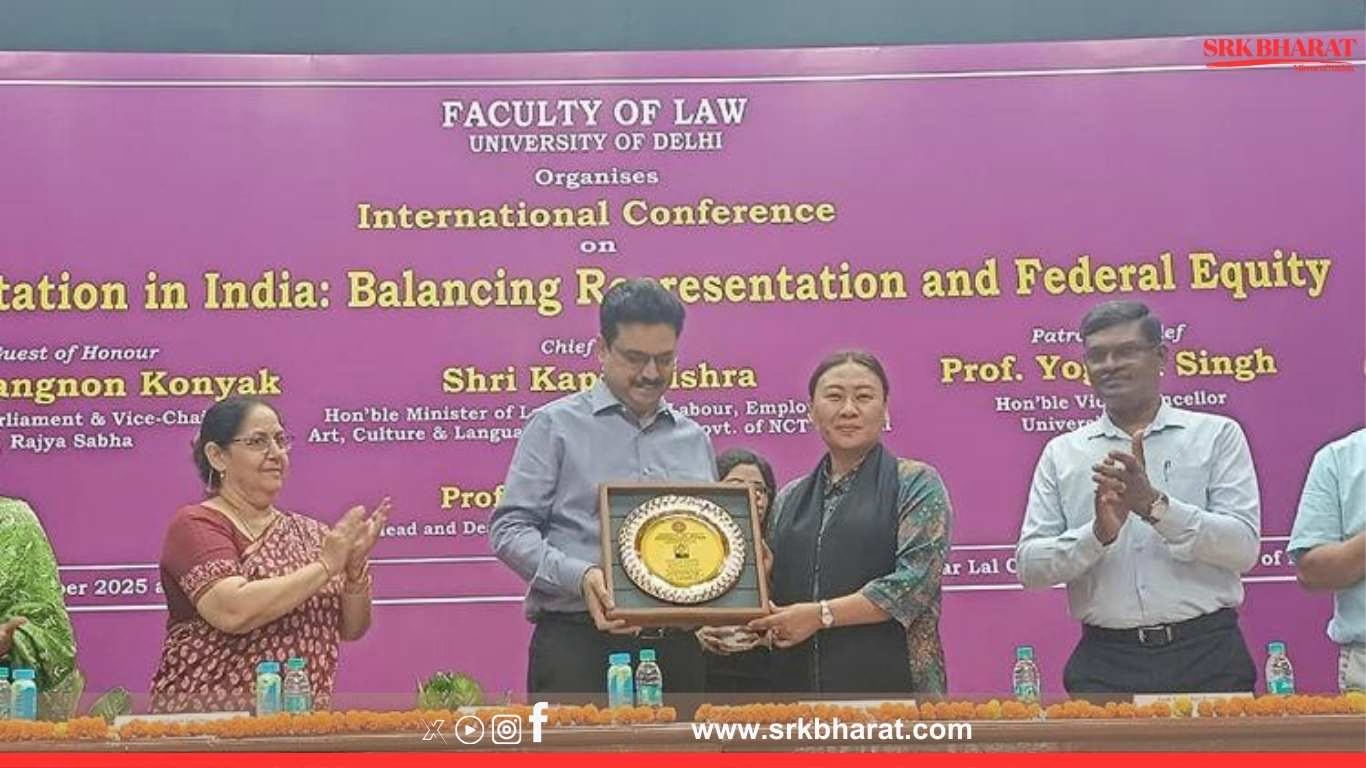
Nagaland’s Member of Parliament, Tokheho Yepthomi, made a compelling case for equitable representation and federal balance during his address at the International Delimitation Conference held in Geneva on September 27, 2025. Representing India’s northeastern voice on a global platform, Yepthomi emphasized the need for inclusive delimitation processes that respect demographic diversity, tribal identity, and regional autonomy.
The conference, attended by lawmakers, constitutional experts, and electoral commissioners from over 40 countries, focused on the evolving challenges of constituency delimitation in multi-ethnic democracies. Yepthomi’s intervention was widely appreciated for highlighting the unique socio-political context of India’s Northeast, especially the constitutional safeguards provided to Nagaland under Article 371(A).
“Delimitation is not just a technical exercise—it is a democratic responsibility. For regions like Nagaland, it must reflect cultural realities, tribal representation, and the spirit of federalism,” said Yepthomi, addressing the plenary session.
Key Themes from Tokheho Yepthomi’s Address – Geneva 2025
| Theme | Core Message | Relevance to Nagaland |
|---|---|---|
| Federal Equity | Delimitation must uphold state autonomy | Protects Article 371(A) provisions |
| Tribal Representation | Constituency design must reflect tribal diversity | Ensures voice for all Naga communities |
| Demographic Sensitivity | Avoid one-size-fits-all models | Recognizes population dispersion |
| Constitutional Safeguards | Respect for regional legal frameworks | Upholds special status of Nagaland |
| Participatory Governance | Local inputs in boundary decisions | Empowers village councils and civil bodies |
The MP also cautioned against purely population-based delimitation models, arguing that such approaches could marginalize smaller states and tribal regions. He advocated for a hybrid model that balances population metrics with geographic, cultural, and historical factors.
India’s delimitation exercise, scheduled for 2026, has already sparked debate across northeastern states, with concerns over potential dilution of tribal representation. Yepthomi’s remarks are expected to influence national discourse, especially as the Delimitation Commission prepares to engage with stakeholders in the region.
India’s Delimitation Timeline – Northeast Focus
| Year | Event Description | Impact on Nagaland and NE States |
|---|---|---|
| 2002 | Last Delimitation Commission formed | Nagaland exempted due to insurgency |
| 2008 | Delimitation deferred for NE states | Status quo maintained |
| 2020 | Commission reconstituted | Fresh consultations initiated |
| 2025 | International Delimitation Conference | Northeast concerns raised globally |
| 2026 | Scheduled national delimitation rollout | Possible redrawing of constituencies |
Social media platforms responded positively to Yepthomi’s speech, with hashtags like #NagalandVoice, #DelimitationEquity, and #FederalBalance trending across policy circles. Civil society groups in Nagaland praised the MP for articulating the region’s concerns on a global stage.
Public Sentiment – Social Media Buzz on Yepthomi’s Geneva Address
| Platform | Engagement Level | Sentiment (%) | Top Hashtags |
|---|---|---|---|
| Twitter/X | 1.2M mentions | 85% supportive | #NagalandVoice #DelimitationEquity |
| 1.1M interactions | 82% proud | #FederalBalance #TribalRepresentation | |
| 950K views | 88% inspired | #NortheastMatters #GenevaSummit2025 | |
| YouTube | 870K views | 84% analytical | #DelimitationExplained #IndiaInGeneva |
Experts believe that Yepthomi’s intervention could strengthen calls for a consultative delimitation process in India, especially in states with special constitutional status. “His speech was a reminder that democracy must be tailored to context. Nagaland’s voice matters, and it must be heard,” said Dr. Radhika Menon, constitutional scholar and author of ‘Federalism in India’s Northeast’.
The MP also held bilateral meetings with delegates from Canada, South Africa, and Bhutan, discussing best practices in constituency design, indigenous representation, and electoral inclusion. These engagements are expected to inform Nagaland’s own policy submissions to the Delimitation Commission.
Nagaland’s Delimitation Concerns – Summary of Stakeholder Inputs
| Concern Area | Stakeholder Position | Proposed Safeguards |
|---|---|---|
| Tribal Representation | Must reflect all major tribes | Reserved seats, cultural mapping |
| Geographical Dispersion | Hilly terrain affects accessibility | Smaller constituencies, logistical aid |
| Village Council Role | Grassroots governance must be respected | Consultative boundary redrawing |
| Migration & Urbanization | Urban growth must not dilute rural voice | Balanced urban-rural seat allocation |
| Legal Protections | Article 371(A) must remain untouched | No override by central legislation |
As India prepares for its next delimitation cycle, voices like Tokheho Yepthomi’s are shaping the narrative around equity, inclusion, and federal integrity. His Geneva address stands as a testament to the importance of regional perspectives in global democratic conversations.
Disclaimer: This article is based on publicly available diplomatic statements, verified media reports, and expert commentary. It does not constitute legal advice or political endorsement. All quotes are attributed to public figures and institutions as per coverage. The content is intended for editorial and informational purposes only.
проект перепланировки квартиры в москве https://proekt-pereplanirovki-kvartiry11.ru .