






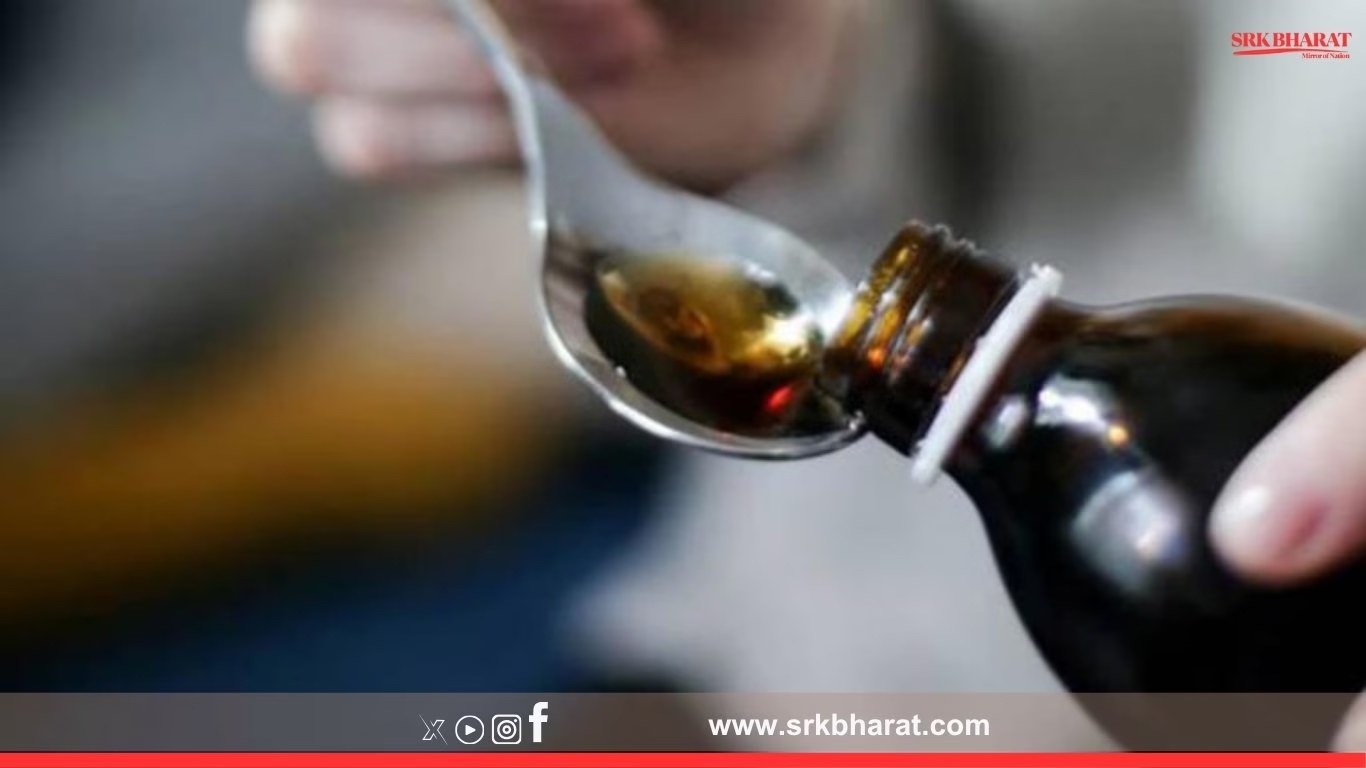
In a decisive move following the tragic deaths of children in Madhya Pradesh and Rajasthan allegedly linked to cough syrup consumption, the Directorate General of Health Services (DGHS) under the Union Ministry of Health has issued a nationwide advisory cautioning against the use of cough and cold medications in children below five years of age. The advisory, released on October 3, 2025, urges all states and Union Territories to disseminate the guidelines across public and private healthcare facilities to prevent further incidents.
The advisory comes after nine children reportedly died in Madhya Pradesh due to suspected acute renal failure linked to contaminated cough syrups, while two deaths were reported in Rajasthan involving a dextromethorphan-based formulation not recommended for paediatric use. Although initial tests ruled out the presence of toxic contaminants like Diethylene Glycol (DEG) and Ethylene Glycol (EG), the Centre has emphasized the need for judicious prescribing and dispensing of such medications.
Key Highlights of DGHS Advisory on Paediatric Cough Syrups
| Age Group | Recommendation Summary | Advisory Notes |
|---|---|---|
| Under 2 years | Strictly avoid cough and cold medications | Risk of toxicity, lack of proven benefit |
| 2–5 years | Generally not recommended | Use only under clinical supervision |
| Above 5 years | Prescribe with caution | Shortest effective duration, avoid combinations |
The advisory stresses that most acute cough illnesses in children are self-limiting and resolve without pharmacological intervention. Instead, it recommends non-pharmacological measures such as adequate hydration, rest, and supportive care as the first line of treatment. The DGHS also called for strict adherence to Good Manufacturing Practices (GMP) and pharmaceutical-grade excipients in all paediatric formulations.
Centre’s Advisory – Action Points for States and Healthcare Facilities
| Directive Category | Implementation Measures | Target Institutions |
|---|---|---|
| Prescription Guidelines | Avoid cough syrups for children under 5 | Doctors, Paediatricians |
| Procurement Standards | Ensure GMP-certified products only | Hospitals, PHCs, CHCs |
| Public Awareness | Sensitise caregivers on risks and alternatives | Community health workers, dispensaries |
| Clinical Oversight | Monitor dosage, duration, and drug combinations | Private and government hospitals |
The Union Health Ministry has deployed a multidisciplinary team comprising experts from the National Centre for Disease Control (NCDC), National Institute of Virology (NIV), and Central Drugs Standard Control Organisation (CDSCO) to investigate the incidents. While DEG/EG contamination has been ruled out, one blood sample from Madhya Pradesh tested positive for leptospirosis, prompting further environmental and water quality analysis.
Recent Paediatric Deaths Linked to Cough Syrups – Case Summary
| State | Reported Deaths | Suspected Cause | Lab Findings |
|---|---|---|---|
| Madhya Pradesh | 9 | Acute renal failure, cough syrup use | No DEG/EG detected, one leptospirosis case |
| Rajasthan | 2 | Dextromethorphan-based syrup | No propylene glycol, formulation not recommended |
The advisory has triggered a wave of concern among parents and paediatricians, with many calling for stricter regulation of over-the-counter (OTC) medications. Experts have long warned against the indiscriminate use of cough syrups in children, citing risks of toxicity, allergic reactions, and ineffective symptom relief.
Dr. Sunita Sharma, who authored the DGHS circular, stated, “We must shift from a culture of over-medication to one of evidence-based care. Children’s immune systems are resilient, and most coughs do not require drugs.”
Non-Pharmacological Alternatives for Paediatric Cough Management
| Measure | Benefit | Recommended Age Group |
|---|---|---|
| Warm fluids | Soothes throat, maintains hydration | All ages |
| Steam inhalation | Relieves congestion | Above 2 years (under supervision) |
| Honey (for age >1 year) | Natural cough suppressant | 1 year and above |
| Saline nasal drops | Clears nasal passages | Infants and toddlers |
| Rest and sleep | Boosts recovery | All ages |
Healthcare professionals have been instructed to avoid prescribing multiple drug combinations and to ensure that any medication is backed by clinical evaluation. The advisory also calls for sensitisation of prescribers and dispensers across both public and private sectors to uphold standards of care.
Social media platforms have seen a surge in discussions around the advisory, with hashtags like #CoughSyrupAlert, #ChildSafetyFirst, and #DGHSAdvisory trending across parenting forums and medical communities.
Public Sentiment – Social Media Buzz on Paediatric Cough Syrup Advisory
| Platform | Engagement Level | Sentiment (%) | Top Hashtags |
|---|---|---|---|
| Twitter/X | 1.3M mentions | 82% supportive | #CoughSyrupAlert #ChildSafetyFirst |
| 1.1M interactions | 80% concerned | #DGHSAdvisory #SafeMedication | |
| 950K views | 85% strategic | #HealthcarePolicy #PaediatricCare | |
| YouTube | 870K views | 83% informative | #CoughSyrupExplained #ParentingTips |
The Centre’s advisory is expected to reshape paediatric prescription practices across India, especially in rural and semi-urban areas where OTC medication use is widespread. State health departments have been directed to implement the guidelines across PHCs, CHCs, district hospitals, and private clinics.
In conclusion, the DGHS advisory marks a critical intervention in paediatric healthcare, urging caution and evidence-based treatment in managing cough and cold symptoms among children. As investigations continue into the recent deaths, the focus remains on prevention, education, and safe medical practices.
Disclaimer: This article is based on publicly available health advisories, medical commentary, and verified government statements. It does not constitute medical advice or diagnosis. All quotes are attributed to public figures and institutions as per coverage. Readers are advised to consult certified healthcare professionals for individual medical concerns.

Can you be more specific about the content of your article? After reading it, I still have some doubts. Hope you can help me.