





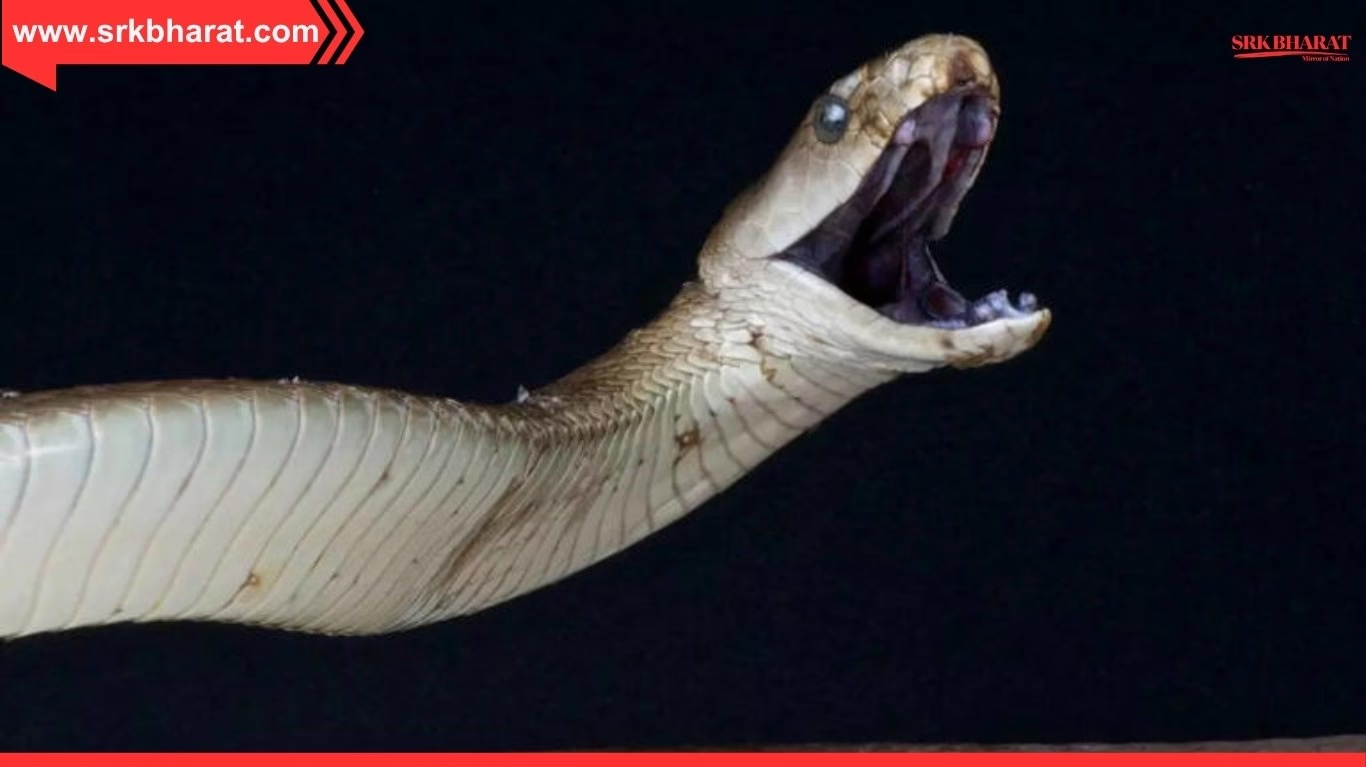
In a groundbreaking development that could revolutionize global healthcare, scientists have unveiled a promising new approach to combat snakebite fatalities using rare human antibodies. The innovation, which aims to create a universal antivenom capable of neutralizing venom from multiple deadly snake species, could save tens of thousands of lives annually—especially in underserved regions where access to traditional antivenoms remains limited.
The Global Snakebite Crisis
Snakebites are a silent global health emergency. According to the World Health Organization, over 138,000 people die each year from venomous snakebites, with hundreds of thousands more suffering long-term disabilities. Victims are often rural dwellers in Africa, Asia, and Latin America, where medical infrastructure is sparse and antivenoms are either unavailable or unaffordable.
Traditional antivenoms are created by immunizing animals like horses and harvesting their antibodies. These treatments are species-specific, expensive, and can trigger severe allergic reactions. Moreover, they require refrigeration and trained personnel for administration—luxuries not always available in remote areas.
The Breakthrough: Human Antibodies from a Hyper-Immune Individual
The new approach centers around Tim Friede, a self-taught herpetologist who has survived over 800 snakebites over two decades. Through controlled exposure, Friede developed hyperimmunity to venom from some of the world’s deadliest snakes, including cobras, mambas, taipans, and rattlesnakes. His blood contains rare antibodies capable of neutralizing toxins across multiple species.
Researchers from Centivax, the National Institutes of Health, and Columbia University collaborated to isolate these antibodies. Using just 40 millilitres of Friede’s blood, they identified potent antibodies that could target the most dangerous venom components shared across species.
Key Antibody Components in the Universal Cocktail
| Antibody/Compound | Target Toxin Type | Functionality Description |
|---|---|---|
| LNX-D09 | Long-chain neurotoxins | Blocks nerve signal disruption, prevents paralysis |
| SNX-B03 | Short-chain neurotoxins | Neutralizes fast-acting neurotoxins affecting respiration |
| Varespladib | Phospholipase A2 toxins | Prevents tissue damage and blood clotting complications |
This antibody cocktail was tested on mice and showed protection against venom from 19 elapid snake species. Thirteen species were fully neutralized, while six showed significant symptom reduction.
Why Snake Venom Is So Difficult to Treat
Snake venom is a complex biochemical weapon. A single species can produce venom containing up to 70 distinct toxins, which belong to ten major protein classes. These toxins attack the body in various ways—disrupting nerve function, destroying blood cells, and triggering internal bleeding.
The challenge in creating a universal antivenom lies in this diversity. However, scientists discovered that many of these toxins share common binding sites. By targeting these shared sites, Friede’s antibodies could neutralize multiple venom types simultaneously.
Scientific and Ethical Considerations
While the results are promising, experts caution against premature optimism. Andreas Hougaard Laustsen-Kiel of the Technical University of Denmark noted that toxins prevalent in African snakes may differ significantly from those in American species. He also questioned the necessity of a single universal antivenom, suggesting regional solutions might be more practical.
Ethical concerns also surround Friede’s self-immunization. Researchers emphasized that his methods should not be replicated. “We did not advise Friede to do this and no one else needs to do this again—we have all the molecules we need,” said Jacob Glanville, CEO of Centivax.
Impact on Public Health and Accessibility
If successful, a universal antivenom could:
- Reduce dependency on animal-based antivenoms
- Lower production costs and improve shelf stability
- Enable rapid deployment in remote regions
- Minimize allergic reactions and improve patient outcomes
Projected Snakebite Mortality Reduction by Region (2025–2030)
| Region | Annual Deaths (Current) | Estimated Reduction (%) | Projected Deaths (2030) |
|---|---|---|---|
| Sub-Saharan Africa | 20,000 | 60% | 8,000 |
| South Asia | 50,000 | 70% | 15,000 |
| Latin America | 10,000 | 50% | 5,000 |
| Southeast Asia | 30,000 | 65% | 10,500 |
Next Steps in Research and Development
The antibody cocktail is currently undergoing further testing and refinement. Researchers aim to:
- Expand efficacy trials to include vipers and sea snakes
- Develop stable formulations for tropical climates
- Conduct human clinical trials by late 2026
- Partner with global health organizations for distribution and funding
Public Health Implications
The development of a universal antivenom could be a game-changer for global health. It aligns with WHO’s goal to halve snakebite deaths by 2030 and could become a model for treating other toxin-based diseases.
Disclaimer: This news content is based on publicly available scientific findings and expert commentary as of October 2025. It is intended for editorial use and public awareness. The information does not constitute medical advice or endorsement of experimental treatments. All clinical applications must undergo regulatory approval and ethical review.