




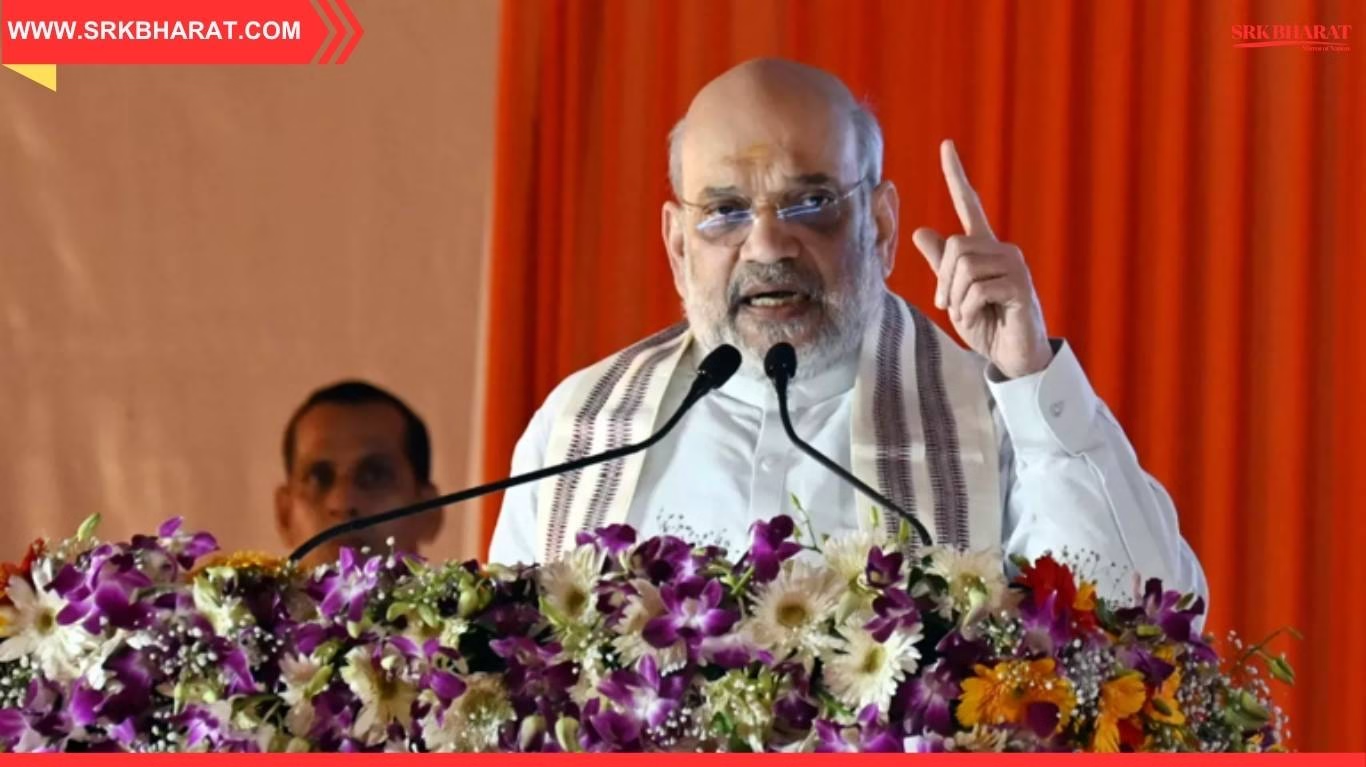
Union Home Minister Amit Shah has reignited the national debate on demographic shifts, asserting that infiltration from Pakistan and Bangladesh is a major factor behind the disparity in population growth among religious communities in India. Speaking at the Narendra Mohan Memorial Lecture in New Delhi on October 10, 2025, Shah emphasized that the issue is not rooted in fertility rates but in illegal cross-border migration, which he described as a threat to India’s cultural identity, democratic ethos, and constitutional integrity.
“Infiltration, not fertility, is driving demographic imbalance. It’s time we act decisively to protect our constitutional values,” Shah said, outlining a “detect, delete, and deport” strategy to tackle the issue.
🧠 Key Highlights from Amit Shah’s Address
| Theme | Statement Summary |
|---|---|
| Infiltration Impact | Fuelling population disparity, especially in border states |
| Citizenship Amendment Act (CAA) | Described as a national pledge fulfilled |
| Voter List Manipulation | Infiltrators allegedly added to electoral rolls |
| Cultural Threat | Demographic changes pose risk to Indian identity |
| Policy Direction | “Detect, delete, deport” approach reaffirmed |
Shah’s remarks come amid renewed scrutiny of India’s border management and the political implications of demographic shifts in states like West Bengal, Assam, and Bihar.
📊 Demographic Disparity: Census Trends and Infiltration Zones
| Region/State | Hindu Population (1951) | Muslim Population (1951) | Muslim Population (2021 est.) | Infiltration Risk |
|---|---|---|---|---|
| West Bengal | 78% | 20% | ~30% | High |
| Assam | 72% | 24% | ~35% | Very High |
| Bihar | 84% | 15% | ~19% | Moderate |
| Uttar Pradesh | 83% | 16% | ~20% | Low |
Shah cited historical census data to argue that the rise in Muslim population in certain regions is disproportionate and cannot be explained by natural growth alone.
🧾 Citizenship Amendment Act (CAA) and Refugee Classification
The Home Minister defended the CAA, stating that it provides a legal pathway for persecuted minorities—Hindus, Sikhs, Buddhists, Jains, Parsis, and Christians—from Pakistan, Bangladesh, and Afghanistan to gain Indian citizenship.
| Community | Recognized Under CAA | Citizenship Pathway |
|---|---|---|
| Hindu | Yes | Fast-track naturalization |
| Sikh | Yes | Fast-track naturalization |
| Muslim | No | Not covered under CAA |
| Christian | Yes | Fast-track naturalization |
Shah clarified that the CAA does not target any religion but seeks to correct historical injustices faced by minorities in neighboring Islamic states.
🧭 Political and Social Implications
Shah’s comments have sparked reactions across the political spectrum:
- BJP Leaders: Applauded the speech as a bold reaffirmation of national security priorities.
- Opposition Parties: Accused the government of communalizing census data and targeting minorities.
- Civil Society Groups: Called for transparent data and humane border policies.
| Stakeholder | Reaction Summary |
|---|---|
| BJP | “Truth must be told. Infiltration is real.” |
| Congress | “Divisive rhetoric ahead of elections.” |
| TMC | “Targeting Bengal’s inclusive culture.” |
| Human Rights NGOs | “Need for balanced and rights-based approach.” |
The issue is expected to dominate political discourse ahead of the 2026 Assembly elections in several border states.
🗣️ Shah’s Call for Electoral Integrity
Amit Shah also linked infiltration to electoral corruption, alleging that illegal migrants are being added to voter rolls, thereby distorting democratic representation.
| Electoral Concern | Allegation Made |
|---|---|
| Voter List Integrity | Infiltrators added via forged documents |
| Booth-Level Manipulation | Targeted registration in border districts |
| Constitutional Breach | Undermines Article 326 (Universal Franchise) |
He urged the Election Commission to intensify voter roll audits in high-risk zones and ensure biometric verification.
Disclaimer
This news content is based on verified public statements, census data, and political reactions as of October 11, 2025. It is intended for editorial use and public awareness. The information does not constitute legal advice, political endorsement, or demographic analysis and adheres to ethical journalism standards.