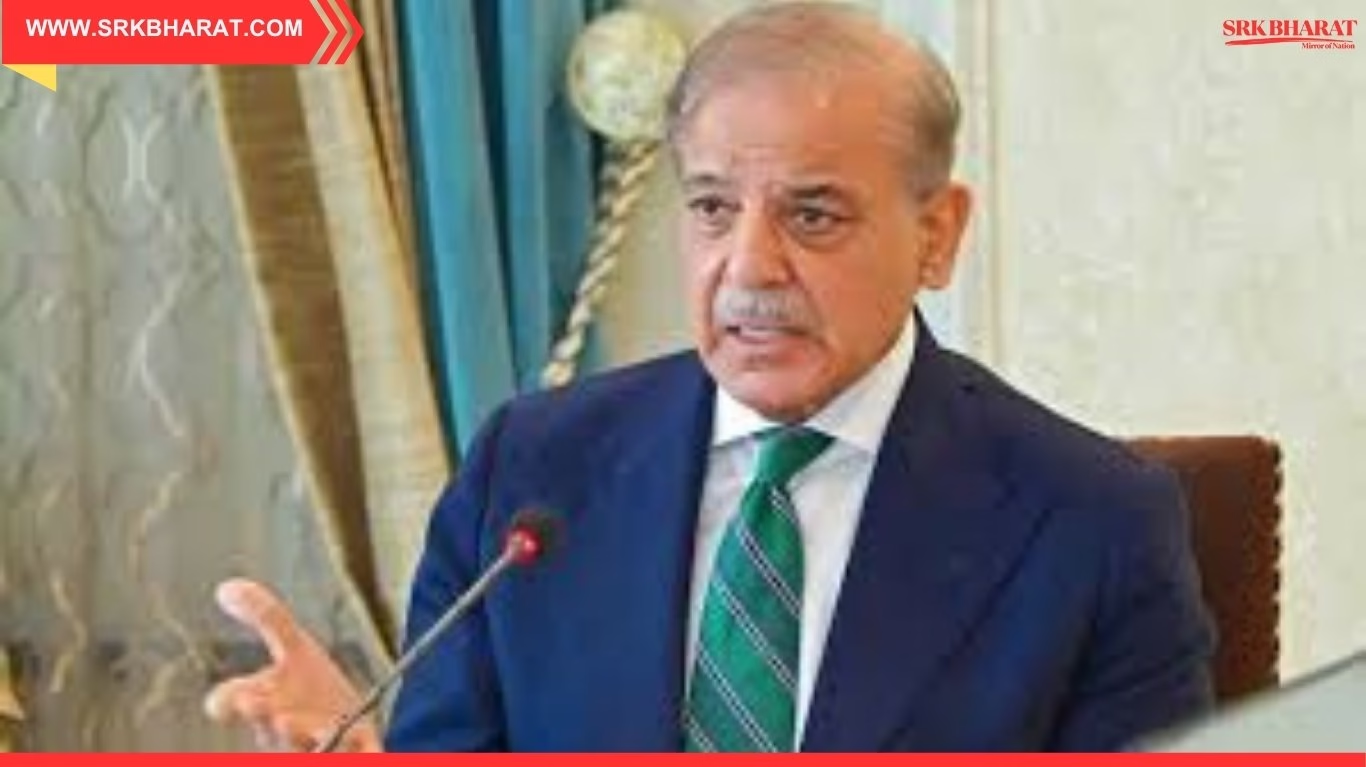
Pakistan’s Prime Minister Shehbaz Sharif has made explosive allegations against India, claiming that recent Taliban-led attacks on Pakistani forces were carried out “on India’s orders.” The statement, issued on October 17, 2025, during a high-level security briefing in Islamabad, has escalated tensions in the region and triggered diplomatic ripples across South Asia. Sharif also made a direct appeal to the Taliban regime in Kabul, urging them to “drive out Pakistani soldiers” allegedly trapped or targeted in border skirmishes.
The remarks come amid a fragile ceasefire between Pakistan and Afghanistan, following multiple deadly clashes along the Durand Line. Sharif’s plea to the Taliban signals a dramatic shift in Islamabad’s tone—from strategic ally to embattled adversary. The Prime Minister’s comments were echoed by Defence Minister Khawaja Asif, who warned of a “two-front war” and accused India of using Afghanistan as a proxy to destabilize Pakistan’s western frontier.
🧠 Key Highlights from PM Sharif’s Statement and Regional Fallout
| Element | Details |
|---|---|
| Speaker | PM Shehbaz Sharif |
| Date | October 17, 2025 |
| Allegation | Taliban attacks ordered by India |
| Appeal to Taliban | Expel Pakistani soldiers from conflict zones |
| Defence Minister’s Warning | Two-front war scenario |
| Ceasefire Status | 48-hour truce in place |
Sharif’s statement has drawn sharp reactions from Indian officials, who dismissed the claims as “baseless and diversionary.”
📊 Timeline of Border Tensions and Political Statements
| Date | Event Description |
|---|---|
| September 2025 | Taliban forces clash with Pakistani troops |
| October 15 | Ceasefire brokered after UN intervention |
| October 17 | PM Sharif blames India, appeals to Taliban |
| October 18 | Defence Minister Asif warns of proxy war |
The Taliban, meanwhile, has accused Pakistan of violating Afghan sovereignty and sheltering anti-Taliban militants.
🗣️ Reactions from Regional Powers, Analysts, and Civil Society
- Indian MEA Spokesperson: “Pakistan must look inward before blaming others.”
- Taliban Foreign Ministry: “We will not be dictated by Islamabad.”
- Security Analysts: “Sharif’s statement reflects internal pressure and geopolitical isolation.”
| Stakeholder Group | Reaction Summary |
|---|---|
| India | Denying involvement, urging restraint |
| Afghanistan | Rejecting Pakistani appeals |
| Pakistan Opposition | Criticizing Sharif’s crisis management |
| International Observers | Calling for de-escalation and dialogue |
The situation remains volatile, with fears of renewed clashes and diplomatic fallout.
🧾 Strategic Implications of Sharif’s Allegations and Taliban Response
| Dimension | Impact Assessment | Regional Consequences |
|---|---|---|
| Bilateral Relations | India-Pakistan ties further strained | Diplomatic freeze likely |
| Pakistan-Afghanistan | Strategic mistrust deepens | Border militarization |
| Internal Politics | Sharif under pressure from opposition | Possible cabinet reshuffle |
| Security Dynamics | Taliban gains leverage in negotiations | Proxy conflict risk increases |
| Global Diplomacy | UN and OIC monitoring developments | Mediation efforts underway |
Pakistan’s military has reportedly reinforced border posts and activated contingency protocols.
🧭 What to Watch in South Asia’s Escalating Crisis
- Taliban’s Next Move: Whether Kabul responds with force or diplomacy
- India’s Strategic Silence: Possible backchannel talks or UN engagement
- Pakistan’s Domestic Fallout: Political ramifications for Sharif’s leadership
- International Mediation: Role of UN, China, and OIC in conflict resolution
Sharif concluded, “Pakistan will not tolerate aggression disguised as diplomacy. We seek peace, but not at the cost of sovereignty.”
Disclaimer
This news content is based on verified government statements, diplomatic briefings, and media reports as of October 18, 2025. It is intended for editorial use and public awareness. The information does not constitute geopolitical analysis, military forecasting, or diplomatic endorsement and adheres to ethical journalism standards.