





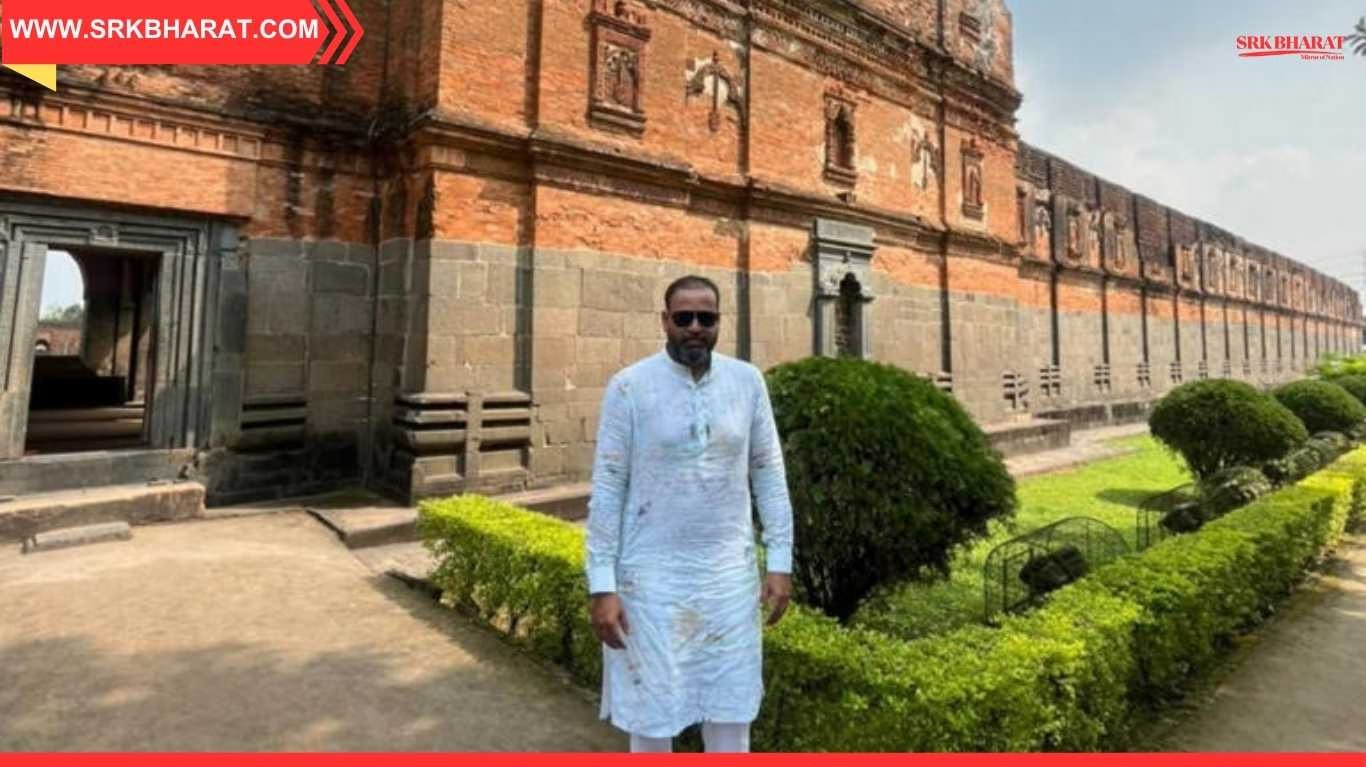
A social media post by Trinamool Congress MP and former cricketer Yusuf Pathan has triggered a fresh political controversy in West Bengal, after he shared images of the Adina Mosque in Malda on platform X, calling it an “architectural marvel.” The post, made on October 16, 2025, was intended to highlight the historical significance of the 14th-century monument built by Sultan Sikandar Shah. However, the West Bengal BJP unit responded sharply, claiming that the structure is actually the Adinath Temple, reigniting a long-standing debate over the site’s origins.
Pathan, who represents the Baharampur Lok Sabha constituency, visited the site during a cultural outreach tour and praised its Indo-Islamic architecture. His post included multiple images of the monument and a caption celebrating Bengal’s rich heritage. The BJP’s counterclaim, however, accused Pathan of “distorting history” and “hurting Hindu sentiments,” with senior leaders demanding an official clarification from the Archaeological Survey of India (ASI), which currently lists the Adina Mosque as a protected Islamic monument.
🧠 Key Highlights of the Adina Mosque Controversy
| Element | Details |
|---|---|
| Date of Post | October 16, 2025 |
| Location | Adina Mosque, Malda, West Bengal |
| Posted By | Yusuf Pathan, TMC MP |
| BJP Claim | Structure is Adinath Temple |
| ASI Status | Listed as 14th-century Islamic monument |
| Political Response | BJP demands clarification, TMC defends Pathan |
| Cultural Sensitivity | High, due to religious and historical claims |
The monument has long been a subject of historical debate, with some fringe groups claiming it was built over a pre-existing temple structure.
📊 Timeline of Events and Political Reactions
| Date | Event Description |
|---|---|
| October 16 | Yusuf Pathan posts mosque photos on X |
| October 17 | BJP leaders respond, claim it’s a temple |
| October 18 | ASI remains silent, TMC defends Pathan’s post |
| October 19 | Cultural groups call for archaeological review |
The controversy has escalated into a broader debate on heritage interpretation, communal harmony, and political symbolism.
🗣️ Reactions from Politicians, Historians, and Citizens
- Yusuf Pathan: “I posted as a citizen proud of our shared heritage. There was no political intent.”
- BJP Spokesperson: “This is a deliberate attempt to erase Hindu history.”
- Historian from Calcutta University: “The Adina Mosque is well-documented as a Sultanate-era structure. Claims of temple origins lack archaeological backing.”
| Stakeholder Group | Reaction Summary |
|---|---|
| TMC Leaders | Defending Pathan’s cultural outreach |
| BJP Leaders | Accusing distortion of historical facts |
| Historians | Calling for evidence-based discourse |
| Citizens | Divided along political and cultural lines |
The ASI has yet to issue a formal statement, though internal sources suggest no change in the monument’s classification.
🧾 Comparative Snapshot: Politically Sensitive Monuments in India
| Monument Name | Location | Disputed Identity | ASI Classification | Political Impact |
|---|---|---|---|---|
| Adina Mosque | Malda, WB | Mosque vs Temple | Islamic monument (Sultanate) | High |
| Gyanvapi Complex | Varanasi, UP | Mosque vs Temple | Under litigation | Very High |
| Bhojshala Site | Dhar, MP | Temple vs Mosque | Shared access | Moderate |
| Quwwat-ul-Islam | Delhi | Mosque with temple remnants | Islamic monument | Low |
The Adina Mosque case is now being viewed as a test of Bengal’s communal equilibrium ahead of the 2026 Assembly elections.
🧭 What to Watch in the Adina Mosque Dispute
- ASI Clarification: Expected to issue a statement on monument classification
- Political Fallout: BJP may use issue to mobilize cultural sentiment
- TMC Strategy: Likely to frame Pathan’s post as apolitical and heritage-focused
- Public Discourse: Historians and archaeologists may weigh in with evidence
Pathan has not deleted the post and has reiterated his commitment to promoting Bengal’s diverse history.
Disclaimer
This news content is based on verified political statements, historical records, and media reports as of October 19, 2025. It is intended for editorial use and public awareness. The information does not constitute archaeological advice, political endorsement, or religious commentary and adheres to ethical journalism standards.


Your point of view caught my eye and was very interesting. Thanks. I have a question for you. https://accounts.binance.info/pt-BR/register-person?ref=GJY4VW8W