


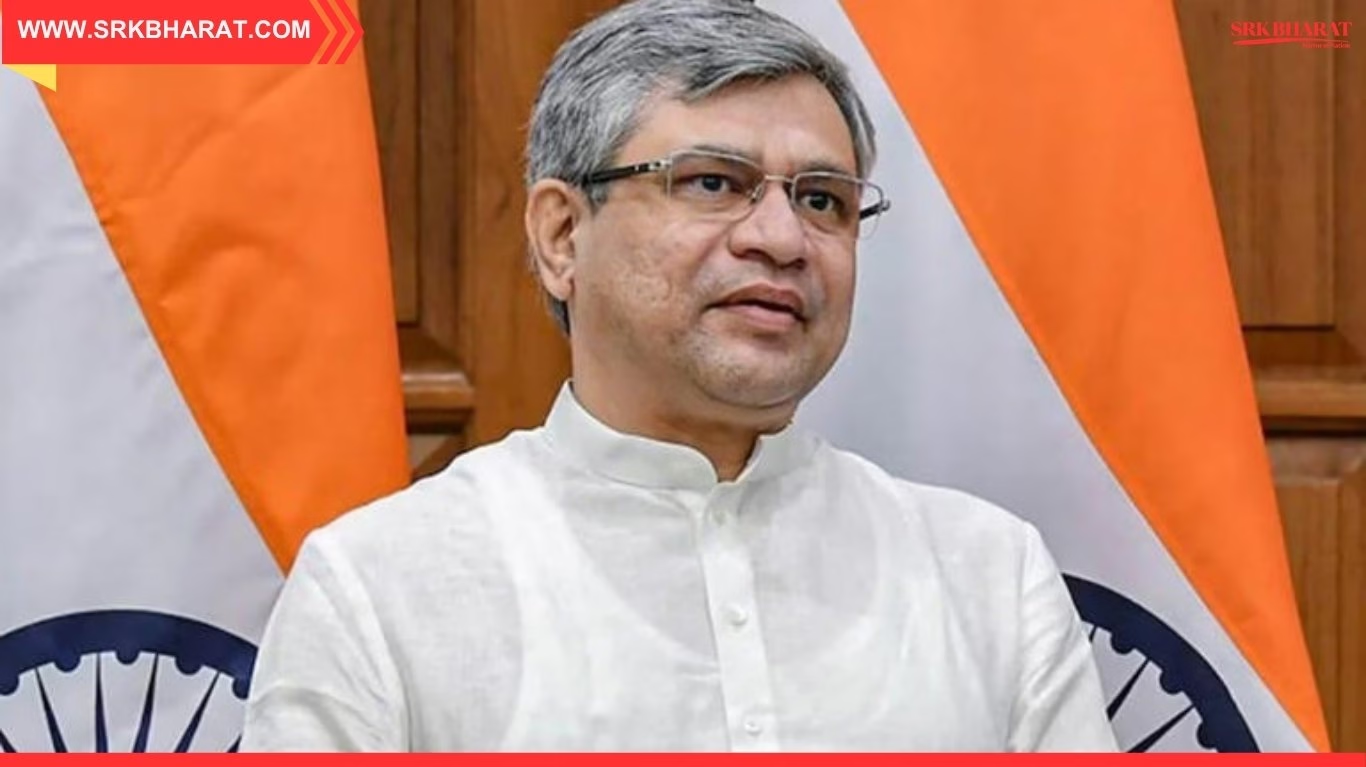
Union Electronics and IT Minister Ashwini Vaishnaw has reaffirmed India’s commitment to building a comprehensive electronics manufacturing ecosystem, stating that the country is now moving beyond finished products to designing and producing core components, equipment, and materials. Speaking after the government approved seven new projects worth ₹5,532 crore under the Electronics Components Manufacturing Scheme (ECMS), Vaishnaw emphasized that India is “developing the entire setup for electronics manufacturing” to reduce import dependency and enhance domestic value addition.
The announcement marks a strategic shift in India’s electronics policy, which began with smartphone assembly and has now expanded to semiconductors, printed circuit boards (PCBs), camera modules, and advanced materials. The approved projects are expected to generate over ₹44,000 crore in production value and create at least 5,000 jobs, according to ministry estimates.
🏗️ India’s Electronics Manufacturing Evolution
| Phase | Focus Area | Milestone Achieved |
|---|---|---|
| Phase I (2014–2018) | Smartphone assembly | Entry of global OEMs |
| Phase II (2019–2022) | IT hardware and consumer electronics | PLI schemes launched |
| Phase III (2023–2025) | Semiconductors and AI hardware | Chip fabrication proposals approved |
| Phase IV (2025 onward) | Components, equipment, materials | ₹5,532 crore ECMS projects cleared |
Vaishnaw noted that India’s electronics journey is now entering its most critical phase—building the foundational infrastructure that powers global supply chains.
🔧 ECMS Projects Approved in October 2025
| Component Type | Companies Involved | Estimated Investment (₹ crore) |
|---|---|---|
| Multi-layer PCBs | AT&S, Sahasra Electronics | 1,200 |
| Copper-clad laminates | Shogini Technoarts, Gujarat Composites | 950 |
| Camera modules | Optiemus Electronics, Dixon Tech | 1,100 |
| Polypropylene film | Cosmo Films, Uflex Ltd | 1,050 |
| Passive components | Murata India, TDK India | 1,232 |
These projects are strategically distributed across states like Gujarat, Tamil Nadu, Uttar Pradesh, and Karnataka, aligning with India’s regional manufacturing clusters.
📈 Strategic Goals of India’s Electronics Push
| Objective | Target Outcome by 2027 |
|---|---|
| Reduce import bill | ₹18,000–₹20,000 crore annually |
| Domestic value addition | Up to 40% (on par with China) |
| Job creation | 100,000+ direct and indirect jobs |
| Export competitiveness | $120 billion electronics exports |
Vaishnaw emphasized that India must become a global hub not just for assembly, but for innovation and component manufacturing.
🧠 Minister’s Vision: Trusted Infrastructure and Resilient Startups
| Focus Area | Policy Direction |
|---|---|
| Trusted digital infrastructure | Security and reliability in supply chains |
| Export-ready standards | Compliance with global benchmarks |
| Startup support | Incentives for component innovation |
| Stakeholder consultation | Industry feedback integrated into policy |
“The industry is in constant dialogue with us, and we value their feedback,” Vaishnaw said, adding that future policy actions will be shaped by collaborative input.
🌍 Global Context: India’s Position in Electronics Supply Chain
| Country | Electronics Value Addition | Strategic Focus |
|---|---|---|
| China | 40–45% | Full-stack manufacturing |
| Vietnam | 25–30% | Assembly and export |
| India (2025) | 18–20% | Components and semiconductors emerging |
| India (2027 target) | 40% | End-to-end electronics ecosystem |
India’s goal is to match China’s value addition levels while building a trusted and diversified supply chain.
🏛️ Policy Framework Supporting Electronics Manufacturing
| Scheme Name | Key Features |
|---|---|
| ECMS (Electronics Components) | Capital subsidy, R&D support |
| PLI (Production Linked Incentive) | Output-based incentives for manufacturers |
| DLI (Design Linked Incentive) | Support for chip and component design |
| SPECS (Capital Support) | Infrastructure funding for new units |
These schemes are designed to attract global players while nurturing domestic champions.
🗣️ Industry Reaction and Expert Commentary
| Stakeholder | Response Summary |
|---|---|
| MAIT (Manufacturers Association) | Welcomed ECMS approvals, urged faster rollout |
| Nasscom | Called for AI hardware integration |
| Invest India | Highlighted FDI potential in electronics |
| Policy Analysts | Praised shift to component-level strategy |
Experts agree that India’s electronics strategy is maturing, with a focus on long-term resilience and innovation.
📌 Conclusion
India’s electronics manufacturing journey has entered a transformative phase, with Minister Ashwini Vaishnaw announcing a bold push to develop the entire setup—from components to equipment and materials. With ₹5,532 crore in fresh investments and a clear roadmap for value addition, India is positioning itself as a global electronics powerhouse. As the ecosystem expands, the focus will remain on trusted infrastructure, resilient startups, and strategic partnerships to ensure sustainable growth.
Disclaimer: This article is based on publicly available government statements and media reports. It does not constitute investment or policy advice. All views expressed are for informational purposes only.