





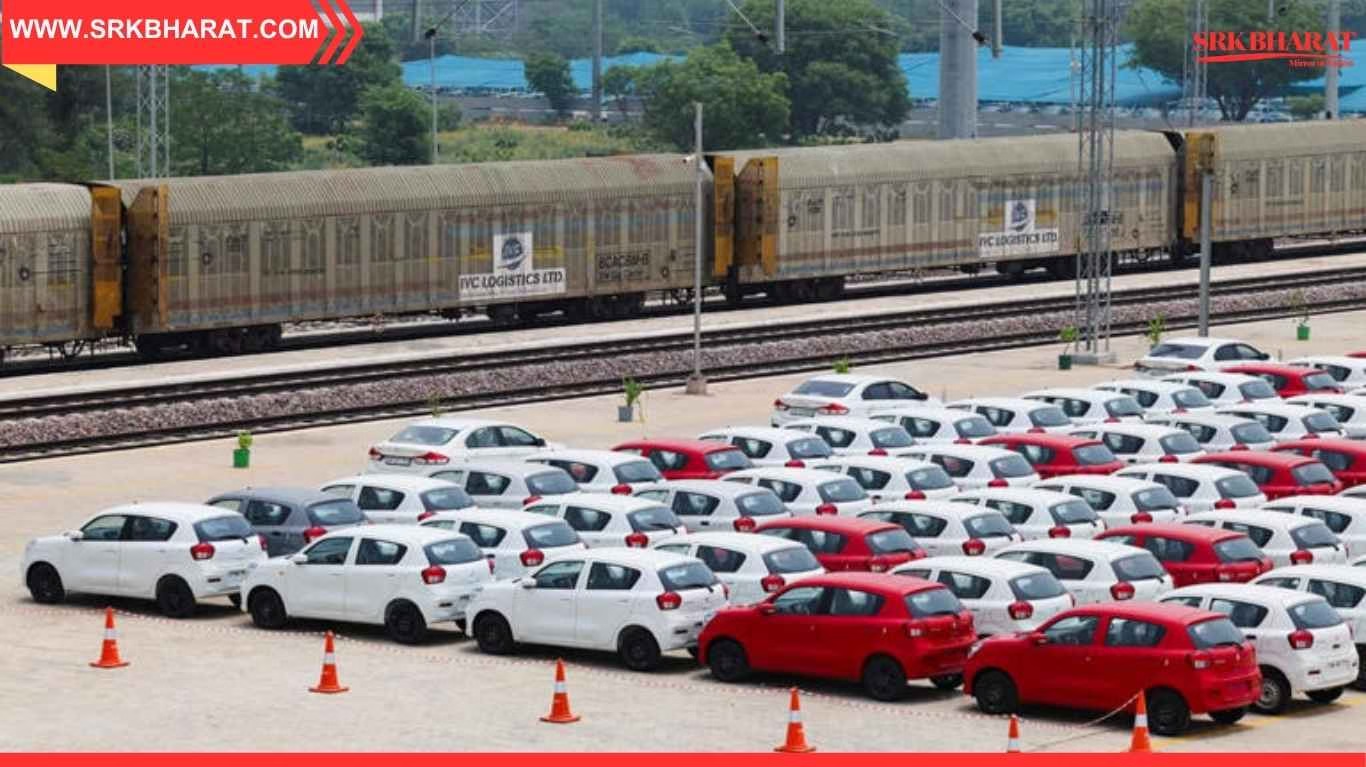
India’s automobile industry witnessed a historic milestone in October 2025, as passenger vehicle (PV) sales soared to a record-breaking 4,70,227 units, marking a 17.23% year-on-year growth compared to 4,01,105 units in October 2024. This surge was fueled by the dual impact of the recently implemented GST 2.0 reforms and robust festive season demand, which significantly boosted consumer sentiment and showroom footfalls across the country.
The previous monthly record of 4,05,522 units set in January 2025 was decisively surpassed, signaling a strong recovery and renewed momentum in the auto sector. Leading automakers including Maruti Suzuki, Mahindra & Mahindra, Tata Motors, and Toyota Kirloskar Motor reported their highest-ever domestic volumes, while Hyundai Motor India saw a slight dip in performance.
📊 October 2025 Car Sales Performance by Leading Automakers
| Automaker | October 2025 Sales | October 2024 Sales | YoY Growth (%) |
|---|---|---|---|
| Maruti Suzuki India | 1,76,318 units | 1,59,591 units | +10.5% |
| Mahindra & Mahindra | 71,624 units | 54,504 units | +31.4% |
| Tata Motors | 61,295 units | 48,423 units | +26.5% |
| Toyota Kirloskar Motor | 23,590 units | 20,410 units | +15.6% |
| Hyundai Motor India | 48,000 units (est.) | 50,000 units | -4.0% |
Sources: Industry data compiled from OEM reports.
🧠 Key Drivers Behind the October Sales Boom
| Factor | Description |
|---|---|
| GST 2.0 Reforms | Rationalized tax slabs, reduced effective rates on small and mid-size cars |
| Festive Season Demand | Navratri, Dussehra, and Diwali promotions boosted consumer spending |
| OEM Discounts & Schemes | Attractive financing, exchange bonuses, and extended warranties |
| Improved Inventory Levels | Better supply chain management post-pandemic disruptions |
| Rise in SUV and EV Sales | SUVs accounted for 77% of Tata’s sales; EVs saw 73% YoY growth |
The GST 2.0 rollout has been particularly impactful, with Maruti Suzuki reporting a jump in small car retail contribution from 16.7% to 20.5% post-reform.
📈 Segment-Wise Performance Overview
| Segment | October 2025 Sales | YoY Growth (%) | Highlights |
|---|---|---|---|
| Hatchbacks | 1,10,000 units | +8% | Strong demand in Tier 2 & 3 cities |
| Sedans | 45,000 units | +5% | Marginal growth, driven by fleet sales |
| SUVs | 2,20,000 units | +22% | Dominated by Tata, Mahindra, Toyota |
| EVs | 38,000 units | +73% | Tata leads with 9,286 units sold |
SUVs and EVs continue to be the growth engines of the Indian PV market.
🗣️ Industry Reactions and Expert Commentary
| Stakeholder | Viewpoint Summary |
|---|---|
| SIAM (Auto Body) | “GST 2.0 has unlocked latent demand across segments.” |
| Maruti Suzuki Spokesperson | “Festive cheer and tax relief drove showroom conversions.” |
| Auto Analysts | “October’s numbers are a turning point for the industry.” |
| Dealership Owners | “Footfalls doubled during Diwali week; inventory cleared.” |
The consensus across the industry is that policy support and seasonal demand created a perfect storm for record sales.
🧭 Regional Trends and Consumer Behavior
| Region | Sales Trend Summary | Popular Models |
|---|---|---|
| North India | Strong demand for compact SUVs | Brezza, Nexon, Scorpio |
| South India | EV adoption rising, especially in urban hubs | Tiago EV, MG ZS EV |
| West India | High sedan sales in fleet and corporate sector | Dzire, City, Verna |
| East India | Hatchbacks dominate due to price sensitivity | Alto, WagonR, Punch |
Consumer preferences continue to evolve, with urban buyers leaning toward tech-enabled and eco-friendly options.
📌 Conclusion
October 2025 has emerged as a landmark month for India’s automobile industry, with passenger vehicle sales reaching unprecedented levels. The synergy between GST 2.0 reforms and festive season enthusiasm has not only revived demand but also set the stage for sustained growth in the coming quarters. As automakers ramp up production and introduce new models, the momentum is expected to carry forward into the year-end and early 2026.
Disclaimer: This article is based on publicly available industry data, OEM reports, and expert commentary. It is intended for informational purposes only and does not constitute financial or investment advice.