





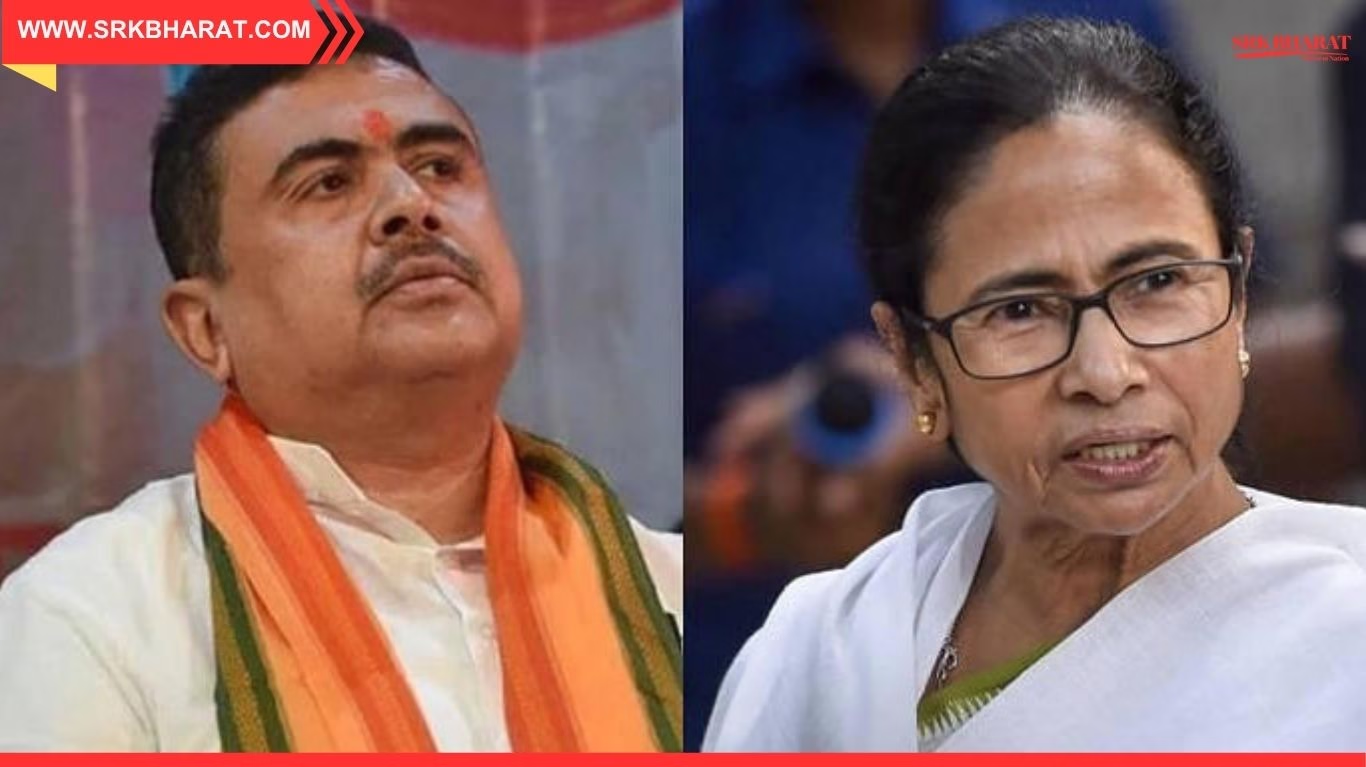
The upcoming 2026 Assembly Election in West Bengal is shaping up to be one of the most contentious in recent memory, as the Special Intensive Revision (SIR) of electoral rolls has triggered widespread panic, especially among refugee communities like the Matuas. With over 40 constituencies in districts such as North 24 Parganas, South 24 Parganas, and Nadia affected, the SIR exercise has become a flashpoint for debates on citizenship, identity, and disenfranchisement.
The Election Commission’s decision to conduct the first SIR since 2002 has led to fears that thousands of voters—particularly those who migrated post-2002—may be excluded from the rolls unless they furnish legacy documents. This has sparked accusations of voter purging, communal targeting, and political manipulation, with both the ruling Trinamool Congress (TMC) and opposition Bharatiya Janata Party (BJP) facing backlash from their respective support bases.
🧠 Key Concerns Around SIR in West Bengal
| Issue | Description |
|---|---|
| Voter Disenfranchisement | Migrants without 2002 legacy documents face exclusion |
| Communal Polarization | Allegations of targeting Bengali Muslims and Hindu refugees |
| Administrative Reshuffle | 64 IAS officers and 17 DMs reshuffled ahead of SIR rollout |
| Political Fallout | Both TMC and BJP risk losing ground in refugee-dominated belts |
| Legal Ambiguity | Lack of clarity on acceptable documentation and appeal process |
The SIR has become a lightning rod for political tension, legal challenges, and social unrest.
📊 Electoral Impact of SIR Across Key Districts
| District | Refugee Voter Base | Assembly Seats Affected | Political Sensitivity |
|---|---|---|---|
| North 24 Parganas | High (Matua, Bengali Muslims) | 18 | BJP stronghold, TMC gains in 2021 |
| South 24 Parganas | Moderate | 12 | TMC bastion, communal flashpoints |
| Nadia | High (Matua belt) | 10 | Swing district, BJP-TMC contest |
| Murshidabad | High (Muslim majority) | 8 | TMC dominance, AIMIM entry |
| Malda | Moderate | 6 | Congress legacy, shifting loyalties |
The SIR rollout has disrupted voter confidence and campaign strategies across these districts.
📈 Timeline of SIR-Linked Developments
| Date | Event Description | Outcome |
|---|---|---|
| Oct 2025 | EC announces SIR in 5 border districts | Panic among refugee communities |
| Oct 30, 2025 | Govt reshuffles 64 IAS officers, 17 DMs | Alleged attempt to influence SIR outcomes |
| Nov 1, 2025 | Matua protests erupt in Bongaon and Ranaghat | Political parties face backlash |
| Nov 5, 2025 | Mamata Banerjee accuses BJP of voter purging | TMC consolidates refugee support |
| Nov–Dec 2025 | SIR hearings and document verification | Legal challenges expected |
The timeline reflects escalating tensions and administrative churn ahead of the 2026 polls.
🗣️ Reactions from Political Stakeholders
| Stakeholder | Commentary Summary |
|---|---|
| Mamata Banerjee (TMC) | “BJP wants to erase Bengali and Muslim voters.” |
| BJP Leaders | “SIR is about transparency, not targeting.” |
| Matua Mahasangha | “We feel betrayed by both parties.” |
| Civil Rights Activists | “This is disenfranchisement disguised as reform.” |
The SIR has fractured traditional vote banks and fueled identity-based mobilization.
📌 Why the SIR Exercise Is a Cause for Worry
- Mass Disenfranchisement Risk: Thousands of voters may be dropped due to lack of legacy documents.
- Communal and Caste Tensions: Targeted scrutiny of Bengali Muslims and Matuas could deepen social divides.
- Political Volatility: Both TMC and BJP face erosion of trust in key constituencies.
- Legal Uncertainty: No clear guidelines on appeals or document verification timelines.
- Administrative Overreach: Sudden reshuffling of officials raises concerns over neutrality.
The SIR has transformed a routine electoral update into a full-blown political and social crisis.
📌 Conclusion
The SIR-charged election in West Bengal is not just a bureaucratic exercise—it’s a referendum on identity, inclusion, and democratic integrity. With refugee communities fearing disenfranchisement and political parties scrambling to recalibrate their strategies, the 2026 Assembly Election could redefine the state’s electoral landscape. As tensions rise, the need for transparency, legal safeguards, and inclusive governance has never been more urgent.
Disclaimer: This article is based on publicly available news reports, political statements, and Election Commission updates. It is intended for informational and editorial purposes only and does not constitute legal or political advice.