




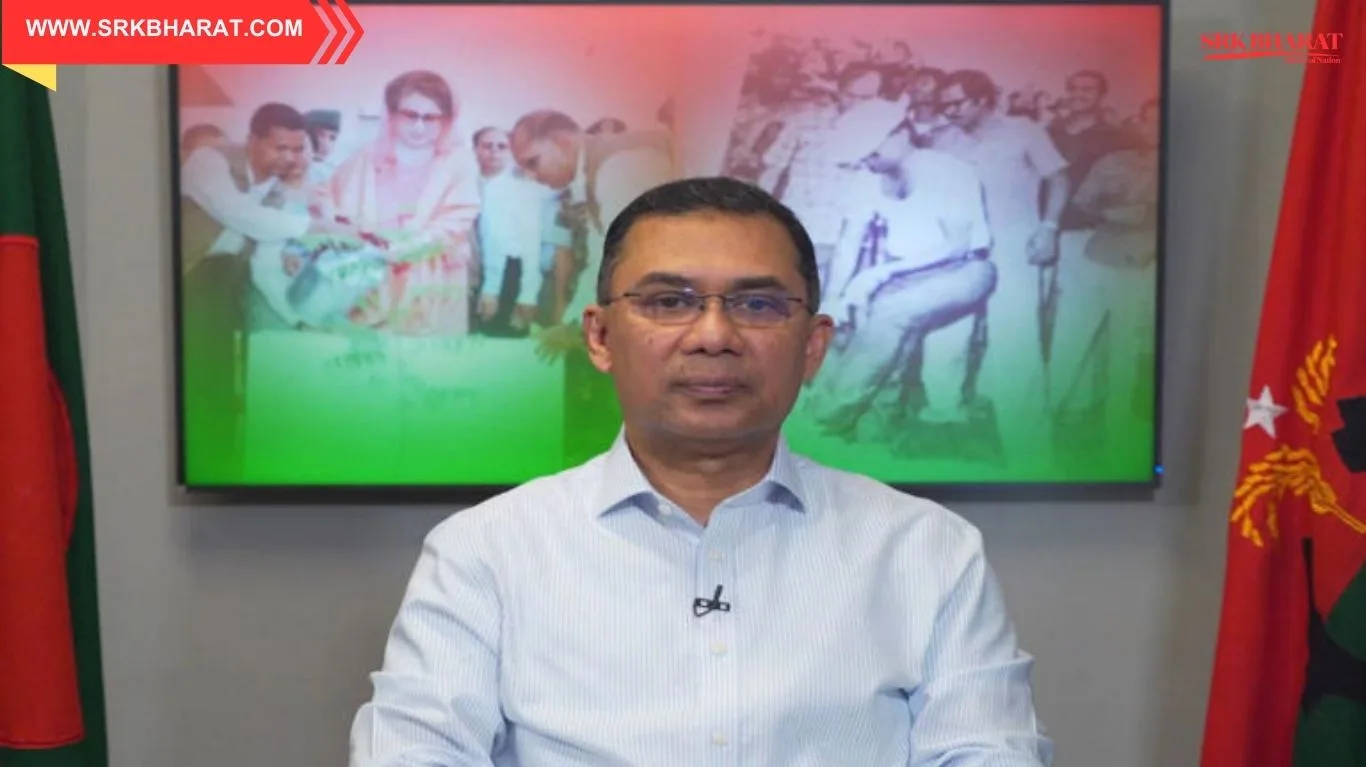
Bangladesh’s political landscape has once again been shaken by controversial remarks from Tarique Rahman, acting chairman of the Bangladesh Nationalist Party (BNP), following the death of his mother and former Prime Minister Khaleda Zia. Tarique’s statement, which implied that Bangladesh’s existence is tied to the legacy of his family, has sparked heated debates across the nation. Critics argue he may be crossing a line by politicizing grief, while supporters claim he is asserting the historical role of his family in shaping the country’s destiny.
Background of Tarique’s Statement
- Tarique Rahman, currently in exile, has been leading the BNP since his mother’s illness and eventual passing.
- In his recent speech, he suggested that Bangladesh “would not exist without the sacrifices and leadership of his family,” a remark that immediately drew sharp reactions.
- Khaleda Zia, widow of former President Ziaur Rahman, was a two-time Prime Minister and one of the most influential figures in Bangladesh’s political history.
- Tarique’s comments came at a time when the BNP is struggling to regain political ground against the ruling Awami League, led by Prime Minister Sheikh Hasina.
Key Highlights of the Controversy
| Indicator | Details |
|---|---|
| Person Involved | Tarique Rahman |
| Context | Death of Khaleda Zia |
| Statement | Bangladesh would not exist without family’s role |
| Reaction | Mixed—criticism from rivals, support from BNP loyalists |
| Broader Impact | Sparks debate on historical narratives and political ethics |
Reactions to Tarique’s Statement
| Factor | Supporters’ View | Critics’ View | Neutral Observers |
|---|---|---|---|
| Historical Legacy | Family played key role in independence and governance | Overstates family’s role, ignores collective struggle | Recognizes contributions but stresses broader context |
| Political Ethics | Assertion of rightful place in history | Politicizing grief, crossing ethical lines | Debate needed on limits of political rhetoric |
| Public Sentiment | Inspires BNP loyalists | Alienates broader electorate | Divides opinion along party lines |
| Media Coverage | Highlights family sacrifices | Focuses on controversy | Balanced reporting with historical context |
| Long-Term Implication | Strengthens BNP narrative | Weakens credibility if seen as exaggeration | Shapes future discourse on national identity |
Why This Story Matters
- National Identity: Tarique’s remarks touch on the sensitive issue of Bangladesh’s independence and identity.
- Political Strategy: The BNP may be using Khaleda Zia’s death to rally support.
- Public Sentiment: The controversy reflects deep divisions in Bangladeshi society.
- Historical Debate: Raises questions about how history is remembered and politicized.
- Future Outlook: Could influence upcoming elections and BNP’s political fortunes.
Tarique’s Perspective
- Tarique framed his statement as a tribute to his mother and father’s role in Bangladesh’s history.
- He emphasized Ziaur Rahman’s role in declaring independence during the 1971 Liberation War.
- He argued that Khaleda Zia’s leadership helped shape Bangladesh’s democratic journey.
- His remarks were intended to reinforce the BNP’s narrative of being central to the nation’s existence.
Critics’ Response
- The ruling Awami League dismissed Tarique’s comments as “historical distortion.”
- Critics argue that Bangladesh’s independence was the result of collective struggle led by Sheikh Mujibur Rahman, not the sole contribution of one family.
- Political analysts warn that Tarique’s rhetoric may alienate undecided voters.
- Some accuse him of exploiting his mother’s death for political gain.
Supporters’ View
- BNP loyalists defended Tarique, claiming his family’s sacrifices are undeniable.
- They argue that Ziaur Rahman’s role in 1971 and Khaleda Zia’s leadership during turbulent times deserve recognition.
- Supporters see Tarique’s remarks as an attempt to reclaim the BNP’s place in history.
- Many believe the controversy will energize the party base.
Public Sentiment
- Ordinary citizens expressed mixed reactions, with some sympathizing with Tarique’s grief and others criticizing his political tone.
- Social media debates reflected sharp divisions along party lines.
- Younger voters appeared less interested in historical disputes, focusing instead on economic and social issues.
- Overall sentiment suggests Tarique’s remarks may deepen polarization.
Expert Opinions
- Historians: Stress that independence was a collective struggle, cautioning against oversimplification.
- Political Analysts: Highlight the risks of politicizing grief and exaggerating historical roles.
- Sociologists: Note that family legacies often dominate South Asian politics.
- Media Experts: Emphasize the role of balanced reporting in shaping public perception.
Challenges Ahead
- BNP Strategy: Balancing historical narrative with present-day issues.
- Public Perception: Avoiding alienation of undecided voters.
- Historical Accuracy: Ensuring claims align with documented history.
- Political Ethics: Managing grief without crossing rhetorical boundaries.
- Electoral Impact: Determining whether controversy helps or hurts BNP’s chances.
Opportunities for BNP
- Reclaim Historical Narrative: Use family legacy to strengthen party identity.
- Mobilize Supporters: Rally loyalists around Khaleda Zia’s memory.
- Engage Youth: Shift focus to present-day issues to attract younger voters.
- Strengthen Unity: Use controversy to consolidate party ranks.
- Global Attention: Highlight family’s role in international forums.
Broader Context of Bangladesh Politics
- Bangladesh’s politics has long been dominated by two families: Sheikh Mujibur Rahman’s and Ziaur Rahman’s.
- The rivalry between Awami League and BNP reflects deeper historical and ideological divides.
- Tarique’s remarks highlight the ongoing battle to control the narrative of independence.
- The controversy underscores the challenges of balancing history, grief, and political ambition.
Media Coverage
- Headlines emphasized Tarique’s claim that Bangladesh would not exist without his family.
- Coverage highlighted sharp reactions from Awami League leaders.
- Analysts debated whether Tarique crossed a line by politicizing his mother’s death.
- The story continues to dominate discussions in political and media circles.
Conclusion
The controversial remarks by Tarique Rahman after his mother Khaleda Zia’s death have reignited debates about Bangladesh’s independence, historical narratives, and political ethics. While supporters see his comments as a rightful assertion of family legacy, critics argue he is crossing a line by politicizing grief. The controversy reflects the deep divisions in Bangladeshi politics and raises important questions about how history is remembered, interpreted, and used in the pursuit of power.
Disclaimer
This article is intended for informational purposes only and does not constitute political endorsement or criticism. Statements, historical narratives, and public sentiments are subject to change based on evolving circumstances. Readers are encouraged to follow official updates for accurate information. The author and publisher are not responsible for any decisions made based on this article.