





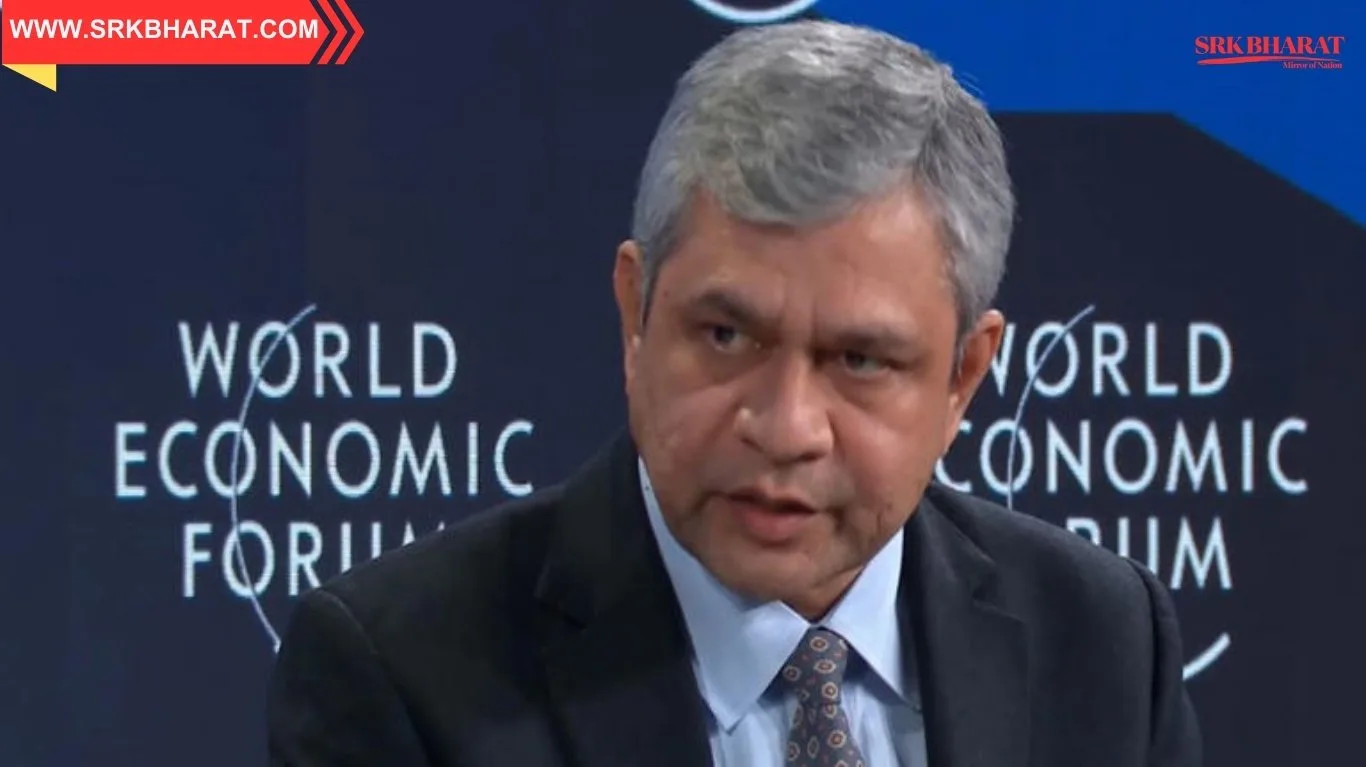
India’s Union Minister for Electronics and Information Technology, Ashwini Vaishnaw, has strongly rejected the International Monetary Fund’s (IMF) recent classification that placed India among “second tier AI economies.” Vaishnaw asserted that India is firmly in the first group of global AI leaders, citing the country’s rapid strides in artificial intelligence, digital infrastructure, and innovation ecosystems. His remarks have sparked a larger debate about India’s positioning in the global technology race and the credibility of international assessments.
Background of the IMF Remark
- The IMF recently released a report categorizing countries into tiers based on their AI readiness and adoption.
- India was placed in the “second tier,” alongside several emerging economies.
- The classification was based on factors such as research output, AI talent pool, investment levels, and adoption rates.
- Vaishnaw’s rebuttal emphasized that India’s achievements in AI, digital public infrastructure, and innovation clearly place it among the top global players.
Key Highlights
| Indicator | Details |
|---|---|
| IMF Report | Classified India as “second tier AI economy” |
| Vaishnaw’s Response | India belongs to “first group” of AI leaders |
| Basis of Assertion | Digital infrastructure, AI talent, innovation ecosystem |
| Broader Impact | Sparks debate on global AI rankings |
| Public Sentiment | National pride in India’s tech achievements |
IMF Classification vs India’s Achievements
| Factor | IMF Assessment | India’s Reality | Implication |
|---|---|---|---|
| AI Research Output | Moderate | Rapidly growing, global recognition | India’s research ecosystem expanding |
| Talent Pool | Developing | Large pool of engineers, AI professionals | Strong human capital |
| Investment Levels | Limited compared to US/China | Rising investments, government initiatives | Momentum building |
| Adoption Rates | Emerging | Widespread use in healthcare, fintech, governance | Demonstrates maturity |
| Global Positioning | Second tier | First group, according to Vaishnaw | Disputed classification |
Why This Story Matters
- Global Tech Race: Highlights India’s ambition to be recognized among top AI economies.
- National Pride: Reinforces confidence in India’s digital achievements.
- Policy Direction: Shapes government strategies for AI adoption and innovation.
- International Perception: Raises questions about the accuracy of global assessments.
- Future Outlook: Positions India as a key player in shaping AI governance and ethics.
India’s AI Achievements
- India has built one of the world’s largest digital public infrastructures, including Aadhaar, UPI, and DigiLocker.
- AI adoption is widespread in sectors like healthcare, agriculture, fintech, and governance.
- Startups and research institutions are contributing to global AI innovation.
- Government initiatives such as the National AI Mission aim to accelerate AI development.
- India’s talent pool, with millions of engineers and IT professionals, is a major strength.
Vaishnaw’s Assertion
- The minister emphasized that India’s achievements in AI and digital infrastructure cannot be overlooked.
- He highlighted India’s leadership in digital payments, public service delivery, and AI-driven governance.
- Vaishnaw argued that India’s scale, innovation, and talent place it firmly in the first group of AI economies.
- His remarks reflect the government’s determination to assert India’s global tech leadership.
Expert Opinions
- Tech Analysts: Note that India’s AI ecosystem is expanding rapidly, challenging global perceptions.
- Economists: Highlight the importance of investment and policy support in sustaining growth.
- Academics: Stress that India’s research output is increasingly recognized globally.
- Critics: Warn that global rankings often undervalue emerging economies’ achievements.
Challenges Ahead
- Investment Levels: Need to match global leaders like the US and China.
- Research Output: Expanding academic and industrial research in AI.
- Infrastructure: Ensuring equitable access to AI technologies across regions.
- Global Recognition: Overcoming biases in international assessments.
- Ethical Governance: Developing frameworks for responsible AI use.
Opportunities for India
- Global Leadership: Position India as a leader in AI governance and ethics.
- Innovation Ecosystem: Strengthen startups and research institutions.
- Talent Development: Expand AI education and skill-building programs.
- International Collaboration: Partner with global leaders for joint research.
- Public Service Delivery: Use AI to enhance governance and citizen services.
Broader Context of AI Race
- The global AI race is dominated by the US and China, with Europe also playing a key role.
- India’s achievements in digital infrastructure and AI adoption challenge traditional perceptions.
- The debate reflects broader questions about how global institutions assess emerging economies.
- India’s assertion of belonging to the first group underscores its ambition to shape the future of AI.
Sectoral Breakdown of Impact
| Sector | Impact | Strategic Importance |
|---|---|---|
| Technology | AI adoption across industries | Strengthens innovation |
| Governance | AI-driven public services | Enhances efficiency |
| Economy | Rising investments | Boosts growth |
| Education | Expanding AI talent pool | Builds human capital |
| Global Diplomacy | Assertion of leadership | Shapes international perception |
Media Coverage
- Headlines focused on Vaishnaw’s rejection of IMF’s classification.
- Analysts debated whether India belongs to the first or second tier of AI economies.
- Coverage highlighted India’s achievements in digital infrastructure and AI adoption.
- The story continues to dominate discussions in tech and policy circles.
Conclusion
The assertion by Ashwini Vaishnaw that India “clearly belongs to the first group” of AI economies challenges the IMF’s classification and underscores India’s ambition to be recognized as a global leader in technology. With achievements in digital infrastructure, AI adoption, and talent development, India is positioning itself as a key player in the global AI race. While challenges remain in investment and research output, the trajectory is clear: India is determined to shape the future of artificial intelligence and claim its place among the world’s top AI economies.
Disclaimer
This article is intended for informational purposes only and does not constitute financial, policy, or technological advice. Statements, opinions, and policy directions are subject to change based on evolving circumstances. Readers are encouraged to follow official updates for accurate information. The author and publisher are not responsible for any decisions made based on this article.