




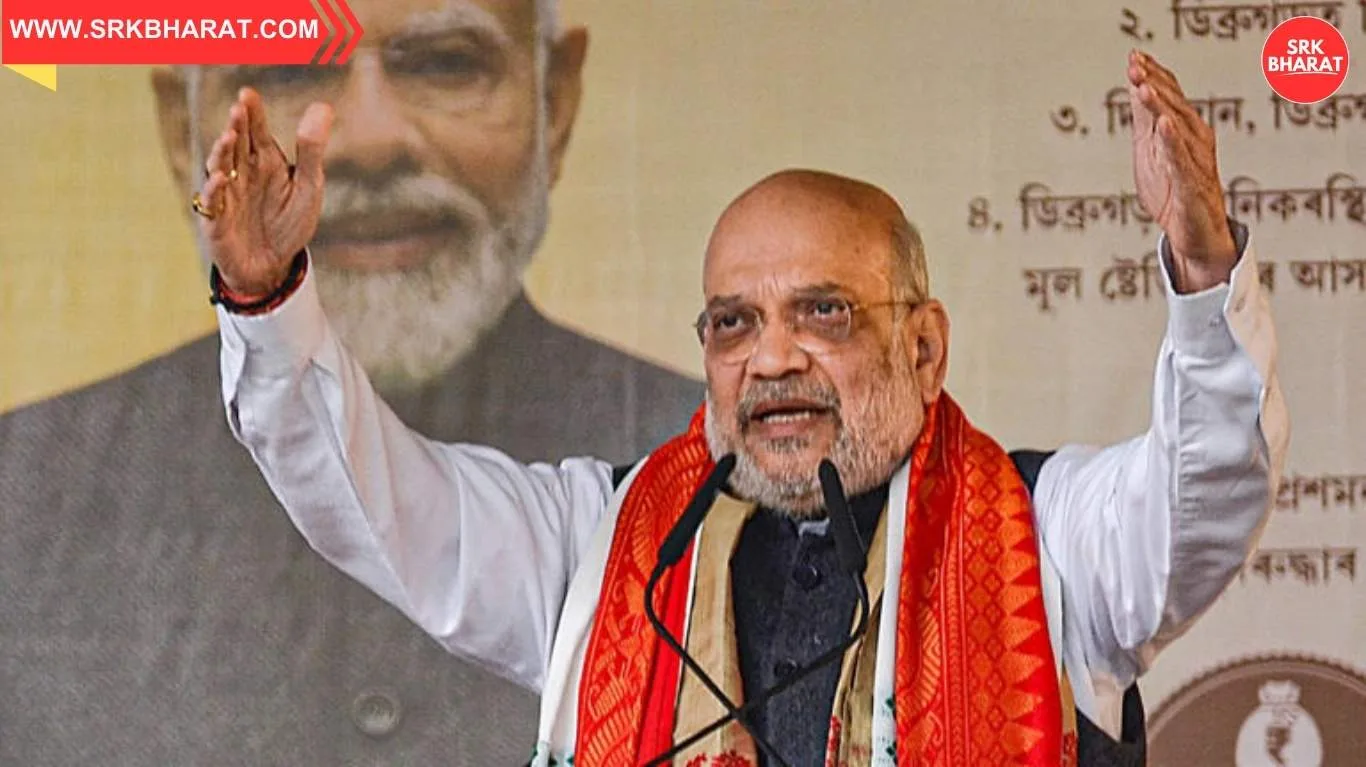
Union Home Minister Amit Shah has made a strong statement during his visit to Assam, declaring that if the Bharatiya Janata Party (BJP) secures victory for the third consecutive term, infiltrators in the state will be removed “one by one.” His remarks have reignited debates around immigration, identity politics, and the future of governance in Assam.
Amit Shah’s Statement
Shah emphasized that the BJP government has already taken steps to secure Assam’s borders and protect the cultural identity of the state. He assured that a third term would intensify efforts to identify and remove infiltrators, thereby safeguarding the interests of indigenous communities.
Key points from his speech:
- BJP is committed to protecting Assam’s identity and culture.
- Infiltrators will be removed systematically if the party wins again.
- The government will continue to strengthen border security and implement policies against illegal immigration.
Political Context
Immigration has long been a sensitive issue in Assam. The National Register of Citizens (NRC) and debates around citizenship have shaped political discourse in the state. Shah’s remarks reflect the BJP’s continued focus on this issue as a central electoral plank.
| Period | Key Development | Impact |
|---|---|---|
| 1980s | Assam Movement | Demand for identification of foreigners |
| 2019 | NRC publication | Controversy over exclusions |
| 2021 | BJP re-elected | Continued focus on infiltration |
| 2026 | Shah’s remarks | Renewed debate on identity politics |
BJP’s Strategy in Assam
The BJP has consistently positioned itself as the protector of Assamese identity. Its strategy includes:
- Strengthening border security with Bangladesh.
- Implementing strict measures against illegal immigration.
- Promoting welfare schemes for indigenous communities.
- Using infiltration as a key electoral issue to mobilize support.
Opposition’s Response
Opposition parties, including the Congress and regional outfits, have criticized Shah’s remarks, accusing the BJP of using divisive rhetoric. They argue that such statements create fear and polarization rather than addressing socio-economic challenges.
Impact on Communities
The issue of infiltration directly affects several communities in Assam:
| Community | Concern | Political Impact |
|---|---|---|
| Indigenous Assamese | Protection of culture and land | Support for BJP’s stance |
| Bengali-origin Muslims | Fear of exclusion | Opposition mobilization |
| Tea Garden Workers | Focus on welfare schemes | Mixed reactions |
| Tribal Groups | Demand for recognition | Seek stronger safeguards |
Comparative Analysis of Party Positions
| Party | Position on Infiltration | Strategy |
|---|---|---|
| BJP | Strong removal stance | Border security, NRC |
| Congress | Focus on inclusivity | Criticizes divisive politics |
| Regional Parties | Protect indigenous rights | Demand clarity on NRC |
| AIUDF | Defends minority rights | Opposes exclusionary policies |
Implications for 2026 Elections
Shah’s remarks are likely to shape the narrative of the upcoming elections in Assam.
- BJP will highlight infiltration as a core issue.
- Opposition will counter with arguments on inclusivity and governance.
- Voter sentiment may hinge on identity politics versus development priorities.
Conclusion
The headline “If BJP Wins for 3rd Time, Infiltrators Will Be Removed ‘One by One’: Amit Shah in Assam” reflects the intensity of political discourse in the state. Shah’s remarks underline the BJP’s strategy of focusing on infiltration and identity, while opposition parties continue to challenge this narrative.
As Assam heads toward another crucial election, the debate over infiltration will remain central, shaping both political strategies and voter decisions.
Disclaimer
This article is intended for informational and analytical purposes only. It reflects current political developments and perspectives within Assam. The content does not represent official statements from the Election Commission of India, Amit Shah, or the BJP. Readers should verify facts through authoritative sources before drawing conclusions.