



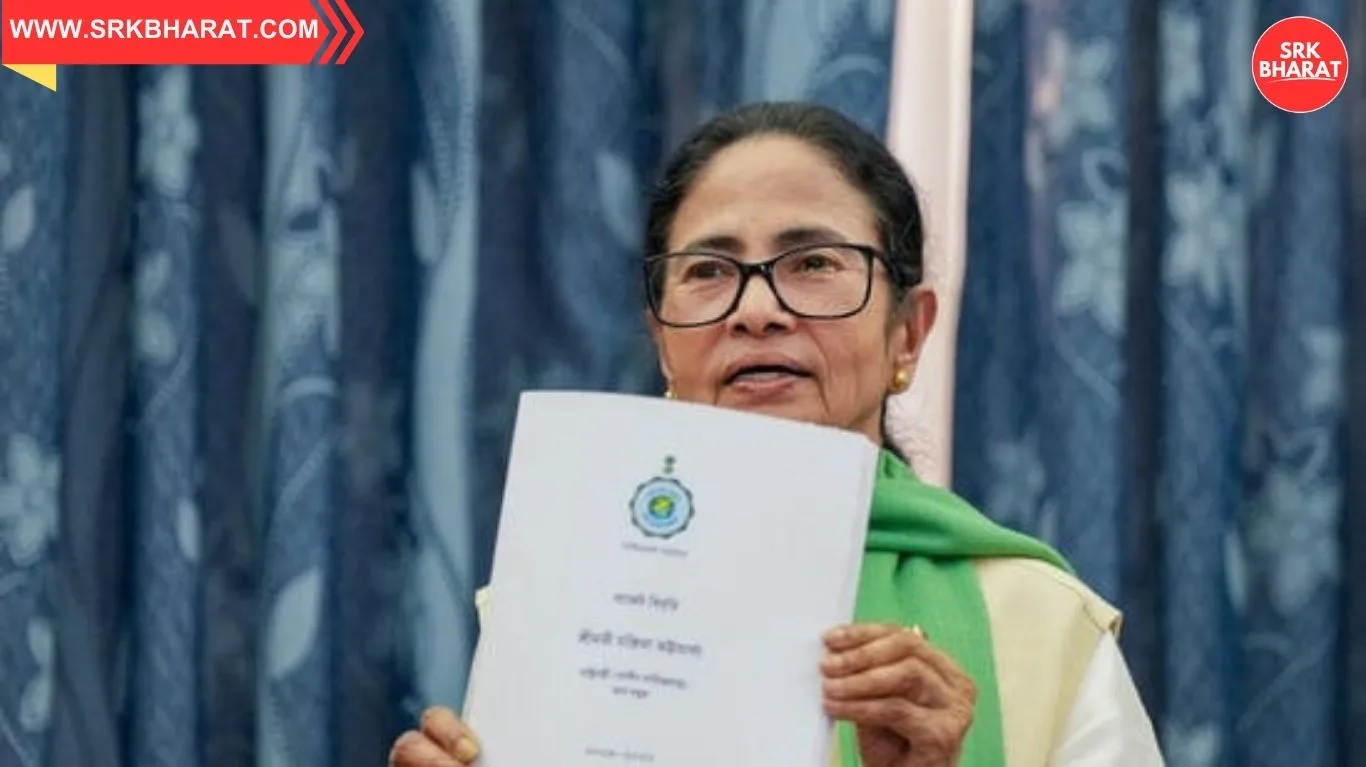
As West Bengal gears up for the 2026 Assembly elections, political parties are recalibrating strategies with a sharp focus on the Muslim electorate, which constitutes nearly 30% of the state’s population. The ruling Trinamool Congress (TMC), led by Chief Minister Mamata Banerjee, has traditionally commanded the lion’s share of Muslim votes since 2011. However, fresh alignments among opposition parties, including the Congress and smaller regional outfits, are emerging to challenge both the TMC and the BJP, potentially leading to a multi-way split of minority votes.
Key Highlights
- Muslim Electorate Size: Estimated at 30% of West Bengal’s 91.27 million population.
- Congress Strategy: Breaking away from CPI(M) to contest independently in Muslim-majority districts like Murshidabad and Malda.
- TMC’s Position: Continues to rely on its strong minority support base.
- BJP’s Challenge: Struggles to penetrate Muslim-majority constituencies but focuses on polarisation strategies.
- Smaller Parties: Exploring alliances to carve out influence in minority-dominated regions.
Analysis of Political Alignments
| Factor | Traditional Scenario | Current Scenario (2026) | Outcome Observed |
|---|---|---|---|
| Muslim Vote Share | Dominated by TMC since 2011 | Congress, smaller parties eyeing share | Possible split |
| Opposition Unity | Congress-CPI(M) alliance | Congress breaking away | Fragmentation |
| BJP Strategy | Limited minority support | Focus on polarisation | Consolidation of Hindu vote |
| Electoral Math | Minority votes decisive in 100+ seats | Multi-way contest likely | Uncertain outcomes |
| Public Sentiment | Trust in TMC’s welfare schemes | Rising discontent in some districts | Shifting loyalties |
Comparative Analysis of Muslim Vote Influence
| Region/District | Muslim Population % | Key Parties Competing | Likely Impact |
|---|---|---|---|
| Murshidabad | 66% | Congress, TMC, BJP | Congress revival attempt |
| Malda | 51% | Congress, TMC | Split vote risk |
| North Dinajpur | 49% | TMC, BJP, smaller outfits | Competitive |
| South 24 Parganas | 35% | TMC stronghold | TMC advantage |
| Kolkata suburbs | 25-30% | TMC, BJP | Polarisation battle |
Drivers of Fresh Alignments
- Congress Strategy Shift: Moving away from CPI(M) to reclaim traditional strongholds.
- TMC’s Welfare Politics: Banking on schemes like scholarships and healthcare for minorities.
- BJP’s Polarisation Tactics: Attempting to consolidate Hindu votes while facing resistance in Muslim-majority areas.
- Smaller Parties’ Ambition: Seeking to emerge as kingmakers in fragmented constituencies.
- Electoral Roll Revision: Special Intensive Revision (SIR) has created uncertainty among Muslim voters.
Public and Media Reaction
- Muslim Voters: Expressing anxiety over voter list revisions and political fragmentation.
- Media Analysts: Highlighting the possibility of a fractured mandate.
- Opposition Leaders: Accusing TMC of monopolizing minority votes.
- TMC’s Response: Dismissing alliances as opportunistic and reaffirming its grassroots strength.
Future Outlook
The 2026 Bengal elections could witness:
- Multi-way contests in Muslim-majority districts.
- Vote Splits that may weaken TMC’s dominance.
- Congress Revival Attempts in traditional bastions.
- BJP’s Polarisation Strategy consolidating Hindu votes but failing to attract minorities.
- Smaller Parties playing decisive roles in close contests.
Challenges ahead:
- Ensuring fair voter roll revisions.
- Managing communal polarisation.
- Balancing welfare promises with governance delivery.
Conclusion
The emergence of fresh political alignments in Bengal with an eye on Muslim votes underscores the fluidity of the state’s electoral landscape. While the TMC remains the dominant force, the Congress’s independent push, coupled with smaller parties’ ambitions, could fragment the minority vote. With nearly 30% of the electorate at stake, the outcome of the 2026 Assembly elections will hinge on how effectively parties mobilize and retain Muslim support amid rising political competition.
Disclaimer
This article is intended for informational and analytical purposes only. It summarizes publicly available political updates and demographic insights. It does not constitute endorsement, insider information, or professional consultation. Readers are encouraged to verify facts independently and consider multiple perspectives before forming conclusions.