

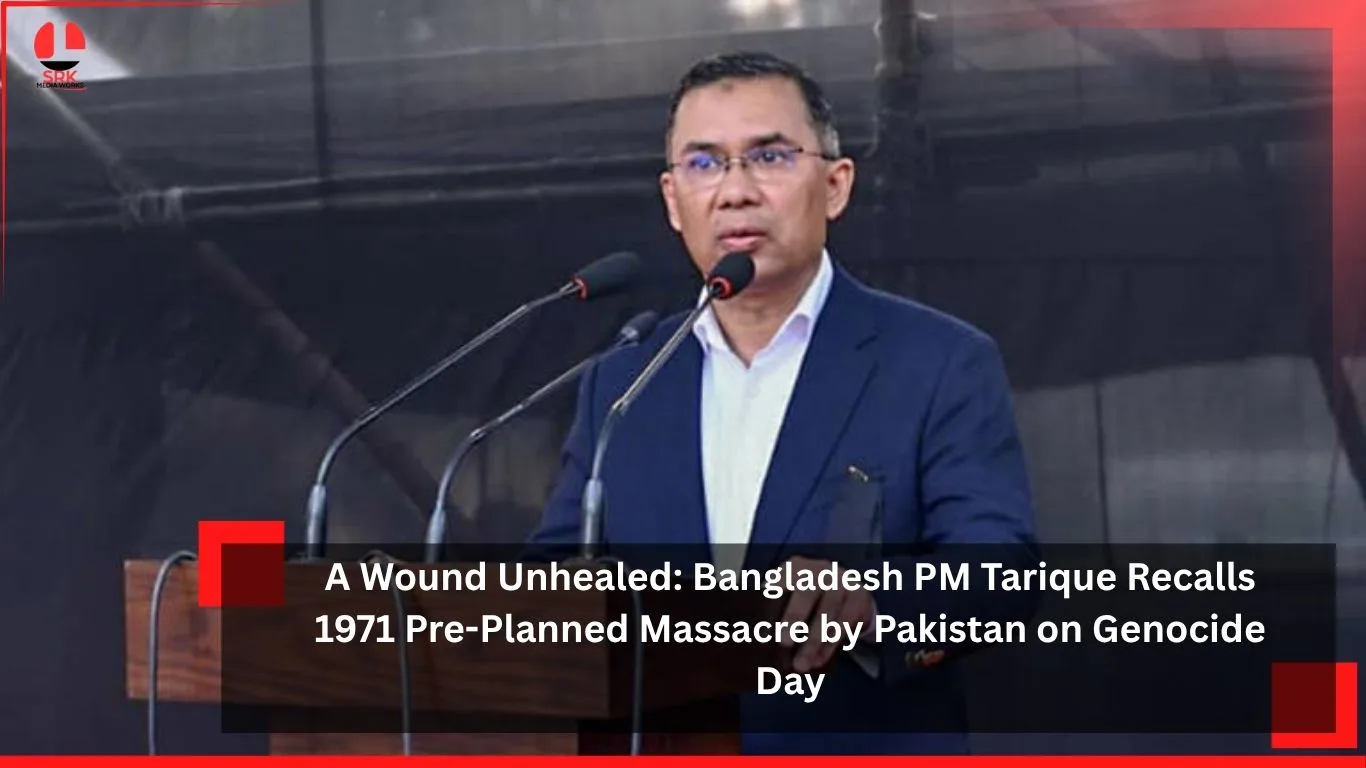
On Bangladesh’s Genocide Day, Prime Minister Tarique Rahman delivered a powerful speech recalling the horrors of the 1971 pre-planned massacre carried out by Pakistan’s military regime. His remarks underscored the enduring trauma of one of the darkest chapters in South Asian history, when thousands of innocent civilians were killed in Dhaka and across the country in a brutal crackdown designed to suppress Bangladesh’s independence movement.
Historical Context of the 1971 Massacre
The events of March 25, 1971, remain etched in Bangladesh’s collective memory. Known as “Operation Searchlight,” Pakistan’s military launched a coordinated assault on Dhaka, targeting students, intellectuals, and political activists. The operation was intended to crush Bengali nationalism, but instead it ignited a full-scale liberation war that culminated in Bangladesh’s independence later that year.
PM Tarique’s Emotional Address
Prime Minister Tarique Rahman emphasized:
- The massacre was not spontaneous but a pre-planned operation by Pakistan’s military rulers.
- Bangladesh continues to bear the scars of genocide, with survivors and families of victims demanding recognition and justice.
- The international community must acknowledge the atrocities as genocide to honor the memory of those lost.
- The resilience of the Bangladeshi people turned tragedy into triumph, leading to independence after nine months of war.
Comparative Analysis of Genocides
| Genocide/Conflict | Year | Estimated Death Toll | Recognition Status |
|---|---|---|---|
| Bangladesh Massacre | 1971 | 300,000–3,000,000 | Limited recognition |
| Holocaust | 1940s | 6,000,000 | Widely recognized |
| Rwanda Genocide | 1994 | 800,000 | Recognized |
| Cambodia (Khmer Rouge) | 1975–79 | 1,700,000 | Recognized |
This comparison highlights how Bangladesh’s genocide has not received the same level of global recognition as other atrocities, despite its scale and brutality.
Pivot in Bangladesh’s Narrative
Bangladesh’s leadership under Tarique Rahman is pushing for a pivot in how the 1971 massacre is remembered globally:
- From National Memory to Global Recognition: Seeking acknowledgment from international bodies.
- From Victimhood to Resilience: Highlighting the strength of the Bangladeshi people.
- From Silence to Justice: Calling for Pakistan to formally apologize and accept responsibility.
Sentiment Analysis
| Group | Sentiment Toward 1971 Massacre | Likely Response |
|---|---|---|
| Bangladeshi Citizens | Emotional, demanding justice | Continue commemorations |
| Survivors & Families | Grieving, resilient | Push for recognition |
| Pakistan Government | Defensive, reluctant | Avoid formal apology |
| Global Observers | Sympathetic, cautious | Call for reconciliation |
Broader Implications
- Diplomatic Relations: Bangladesh-Pakistan ties remain strained due to unresolved historical grievances.
- International Recognition: Advocacy for genocide recognition could reshape global narratives.
- Generational Memory: Younger Bangladeshis are being educated about the events to preserve historical truth.
- Regional Stability: Addressing historical wounds is essential for long-term peace in South Asia.
Conclusion
Prime Minister Tarique Rahman’s remarks on Genocide Day serve as a reminder that the wounds of 1971 remain unhealed. By recalling the pre-planned massacre, he reinforced the importance of memory, justice, and recognition. For Bangladesh, the struggle is not only about independence achieved but also about ensuring that the sacrifices of millions are never forgotten.
Disclaimer
This article is intended for informational purposes only and does not represent official government policy or judicial conclusions. The content is based on historical accounts and public statements. Readers should note that interpretations of historical events may vary, and recognition of genocide remains subject to international debate.