

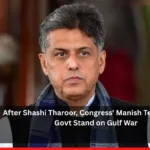
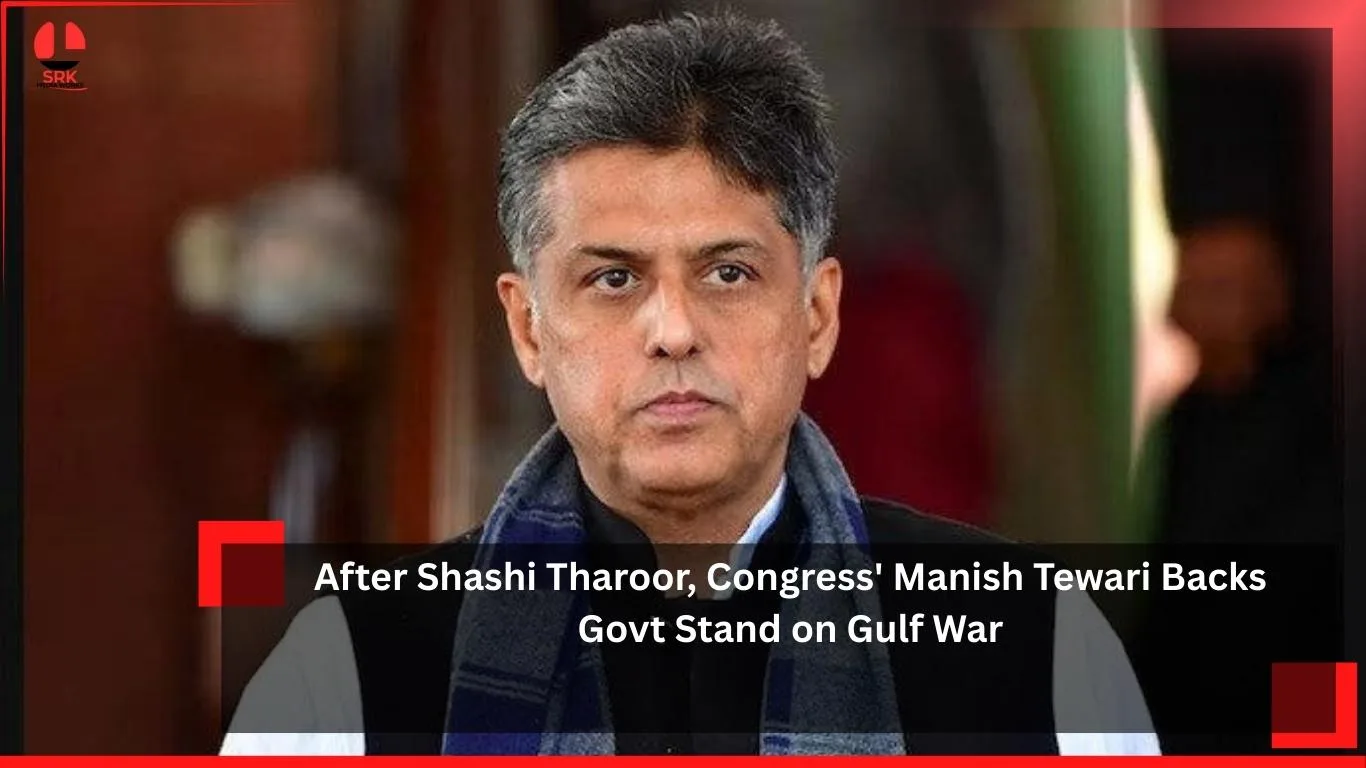
Congress leader Manish Tewari has joined Shashi Tharoor in backing the Indian government’s stand on the Gulf war, marking a rare moment of bipartisan consensus on foreign policy. His statement emphasized the importance of national unity during global crises and highlighted India’s responsibility to safeguard its strategic interests in West Asia.
Context of the Gulf War
The Gulf war has triggered widespread instability, with rising oil prices, disrupted trade routes, and concerns over the safety of millions of Indian expatriates living in the region. India’s government has adopted a cautious stance, calling for de-escalation and diplomacy.
Manish Tewari’s Statement
Tewari underscored the need for India to support peace initiatives and avoid being drawn into external conflicts. He echoed Tharoor’s earlier remarks, stressing that India’s position must be pragmatic, balanced, and focused on protecting national interests.
Political Reactions
The support from two senior Congress leaders has sparked debate across political circles.
| Stakeholder | Reaction | Implication |
|---|---|---|
| Congress Leadership | Mixed | Some support, others cautious |
| BJP Govt | Welcomed | Strengthens credibility of stance |
| Regional Parties | Neutral | Focused on domestic issues |
| Public | Divided | Concerns over oil prices and diaspora safety |
India’s Strategic Concerns
India’s position on the Gulf war is shaped by several critical factors:
- Energy Security: Heavy reliance on Gulf oil imports.
- Diaspora Safety: Millions of Indians live and work in Gulf nations.
- Trade Routes: Disruption in the Strait of Hormuz impacts commerce.
- Geopolitical Balance: Maintaining ties with both Western allies and Gulf states.
Comparative Analysis of Bipartisan Support in India’s Foreign Policy
| Issue | Govt Stand | Opposition Response | Outcome |
|---|---|---|---|
| Russia-Ukraine War | Neutral, balanced | Divided | Limited consensus |
| Israel-Palestine Conflict | Support for peace | Mixed | Ongoing debate |
| Gulf War | De-escalation, diplomacy | Backed by Tharoor & Tewari | Rare bipartisan support |
Broader Implications
The bipartisan support signals a shift in India’s political landscape, where foreign policy is increasingly seen as a domain requiring unity.
- Strengthens Govt Position: Adds credibility to India’s diplomatic efforts.
- Weakens Opposition Criticism: Reduces scope for political attacks on foreign policy.
- Boosts International Image: Shows India as united in times of global crisis.
Public Sentiment
While political leaders debate strategy, ordinary citizens are more concerned about the economic fallout. Rising oil prices, inflation, and job security for expatriates dominate public discussions.
Future Outlook
India is expected to continue advocating for peace and de-escalation in the Gulf. With bipartisan support, the government may find it easier to pursue diplomatic initiatives and safeguard national interests.
Conclusion
Manish Tewari’s backing of the government’s stand on the Gulf war, following Shashi Tharoor’s similar support, highlights a rare moment of unity in Indian politics. As global tensions rise, India’s bipartisan consensus strengthens its position as a responsible actor committed to peace, stability, and the protection of its citizens abroad.
Disclaimer: This article is intended for informational purposes only. It provides an overview of political reactions to India’s stance on the Gulf war. The content does not represent official government communication, and readers are advised to consult verified reports for precise details.