


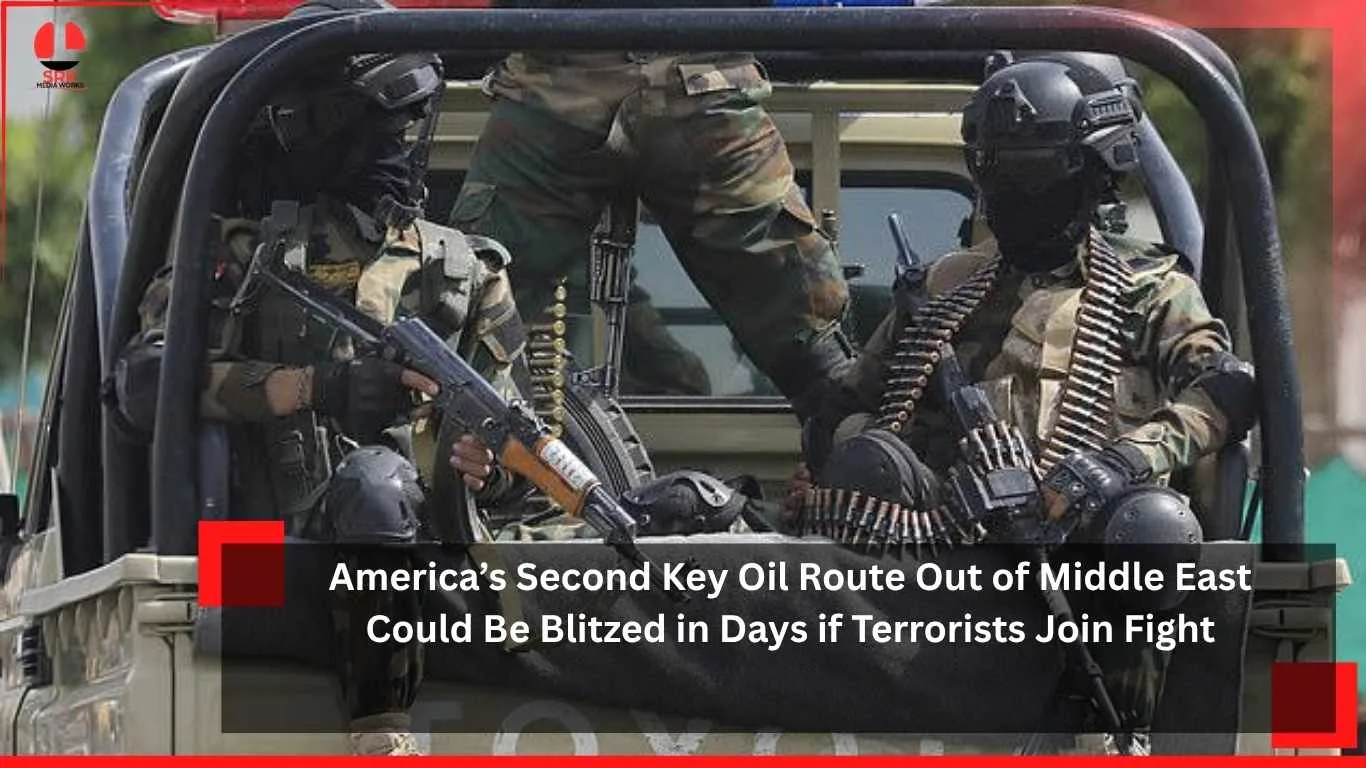
The United States faces a looming threat to its energy security as analysts warn that America’s second key oil route out of the Middle East could be disrupted within days if terrorist groups escalate their involvement in regional conflicts. This potential crisis underscores the vulnerability of global energy supply chains and the strategic importance of securing maritime and land-based oil routes.
The Strategic Oil Route
The second major oil route for the U.S. bypasses the Strait of Hormuz, connecting Middle Eastern oil fields to alternative shipping lanes. This corridor has been developed to reduce reliance on the Hormuz chokepoint, which has historically been vulnerable to geopolitical tensions.
However, experts caution that if terrorist groups join ongoing conflicts in the region, this alternative route could be blitzed in days, cutting off a critical supply line and destabilizing global markets.
Why This Route Matters
- Energy Security: Provides redundancy against disruptions in the Strait of Hormuz.
- Global Stability: Ensures steady oil flow to international markets.
- Economic Impact: Protects against sudden spikes in oil prices.
- Military Strategy: Reduces vulnerability to naval blockades.
Comparative Analysis of Oil Routes
| Route | Vulnerability Level | Strategic Importance | Potential Threats |
|---|---|---|---|
| Strait of Hormuz | High | Primary global chokepoint | Military conflict, blockades |
| Second U.S. Route | Medium | Alternative supply line | Terrorist attacks, sabotage |
| Red Sea Corridor | Medium | Links Gulf to Europe | Piracy, regional instability |
| Mediterranean Access | Low | Diversified shipping | Political unrest |
This comparison shows that while the second U.S. route reduces reliance on Hormuz, it remains vulnerable to asymmetric threats.
Pivot Analysis: Risks if Terrorists Join Fight
| Risk Type | Short-Term Impact | Long-Term Consequence |
|---|---|---|
| Infrastructure Attack | Disruption of oil flow | Global energy crisis |
| Maritime Sabotage | Increased shipping costs | Reduced trade reliability |
| Regional Escalation | Spread of conflict | Prolonged instability |
| Market Volatility | Oil price surge | Economic slowdown |
Broader Geopolitical Implications
- For the U.S.: A blitz on the second oil route would force Washington to deploy military assets to secure supply lines.
- For Middle East Nations: Regional economies dependent on oil exports would face severe disruption.
- For Global Markets: Oil prices could skyrocket, triggering inflation worldwide.
- For Terrorist Groups: Disrupting oil routes would amplify their global impact, drawing international attention.
Historical Context
The vulnerability of oil routes has long been a concern. From tanker wars in the 1980s to piracy in the Red Sea, energy corridors have repeatedly been targeted. The current threat reflects a continuation of this pattern, with terrorist groups potentially exploiting weak points in infrastructure.
Possible Scenarios
- Escalation: Terrorist attacks disrupt the second oil route, forcing military intervention.
- Containment: Regional powers collaborate to secure the corridor, preventing major disruption.
- Diversification: The U.S. accelerates investment in alternative energy and diversified supply chains.
Conclusion
The warning that America’s second key oil route out of the Middle East could be blitzed in days if terrorists join the fight highlights the fragility of global energy security. While the route was designed to reduce dependence on the Strait of Hormuz, its vulnerability to asymmetric threats remains a pressing concern.
As tensions rise, securing this corridor will be critical not only for U.S. interests but for the stability of global markets. The coming months may determine whether this route remains a lifeline or becomes another flashpoint in the struggle for energy dominance.
Disclaimer: This article is based on reported geopolitical assessments and strategic analysis. It does not represent classified intelligence or official government positions. The content is intended for informational purposes only and should not be interpreted as definitive military or economic forecasts.