

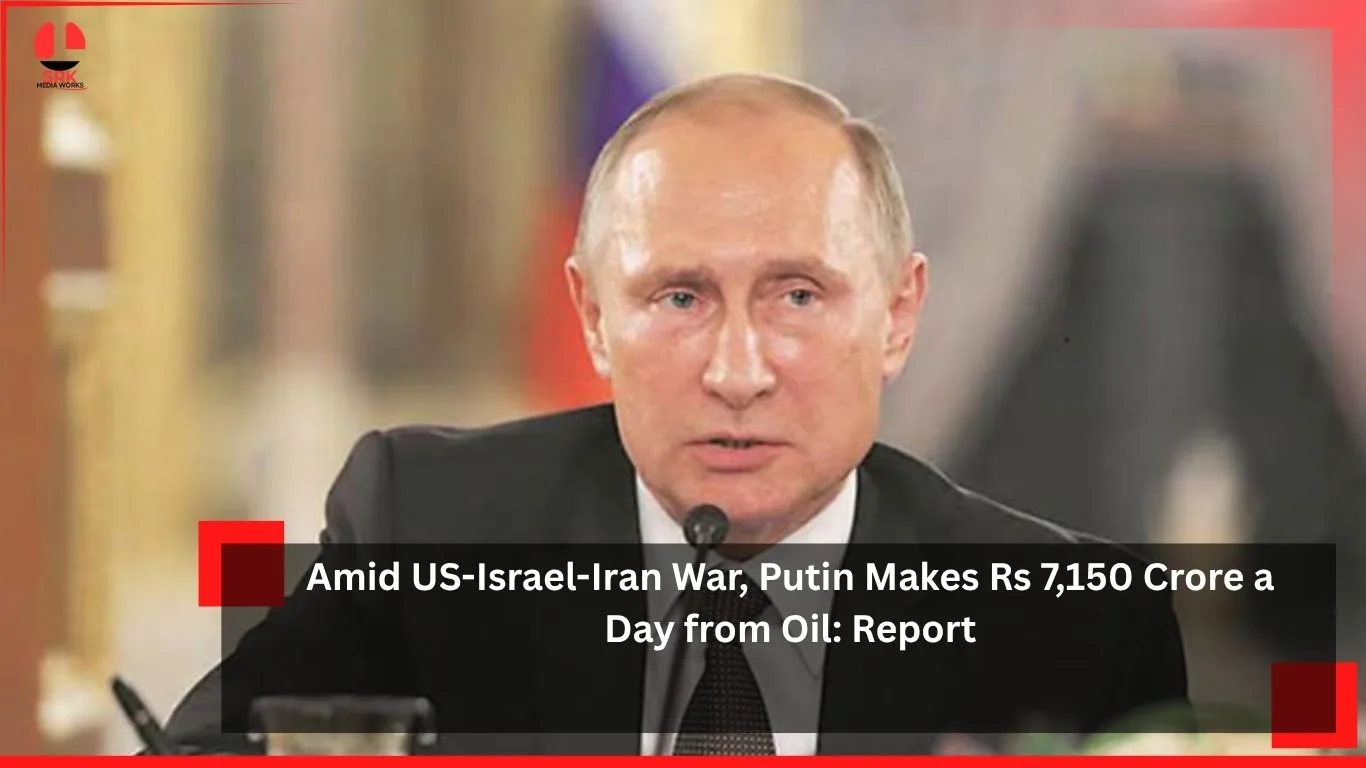
As the US-Israel-Iran conflict intensifies, global energy markets are experiencing unprecedented volatility. Amid this turmoil, reports suggest that Russian President Vladimir Putin is reaping massive financial gains from oil exports, earning approximately Rs 7,150 crore per day. This staggering figure highlights how geopolitical crises can reshape global trade flows, benefiting some nations while destabilizing others.
Background of the Report
The ongoing war involving the US, Israel, and Iran has disrupted oil supplies through the Gulf, particularly the Strait of Hormuz. With one of the world’s most critical energy chokepoints under threat, global markets have turned to alternative suppliers. Russia, already a major oil exporter, has capitalized on this disruption, increasing its revenues significantly.
Key Highlights
- Daily Earnings: Russia reportedly earns Rs 7,150 crore per day from oil exports.
- Market Turmoil: Global oil prices have surged due to supply disruptions.
- Geopolitical Advantage: Russia benefits from reduced competition in energy markets.
- Global Impact: Import-dependent nations face rising costs and inflationary pressures.
Comparative Analysis of Oil Export Revenues
| Country | Daily Oil Export Revenue (Approx.) | Impact of US-Israel-Iran War |
|---|---|---|
| Russia | Rs 7,150 crore | Significant increase due to demand |
| Saudi Arabia | Rs 5,800 crore | Stable but pressured by regional risks |
| Iran | Reduced due to blockade | Severe disruption, limited exports |
| United States | Rs 4,200 crore | Gains from domestic production |
Pivot Analysis: War Disruption vs Russian Gains
| War Disruption Factor | Russian Advantage | Global Consequence |
|---|---|---|
| Strait of Hormuz blockade | Increased demand for Russian oil | Higher global prices |
| Sanctions on Iran | Reduced competition | Russia fills supply gap |
| Market volatility | Elevated revenues | Importers face inflation |
| Energy insecurity | Russia strengthens leverage | Global South struggles economically |
Global Reactions
- United States: Concerned about Russia’s growing influence in energy markets.
- Europe: Struggles with rising energy costs, increasing reliance on Russian supplies.
- Asia: Import-dependent nations like India and China face higher bills.
- Russia: Celebrates record revenues, reinforcing its economic resilience amid sanctions.
Historical Context
Russia has long been a dominant player in global energy markets. Past conflicts in the Middle East have often boosted Russian oil revenues, as disruptions in Gulf supplies redirected demand. The current war mirrors this pattern, with Russia emerging as a major beneficiary of instability.
Challenges Ahead
- Market Stability: Prolonged conflict could keep oil prices volatile.
- Sanctions Pressure: Western nations may attempt stricter sanctions on Russian exports.
- Global Inflation: Rising energy costs threaten economic stability worldwide.
- Diplomatic Fallout: Russia’s gains may deepen geopolitical divides.
Conclusion
The US-Israel-Iran war has created a volatile energy landscape, but Russia has emerged as a major beneficiary, earning Rs 7,150 crore daily from oil exports. This development underscores how geopolitical crises can shift economic power, reinforcing Russia’s leverage in global markets. While import-dependent nations grapple with rising costs, Russia’s windfall highlights the complex interplay between war, energy, and global economics.
Disclaimer
This article is based on publicly available reports and expert commentary. It does not represent official government statements or classified intelligence. Readers should interpret the content as journalistic analysis, recognizing that geopolitical and economic developments are fluid and subject to change.